Official game
Play Seina: a Tale Of Spirits
This game is hosted by Steam. Continue to the official page to play or download it.
Wishlist on SteamOverview
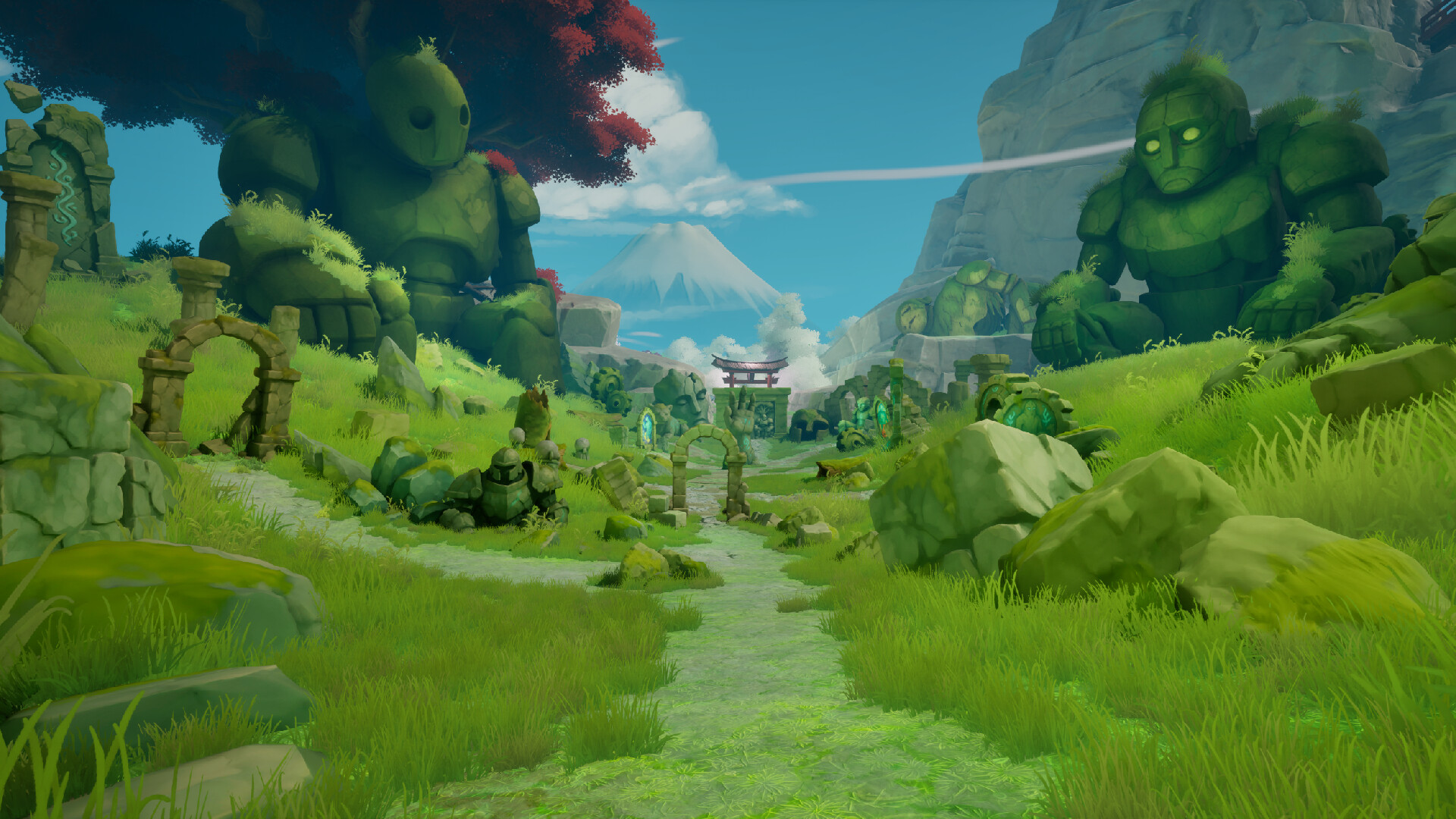
Seina: a Tale Of Spirits is a cozy fantasy adventure built around one of the oldest stories in the world: someone you love is gone, and you go find them. You play Mika, a young girl whose cat Seina has vanished without a trace. The search leads her into an overgrown world of moss-covered shrines, misty forests, and quiet lakes, a place full of memories of another time and animals who seem to know exactly why your cat left. They just will not tell you all at once.
The game is developed by Argyro Brotsi and published by POFUPOFU STUDIOS, drawn in hand-painted watercolor with a soundtrack tuned for calm. It was an official Tiny Teams Festival selection in August 2026, joined the Cat Awareness Feline Sale around International Cat Day, and a demo is live on Steam right now. The developer has also announced versions for PlayStation 5, Xbox Series X/S, and Switch 2 alongside the PC release planned for 2026, which is unusual ambition for a solo cozy project.
| Fact | Detail |
|---|---|
| Developer / Publisher | Argyro Brotsi / POFUPOFU STUDIOS |
| Genre | Cozy fantasy adventure, exploration, light puzzles |
| Release | Planned 2026, exact date TBA; demo live now |
| Length | Roughly 3-6 hours estimated |
| Platforms | Windows (Steam), PS5 / Xbox Series / Switch 2 announced |
| Difficulty | None. No combat, no fail states, no timers |
| Playtime style | One calm evening per area, savored slowly |
| Languages | 23 supported, English full audio + subtitles |
| Steam features | Achievements, Family Sharing |
A note worth reading before you start: the Steam page carries an AI disclosure stating generative tools were used to enhance certain texture assets during development, with all final assets reviewed and tweaked by the developer. If that matters to your purchasing decision, know it up front. The hand-painted style on display in the demo still reads as deliberate and personal.
Who this is for: players who finished A Short Hike and wanted more world to wander, Spiritfarer fans who liked the gentle quests more than the management layer, cat people, and anyone using games as a way to lower their heart rate after work.
Who should skip it: anyone needing combat, stakes, or mechanical depth. This is a walking-and-talking game with hidden-object instincts. The challenge is attention, not reflex.
Getting Started
Before you launch
- Set the pace yourself. There is no timer and no fail state, so the game will never rush you. The players who bounce off cozy games are usually the ones who kept their action-game pacing. Decide in advance that this session is a slow one.
- Play with sound on. Every area tells part of its story through ambient audio. Birdsong shifts when a spirit is nearby, and quiet musical cues mark spots worth investigating.
- Full screen, subtitles on, notifications off. The emotional beats live in small dialogue moments. This is a game you can finish in three sittings; treat each like a chapter.
Your first 30 minutes
The demo opens in a starter area before the wider world unfolds. Whether you are in the demo or the full game, the opening hour follows the same shape:
- Follow the cat's trail, literally. The opening teaches you to read environmental traces: paw prints, disturbed leaves, a rustled bush. The game never gives you a minimap quest arrow. Seina's path is written on the ground, and learning to look down and around is the core skill.
- Talk to the first spirit more than once. Spirits have layered dialogue. The first conversation introduces them, the second one usually opens their favor quest, and the third reveals the story thread that connects them to Seina's disappearance.
- Do the first favor before pushing forward. The opening spirit quest teaches the kindness loop the whole game runs on: encounter, observe, help, connect. Finishing it unlocks the pattern for everything after.
- Walk the edges of the starting area. The map design places optional content along borders: a flower behind a rock, a spirit sitting at the waterline, a shrine half-hidden in moss. A straight line to the objective misses most of the game.
- Interact with everything that looks hand-drawn twice. Props with visible brushwork detail are usually interactive. The puzzle objects do not glow; they are simply more carefully painted than the scenery.
Beginner mistakes
- Sprinting everywhere. Mika moves slowly on purpose. Sprinting (or holding forward) past areas triggers fewer ambient events and skips spirit proximity dialogue.
- Treating spirits as quest vending machines. Each spirit has moods and a small arc. Grabbing the favor and leaving skips the payoff, which is usually the funniest or most touching line in the area.
- Ignoring color shifts. The palette changes when an area holds a secret. A sudden warm patch in a cool forest is the game pointing at something.
- Rushing puzzles. The environmental puzzles are simple, but several gate optional paths and extra spirit encounters. Solving them slowly is the point.
- Expecting the cat to be found quickly. The story structure is a spiral: each area answers a small question about Seina and raises a bigger one. Trust the pace.
Core Mechanics Explained
The kindness loop
Every interaction in the game runs the same five-beat loop, and learning to spot the beats is what makes play feel fluid instead of wandering:
1. ENCOUNTER  a spirit appears, often blocking a path or sitting somewhere odd
2. OBSERVE    what it looks at, what surrounds it, what it says first
3. HELP       the favor is almost always solveable from the current area
4. CONNECT    the spirit opens up: a memory, a joke, a hint about Seina
5. ADVANCE    a path opens, a puzzle element moves, or a new area unlocks
Two design consequences follow. First, favors never require backtracking to a previous area; if a spirit asks for something, the solution is within reach. Second, the favor is never really the point. The connect beat is where the mystery advances, so skipping dialogue means skipping the actual story.
Environmental puzzles
Puzzles are observation checks, not logic gauntlets. The catalog is small and repeats with variation:
| Puzzle type | What it asks of you | Where it appears |
|---|---|---|
| Find-and-carry | Locate an object in the area, bring it to the spirit | Forest and village areas |
| Sequence mirrors | Repeat a pattern the spirit or environment shows you | Shrine interiors |
| Path unblocking | Move a fallen object or wake a sleeping creature | Lakesides, overgrown trails |
| Hidden object | Spot the odd detail in dense foliage | Everywhere, usually optional |
| Guide escort | Lead a small spirit along a safe route | Ruins and crossings |
Nothing has a fail state. A wrong sequence simply does not advance, and the game re-offers the pattern. If a puzzle stumps you, the answer is almost always visual: something in the scene is colored, positioned, or animated differently than its neighbors.
The world as storyteller
Every area communicates through palette, sound, and staging before any dialogue fires. The moss-and-ruins aesthetic is not just pretty; overgrowth marks time, and time is the mystery. Places that matter to the story of why Seina left are the places where the world remembers hardest: intact shrines in ruined fields, kept gardens in wild forests. Read the environment as narrative, and the final act's reveals feel set up rather than sudden.
The demo's three areas
The demo covers a complete vertical slice across three named locations, each demonstrating a different corner of the design:
- Clover Crossing functions as the tutorial field: movement, camera, first spirit encounters, and the basic find-and-carry favor.
- Rivercap Lane introduces layered puzzle chains and the escort favor type, plus the first genuinely funny spirit writing.
- Moonfeather Village is the emotional center of the demo, where the story threads from the first two areas begin tying together and the mystery of Seina's departure gets its first real shape.
Full-demo playthroughs run between 18 and 40 minutes depending on thoroughness, and the area design rewards the thorough end of that range: a quick run sees the path, a slow run finds the otters.
Spirits, secrets, and attention gates
Optional content in Seina is gated by attention, never difficulty. The consistent tells:
- A spirit facing away from the path usually has a favor. The game stages them looking at the thing they need help with.
- Repeating ambient sound in one spot marks a hidden secret. Stop when the forest repeats itself.
- Unusual color marks interactables. One warm object in a cool scene is a flag.
- Architecture that outlived its purpose, a maintained gate in a ruin, marks story-relevant locations.
None of these are logged in a journal. The game trusts you to notice, which is exactly why noticing feels good.
Progression Strategy
There are no levels, currencies, or skill trees. Progression in Seina means story coverage and world completion, so the strategy is about ordering your attention.
The circuit method
When you enter any new area, walk its full perimeter before following the main path inward. The map design consistently places spirits and secrets along edges and returns optional finds to you mid-path. A complete circuit takes a few extra minutes and typically surfaces one favor and one secret per area that a straight rush misses entirely.
The revisit rule
After every major story beat, walk back through the previous area. Dialogue layers: spirits comment on what just happened, and at least one earlier favor unlocks a follow-up conversation. The game is paced around this rhythm, and the areas are small enough that revisiting costs two minutes, not twenty.
What completion looks like
A completionist pass means: every favor completed, every spirit's dialogue chain exhausted, every hidden secret found, and the gallery of quiet moments seen. Steam achievements for the full game are expected to track exactly this. Because there is no fail state, the only meaningful missable is dialogue you skipped, which is why the revisit rule exists.
Pacing for the story
The game alternates light and heavy emotional beats deliberately. If you play one area per sitting, you land where the game wants you to land. Binging all areas in one session flattens the contrast the writing works to build. This is the rare game where a content warning applies in reverse: it is short enough that savoring it is the optimal strategy.
The Complete Playbook: 7 Step-by-Step Strategies
1. The three-look rule for every spirit
Before interacting with any spirit, look three times: at what the spirit is facing, at the ground around it, and at the nearest unusual object. This five-second habit solves most favors before the dialogue even asks. A spirit staring at a flower on a ledge is handing you the quest objective visually.
2. The perimeter sweep
1. Enter the new area. Do NOT follow the obvious path.
2. Turn left and hug the map edge until you loop back.
3. Note (mentally) every spirit, prop, and color anomaly found.
4. NOW take the main path. Favors found on the sweep usually
   pay off mid-path, not before it.
This one method is the difference between a 3-hour playthrough and a 6-hour one, and the 6-hour one is better.
3. The puzzle triage
When a puzzle does not resolve: check for a missing object in the area you have not picked up, check whether a nearby spirit needs waking, and check the pattern for a mirrored element. Ninety percent of stuck moments die to this triage. The remaining ten percent mean you missed a secret on the perimeter; go sweep.
4. The dialogue exhaust
Talk to every spirit until dialogue repeats. Then talk once more after each story beat. The writing hides its best jokes in third and fourth conversations, and the cat-related dialogue in particular rewards the players who keep clicking. If a spirit ever says something about Seina directly, that thread continues in a later area; remember who said what.
5. The otter protocol
Without spoiling specifics: certain animals in this game exist purely for delight, and several are missable. When you hear unusual splashing, chirping, or chittering, drop whatever favor you are on and investigate. These encounters do not advance the plot, they are the reason the plot exists, and demo players consistently name them as the highlight. Treat them as mandatory personal content.
6. The screenshot discipline
The world is hand-painted and the moments are composed. When a scene lands, screenshot it. Practically, this doubles as your journal: the game has no quest log, and your screenshot folder becomes the map of which favor was where. Reviewing screenshots before a revisit session tells you which threads to pull.
7. The final-area rule
Save the last area of the demo (or game) for when you have at least an uninterrupted hour. The endings of each area chain into the next, and the emotional payoff is built from every favor and conversation you completed. Rushing the final stretch on a work night, mid-gaze at the clock, wastes the one thing the game has been earning for six hours.
Advanced Tips
Ambient audio is a radar. Learn the three sound signatures: spirit proximity (soft melodic shift), hidden secret (repeating natural sound, like a looped birdcall), and story location (near silence with reverb). Headphones make all three obvious; laptop speakers flatten them.
The cat trail reading improves with zoom. Get in the habit of looking at the ground when entering new screens. Trails, paw prints, and disturbed ground are painted at detail level, and players who never look down miss the game's most consistent guiding system.
Spirit moods telegraph favor availability. A spirit sitting still with closed body language usually has an available favor. A spirit mid-animation, playing or wandering, usually does not, and interacting early can skip a line of dialogue. Wait a beat for restless spirits to settle.
Palette shifts mark transitions before cutscenes do. When the color temperature of the world changes, a story beat is loading. Stop walking, finish your current favor first if you can, then advance. Entering story beats mid-favor can reorder dialogue slightly.
The camera is a puzzle hint system. When the camera drifts toward something, it is not idle motion. Level designers placed every shot. If the view lingers on a cliff, a shrine, or a patch of flowers, something is there.
Play the demo before wishlisting, then wishlist anyway. The demo is a fair representation of tone, pace, and puzzle depth. Console versions announced for PS5, Xbox Series, and Switch 2 make the eventual platform choice interesting; the Steam version is the one shipping first.
FAQ
Is there any combat or fail state? None. No combat, no death, no timers, no wrong choices. The challenge is observation and the reward is story.
How long is the game? No official number. Based on the demo slice and genre norms, expect 3-6 hours for a thorough single playthrough, longer if you chase every secret.
Is the demo worth playing? Yes, and it is generous: three complete areas, roughly 20-40 minutes of content, representing the actual opening of the game.
What platforms? Windows via Steam now. PS5, Xbox Series X/S, and Switch 2 versions announced for 2026. The system requirements are surprisingly real (GTX 1660-class minimum) because of the hand-painted art, so check your machine.
Is it good for kids? Very. Simple puzzles, reading-level dialogue, nothing scary, and a cat. The humor lands for adults too, which is the genre's harder trick.
Does it support controllers? Not confirmed for launch. The demo plays with keyboard and mouse, and the puzzle inputs are simple clicks and drags.
What is the story actually about? A girl, her missing cat, and a world that remembers things. The spirits know more about Seina's disappearance than they first say, and the mystery of why she left is the spine of the plot.
Why the AI disclosure? The developer states generative tools assisted with enhancing certain texture assets, with all final assets reviewed and hand-tweaked. The demo's art holds together; factor the disclosure into your decision if this matters to you.
Single price or free? Pricing is TBA. The demo is free, wishlist the game to catch the release announcement.
Quick Reference Card
| Situation | Action |
|---|---|
| New area entered | Perimeter sweep before main path |
| Spirit facing away from path | Has a favor; check what it faces |
| Repeating ambient sound | Hidden secret nearby |
| Sudden palette shift | Story beat or secret; look around |
| Puzzle stuck | Triage: missing object, sleeping spirit, mirror pattern |
| Finished a story beat | Revisit previous area for new dialogue |
| Splashing or chittering sounds | Drop everything, investigate |
| Ending an area | Save it for an uninterrupted hour |
| Spec | Requirement |
|---|---|
| Minimum | Win 10 64-bit, i5-4460, 8GB RAM, GTX 1660 8GB, DX11 |
| Recommended | i7-9700 / R5 1600, GTX 2080 / Radeon VII, DX12 |
| Storage | Small install (indie-scale) |
| Languages | 23, including full English audio |
Seina: a Tale Of Spirits asks for one thing: your attention, given slowly. Every system in it, the favors, the puzzles, the painted world, converts attention into warmth. Bring that, and the mystery of the missing cat takes care of itself.
Last reviewed by Game How To Editorial. We play each game, verify mechanics against official sources, and update guides when the game changes.