Official game
Play Rolic
This game is hosted by Steam. Continue to the official page to play or download it.
Wishlist on SteamOverview: A Forest That Runs on Math Without Showing Any
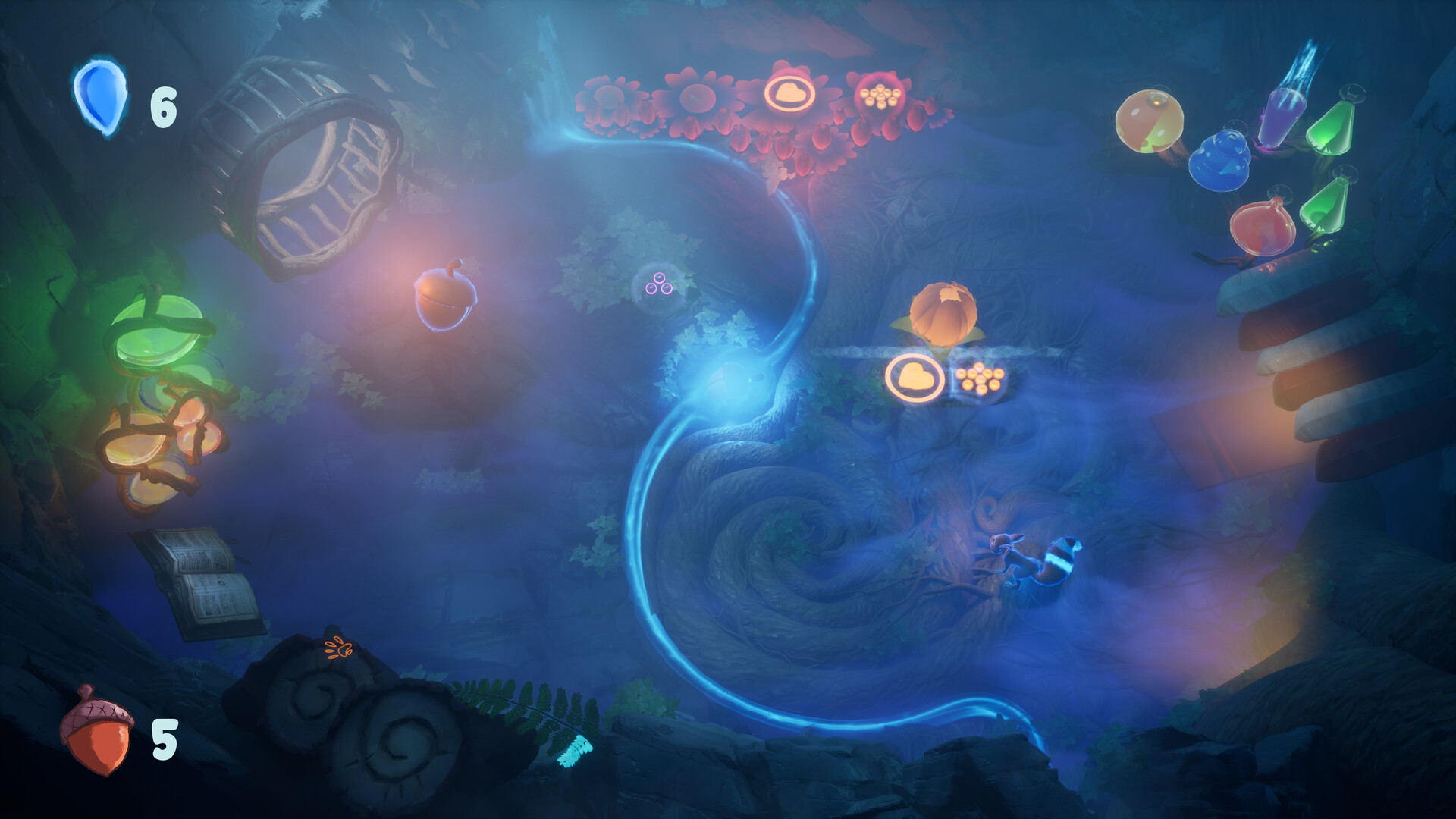
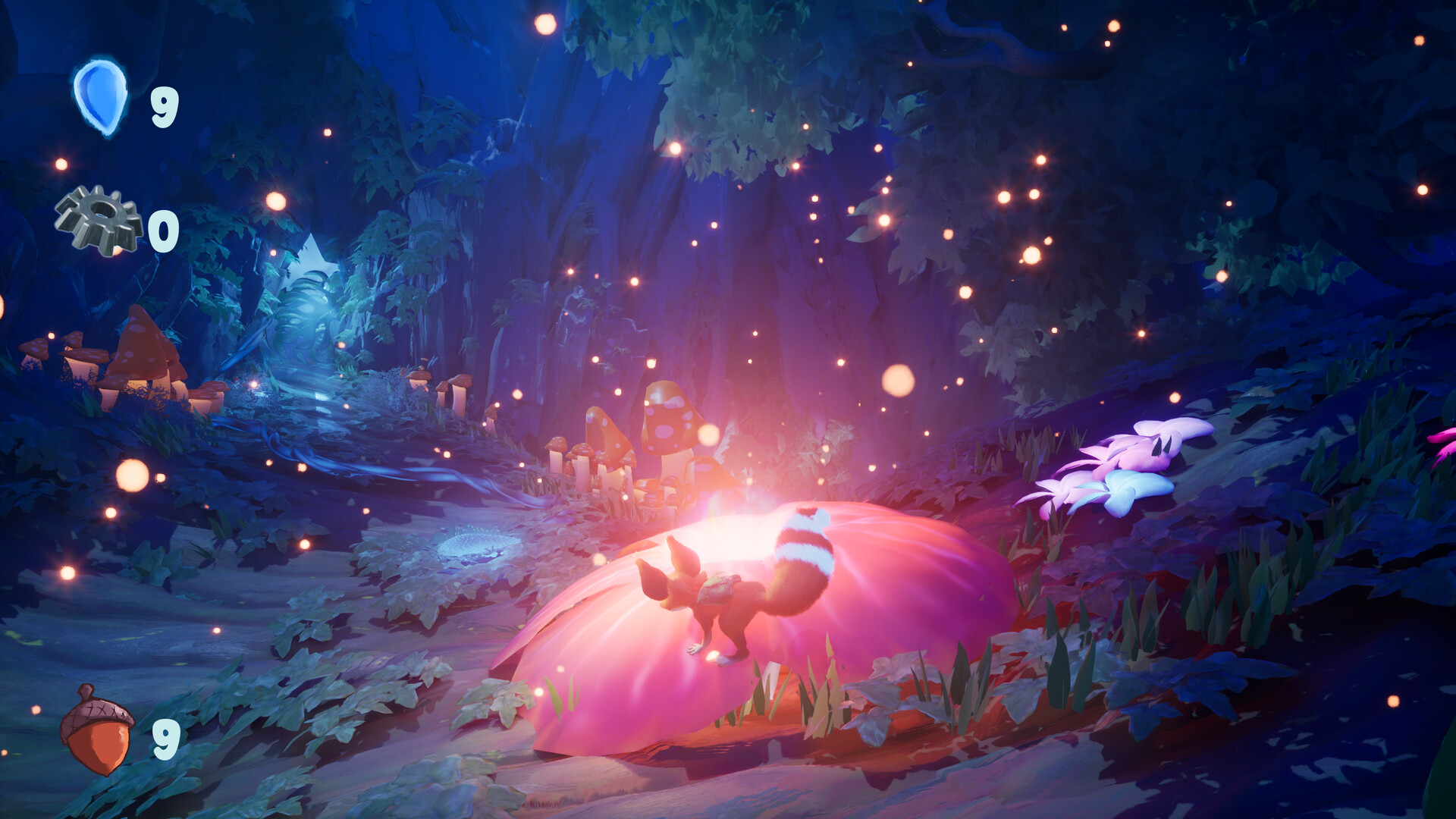
Rolic is a cozy 3D puzzle platformer from Gear Nautilus, set in a magical forest where the puzzles follow algebraic logic and you never once see an equation. You scoot, scramble, and glide through twisting vibrant lands, run completely upside-down along massive tree branches, crack open enchanted nuts with wizardry, and help a cast of quirky forest spirits restore the land's balance through a full day-night cycle.
The developer is not your typical cozy-game solo dev. Gear Nautilus is Todd Sue, a 23-year AAA veteran whose credits include serving as Art Director for Apex Legends, one of the largest teams on a multi-billion-dollar franchise. He stepped away to build Rolic around a question he started asking after his children were born: how do you make the world better for kids with the skills you have? The answer is a forest that teaches algebraic intuition the way Portal taught momentum, wrapped in saturated toylike art with a live global leaderboard.
| Fact | Detail |
|---|---|
| Developer | Gear Nautilus (Todd Sue, solo, ex-Apex Legends Art Director) |
| Genre | Cozy 3D puzzle platformer, open world |
| Platform | Windows (Steam); release date TBA |
| Setting | A mystical, vibrant magical forest |
| Core mechanic | Algebraic wizardry: bubbles, injectors, simplification, never visible equations |
| Movement | Scoot, scramble, glide, upside-down run along branch undersides |
| Puzzle count | 56 puzzles live on the Puzzle Rally leaderboard, difficulty 1-35 |
| Categories | Tutorial, Addition, Multiplication, Divide, Numerator, Denominator |
| Progression | Sparkleseeds, character customizations, unlock chains |
| Extras | Day-night cycle, quests (forest spirits, the Moon's broken toy) |
| Community | Discord (main hub), Puzzle Rally leaderboard at rolicgame.com |
Who it is for: fans of A Short Hike and Lil Gator Game, puzzle players who like rules-light discovery, competitive players who didn't expect a cozy game to have a leaderboard, and parents looking for a game that sneaks real math intuition into a loop kids actually want to play.
Who it is not for: players who want combat, strict logic-puzzle difficulty like Stephen's Sausage Roll, or a finished game today. Rolic is in playtest; the release date is unannounced.
The one-line mental model: the branches are roads with two surfaces, the puzzles are equations with the math hidden, and the leaderboard is the optional sharp edge on an otherwise soft game.
Getting Started: Your First Session
Access First
The demo rotates through Steam events, and beta signups run through playtest channels; wishlisting is the reliable way to catch the next window. The Puzzle Rally at rolicgame.com is live right now with real players on it, which means the competitive layer is playable before the full game exists. Join the Discord linked from the official site; it is where playtest keys and patch news land first.
Your First Hour Plan
- Do the movement tutorials before anything else. "How To Move" and "Move Other Side" are difficulty 1-2 and take under a minute each. The whole game's grammar builds on them.
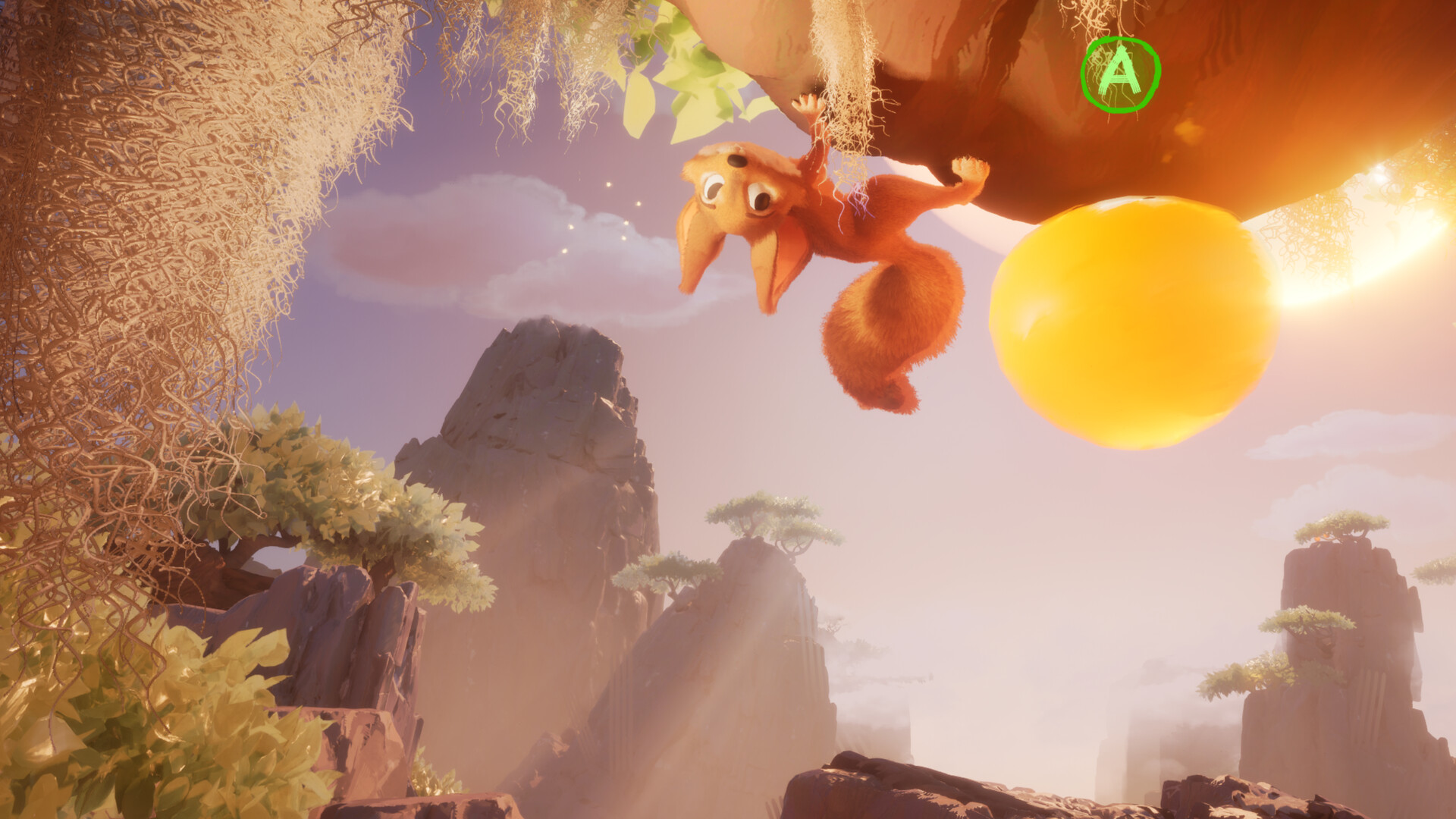
- Test the upside-down run early. Grip any sufficiently large branch, roll to its underside, keep running. Several early treasures sit on branch undersides where a traditional platformer would never think to look. If a nut looks unreachable, check the ceiling.
- Play the Bubble Berries tutorials twice if needed. They are the algebra on-ramp: clear berries by combining opposites, which is a minus a. Everything later, from injectors to decoys, is that idea wearing bigger clothes.
- Wander before you optimize. The forest is a meandering maze and the best rewards hide deep within the woods. Your first hour should be a walk, not a checklist.
- Talk to everything. Quests come from the cast, from local forest spirits to repairing a literal broken toy for the Moon herself. Dialogue is short and the rewards are real.
Beginner Mistakes to Avoid
| Mistake | Why It Costs You |
|---|---|
| Skipping the berry tutorials | They look like filler. They are the entire algebra foundation; injector and decoy puzzles chain straight back into berry logic. |
| Fighting the camera on the underside run | The camera rolls with you when you flip. Resisting the flip is disorienting; letting it roll makes traversal read like flying. |
| Ignoring the glide | The glide is floatier than it looks and covers more distance than the camera suggests. Drops that look mandatory are usually glide-safe. |
| Only sweeping high | The canopy gets the attention, but ground-level nooks hide foraging spots and characters. Sweep low after you sweep high. |
| Grinding puzzles before unlocking tools | Puzzle difficulty gates on unlockables like the Bubble Injector and Spellbook. Doing open-world quests first hands you the tools that make puzzles trivial. |
| Treating it like a task list | Rolic's pacing is deliberately chill. Sprinting the objectives burns content designed to be wandered. |
Core Mechanics: The Systems Under the Canopy
Movement: The Four Verbs
Rolic's traversal kit is scoot, scramble, glide, and the upside-down run. Scooting handles tight branches and quick repositioning. Scrambling climbs surfaces that look too steep. The glide covers gaps and softens every fall. The upside-down run is the star, and it reshapes platforming space: a branch is not an obstacle, it is a road with two surfaces. Level design plays with this constantly, placing treasures and puzzle entrances on undersides. There is even a movement upgrade hiding in the puzzle track: the "Hourglass Easy & Infinite Sprint Unlocked!" puzzle at difficulty 13 grants infinite sprint, which changes overworld routing permanently.
The Algebra Layer, Made Physical
The forest's magic follows algebraic logic without ever showing math. The canonical example: clear berries by combining opposite berries, a minus a. The full puzzle track generalizes it through six categories, and the leaderboard data reveals the whole curriculum:
| Category | Puzzles | Difficulty Range | Core Concept |
|---|---|---|---|
| Tutorial | 8 | 1-8 | Movement, berry cancellation, simplification |
| Addition | 24 | 9-16 (plus bosses) | Injecting values and variables, decoy spotting |
| Multiplication | 5 | 17-19 | Multiply-by-one as a transformation tool |
| Divide | 5 | 20-21 | Multiplying then dividing, mixed bubbles |
| Numerator | 13 | 23-33 | Dividing injectors, negative targets, double variables |
| Denominator | 1 | 35 | Decoy Cross, the current final exam |
What makes it work is that the abstraction is physical. You are not solving for x on a worksheet. You are holding a bubble that shows a value, deciding whether to pop it, inject it, or divide through it, and watching the world respond. Puzzle names teach the vocabulary: "Inject One Variable," "Subtract Target Variable," "Multiply Variable By One," "Reduce Then Divide Variable Injector." By the time a player reaches the Denominator category, they have silently learned to manipulate rational expressions.
For parents: this is genuinely educational-adjacent. It builds the intuition that values cancel and combine before any notation appears. It is not a math curriculum. It is a forest that behaves mathematically.
The Puzzle Economy: Sparkleseeds
Every puzzle awards Sparkleseeds, the leaderboard currency. Reading the live data, the economy rewards speed and simplification:
- Tutorial puzzles award 1 to 6 seeds; most sit at 5-6
- Mid-track Addition puzzles award 2-3, with decoy variants jumping to 5-6
- The "Simplify to earn extra" tutorial explicitly teaches that simplifying your solution earns bonus seeds
- Fast clear times matter: the recorded bests on hard puzzles (34 seconds on "Choose Wisely," 38 on "Decoy Cross") show seeds flowing to speed as much as completion
"Race to One Hundred" is the site's own tagline: the leaderboard race is to 100 Sparkleseeds and beyond. Current live leaders sit at 118 seeds across 45 completed puzzles, which tells you the practical target: complete the track, then re-run puzzles with faster, simpler solutions to push your total.
Unlock Chains Hidden in the Puzzle Track
Four puzzles in the track are unlock events rather than tests:
| Unlock Puzzle | Difficulty | What It Grants |
|---|---|---|
| Bubble Highlighter | 8 | Highlighting for bubble targets |
| Randomizer Wheel | 10 | The randomizer tool |
| Bubble Injector Pop | 15 | The injector, the workhorse of mid-game puzzles |
| Hourglass Easy & Infinite Sprint | 13 | Infinite sprint for the overworld |
| Spellbook | 22 | Late-game puzzle manipulation |
The routing implication is large: the Bubble Injector at difficulty 15 gates most of the Addition back half, and the Spellbook at 22 gates the Numerator endgame. Chase unlocks in order and the difficulty curve smooths out; skip them and later puzzles read as impossible.
The Nut Loop
Enchanted nuts are the exploration currency. Finding them is step one; cracking them open with your wizardry is step two, and cracking earns rewards plus character customizations. The loop is collect, crack, customize. Customization is the progression spice: unlocking new looks personalizes your journey, and the unlock chains above bolt real mechanics onto that cosmetic skeleton.
The Day-Night Cycle
The cycle is not cosmetic. Lighting changes what you can see, some characters and events keep their own schedules, and a morning grove at night reads as a new space. Nighttime is the visual high point, with bioluminescent flora and a quieter soundscape. Practically: solve what night makes solvable, then sweep the same region in daylight for what the darkness hid.
Progression Strategy: The Optimal Order
- Tutorial track (difficulty 1-8) first, always. Eight puzzles, most under 20 seconds each, and they unlock the Bubble Highlighter plus teach simplification bonuses. This is the foundation everything else assumes.
- Open-world quest sweep before deep puzzles. The cast hands out quests that unlock tools and movement upgrades. Doing quests first means entering the Addition track with every advantage available.
- Addition track in difficulty order (9→16). The sequence is deliberate: Subtract Target Variable teaches subtraction, then injectors arrive at 11, decoys at 14, and bubble popping at 15-16. Each puzzle's mechanic is the next puzzle's assumption.
- Grab Infinite Sprint (difficulty 13) the moment it is reachable. Overworld traversal before and after this unlock are different games; the sprint collapses map travel time.
- Multiplication and Divide tracks (17-21) as one block. Multiply-by-one is the transformation trick that division builds on. They are short tracks; do them back to back.
- Spellbook at 22, then the Numerator endgame (23-33). This is where times per puzzle climb from ~15 seconds to 30-90 seconds. Expect "Reduce Then Divide Variable Injector" (87.7s best) and "Divide With Negative Target Variable Injector" (192s best) to take real attempts.
- Denominator's "Decoy Cross" (difficulty 35) last. It is the current mountain: one puzzle, 4 seeds, and the only entry in its category.
- Then re-run for seeds. The leaderboard rewards total Sparkleseeds. Simplified solutions on already-cleared puzzles are where ranks are made; the live #1 has 118 seeds on 45 puzzles, averaging over 2.6 seeds per puzzle, which means heavy optimization of repeat clears.
Step-by-Step: Five Concrete Play Sequences
- The opening hour: tutorials 1-8 straight through → upside-down run practice on the first big branch → berry sweep of the spawn grove → first nut crack → talk to every character in the opening region. You exit the hour with the Highlighter, a customization, and the map's grammar internalized.
- The unlock rush: beeline the Addition track to "Randomizer Wheel" (10) and "Infinite Sprint" (13), ignoring side content. Then take the sprint back into the overworld and re-sweep every region you walked slowly before. This sequence converts puzzle progress directly into exploration speed.
- The injector gate: at difficulty 14-15, decoy puzzles and the Bubble Injector unlock arrive together. Sequence: "Inject One Variable wtih Decoy" → "Bubble Injector Pop Unlocked!" → back to every puzzle you could not solve before the injector existed. Half the track re-opens at once.
- The endgame climb: "Spellbook Unlocked!" at 22 → the Numerator block 23-26 → the three difficulty-33 puzzles → "Decoy Cross" at 35. Budget separate sessions; the 60-to-190-second bests on these puzzles mean each attempt is a commitment, and the fail-retry loop is real puzzle work, not platforming luck.
- The leaderboard push: after clearing the track, pick your five fastest categories and re-run for simplified solutions. The "Simplify to earn extra" rule means a clever two-step solution on a tutorial puzzle can out-earn a sloppy clear on a hard one. Current leaderboard gaps (118 vs 95 seeds at the top) are exactly this kind of optimization gap.
Advanced Tips
- Read puzzles as statements, not obstacles. Look at the bubbles in the space, identify what cancels, and simplify before you act. The game rewards players who solve the equation on paper-in-your-head first and execute second.
- The underside is the highway. The fastest path between two nuts is usually along a branch's underside, because undersides connect canopies directly. Players who internalize underside routing cut collectathon sweep times roughly in half.
- Decoys follow a tell. Decoy puzzles (difficulty 14+) place lookalike bubbles near real targets. The safe habit: identify the target variable first, then work backward to which bubble feeds it. Popping in discovery order is how decoys eat your time.
- Negative injectors flip your intuition. The Numerator track's "negative target variable injector" puzzles punish the mid-game habit of injecting toward zero. Read the target's sign before you inject anything.
- Multiply-by-one is a tool, not a lesson. "Multiply Variable By One" puzzles look trivial. They teach identity transformation, which the division track then requires. Do not skip them even though they are easy.
- Night-first route planning. Because the cycle changes puzzle behavior and visibility, run problem areas at night first, then re-sweep in daylight. Reversing the order wastes trips.
- Seed farming beats completion grinding. A fast simplified re-clear on a 6-seed puzzle beats a slow first clear on a 3-seed one. Optimize where the ratio is friendly.
- The leaderboard is seeded fair. The Puzzle Rally's structure means everyone plays the same 56 puzzles; ranks measure solution quality, not content access. Grinding mid-tier puzzles for speed is a legitimate ladder strategy.
System Requirements and Performance
| Tier | Minimum | Recommended |
|---|---|---|
| OS | Windows 11 | Windows 11 |
| CPU | Intel Core i7-7700K | Intel Core Ultra 7 265K |
| RAM | 2 GB | (unlisted) |
| GPU | RTX 2080 | RTX 4070 Ti SUPER |
| Storage | 2 GB | 4 GB |
That GPU requirement is oddly high for the art style and likely reflects an unoptimized playtest build or engine defaults; the recommended RTX 4070 Ti SUPER for a toylike platformer should be treated as provisional. The 2 GB minimum RAM figure is implausibly low, which reinforces the "temporary numbers" read. Expect revision as builds ship.
Steam Deck and Platform Notes
Windows only so far, with no Steam Deck statement and no ProtonDB report for the current build. The controls are a natural controller fit (the store page tags controller support) and the art style suggests Deck-friendly hardware demands, but the spec listing keeps that uncertain. Revisit after the next demo drops.
Developer Background
Gear Nautilus is Todd Sue, a team of one. His AAA resume spans 23 years: environment and vehicle art, lighting, tool programming, optimization, pipeline work, and ultimately Art Director for Apex Legends, managing the largest team on a multi-billion-dollar franchise. He left that to build scrappy, and to answer the question he frames on the studio site: once he had children, how could his skills make the world better for them? Rolic is the answer, and its design shows the pedigree. The leaderboard infrastructure is production-grade for a "cozy" game; the puzzle curriculum is deliberate enough to categorize, name, and difficulty-score all 56 puzzles; and the art hits a level of polish rare in solo projects. The studio also lists earlier educational projects under its "leveling up learning" banner.
Comparison With Similar Games
| Game | Shared DNA | Where Rolic differs |
|---|---|---|
| A Short Hike | Cozy open-world exploration, glide, whimsical cast | The algebraic puzzle layer and upside-down routing |
| Lil Gator Game | Toylike brightness, collectathon joy, movement-first design | A rules-based puzzle system instead of pure collection |
| Portal | Teaching real reasoning through invisible mechanics | No test chambers; the whole forest is the worksheet |
| Capy's puzzle games | Physical abstraction of math concepts | Open-world framing and a persistent leaderboard |
FAQ
When does Rolic release? Date TBA. The demo rotates through Steam events and beta signups run continuously; wishlist to catch the next window.
Is there really no math on screen? Correct. Bubbles, berries, injectors, and wizardry carry the algebra. Puzzle names hint at operations, but no equations appear.
Is it good for kids? That is the design intent. The tutorial track teaches cancellation and simplification before any harder operation, and failure carries no punishment beyond retrying.
What is the Puzzle Rally? The live leaderboard at rolicgame.com: 56 puzzles across six categories, ranked by Sparkleseeds earned. Current top players sit above 100 seeds.
How long is the game? The full release scope is unannounced. The current puzzle track is roughly 30-60 minutes for a skilled player, longer for a completionist sweep of the forest.
Does the day-night cycle matter mechanically? Yes. Visibility, some characters, and certain puzzle behaviors change with the light. Some areas reward a night-first visit.
Is it on Steam Deck? Unconfirmed. Windows-only listing, controller support tagged, no verification yet.
Quick Reference Card
| Topic | Answer |
|---|---|
| Release | TBA; demo rotations + beta signups |
| Puzzle track | 56 puzzles, 6 categories, difficulty 1-35 |
| Currency | Sparkleseeds; leaderboard race to 100+ |
| Key unlocks | Highlighter (8), Randomizer (10), Infinite Sprint (13), Injector (15), Spellbook (22) |
| Final exam | "Decoy Cross," Denominator, difficulty 35 |
| Movement | Scoot, scramble, glide, upside-down run |
| Seed rule | Simplified solutions earn extra |
| Routing | Undersides of branches are highways |
| Specs | i7-7700K, 2 GB RAM, RTX 2080 (provisional, expect revision) |
| Deck | Unconfirmed; controller support tagged |
Screenshots