Official game
Play Truckful
This game is hosted by Steam. Continue to the official page to play or download it.
Buy on SteamOverview: What Kind of Game Is Truckful?
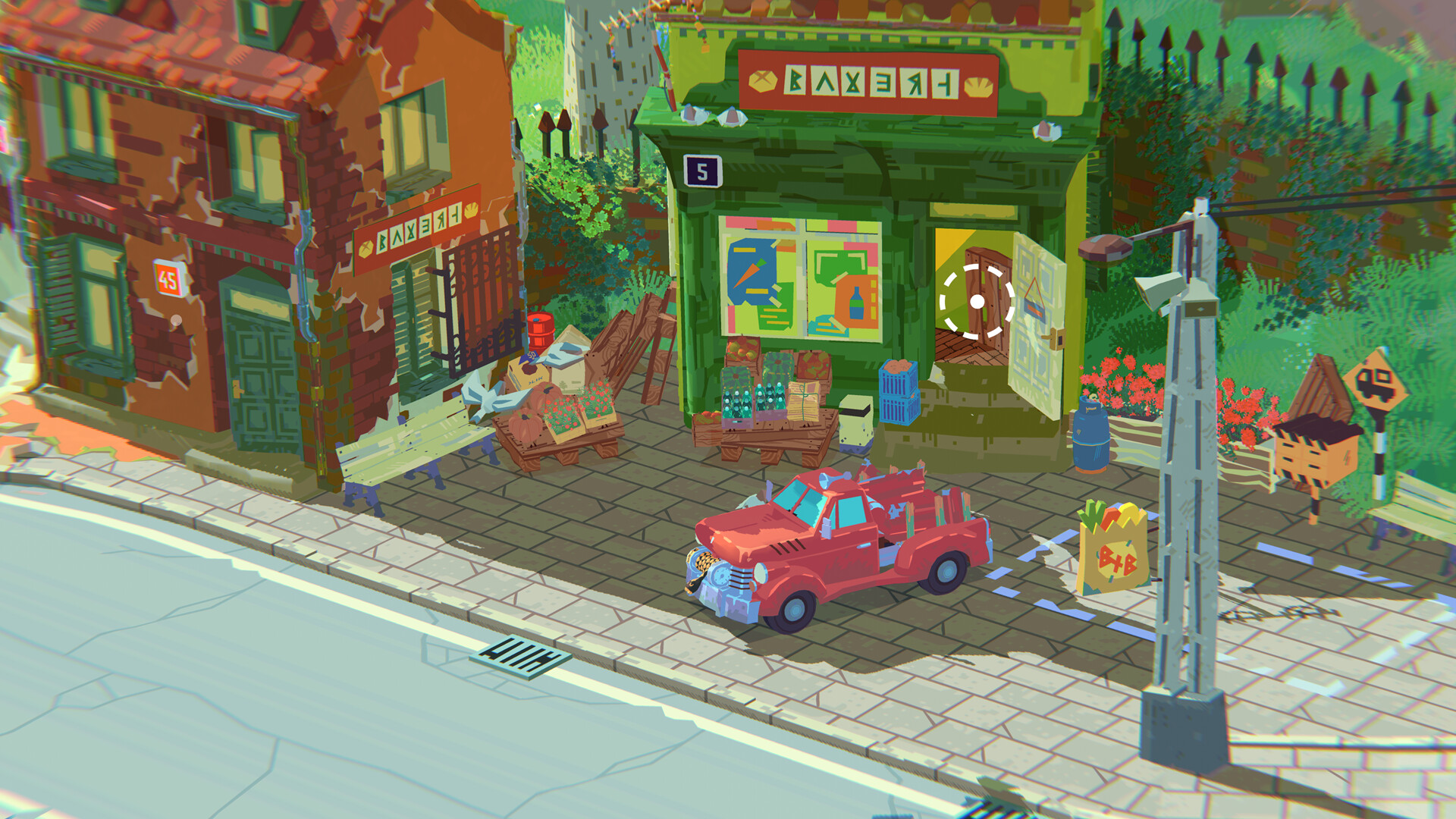
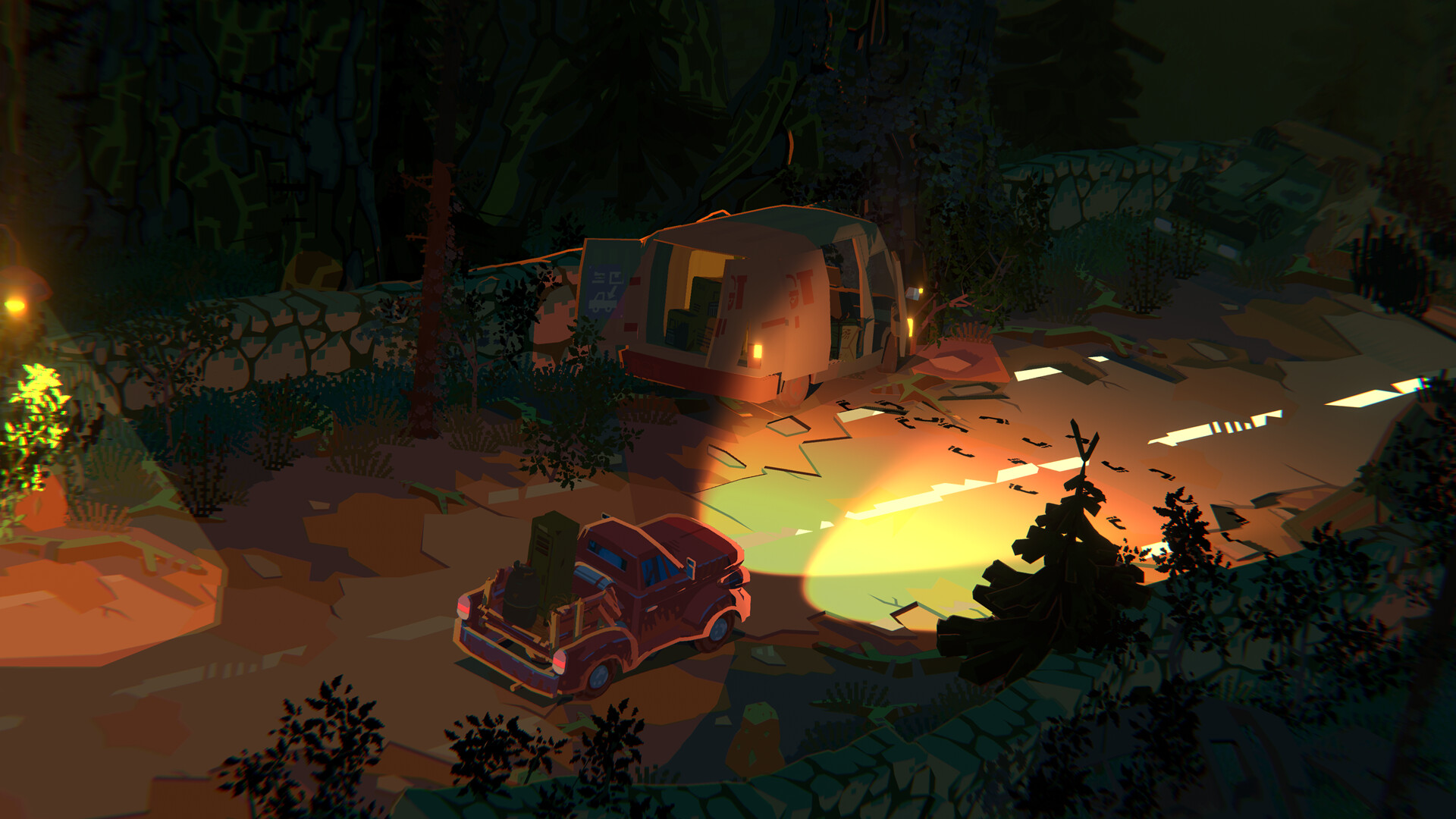
Truckful is a single player physics based delivery adventure from MythicOwl, published with Pocketpair Publishing. You drive a rugged pickup truck through a countryside valley that looks peaceful and is anything but. Villagers need goods. The truck bed carries them. The old forest at the valley edge watches every run.
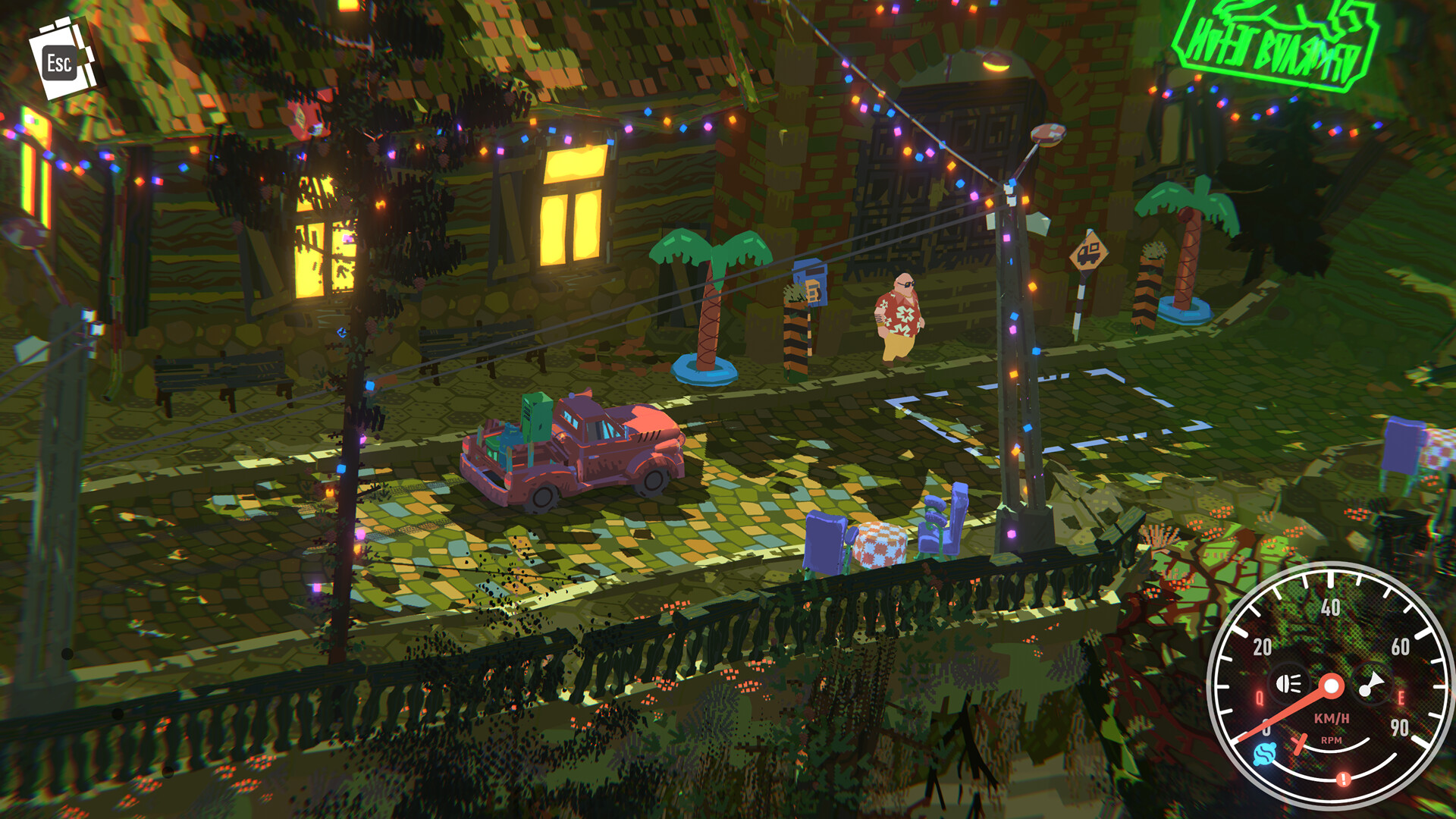
The game sits in a rare spot between cozy and tense. The tone is warm: sunny fields, sleepy towns, a cast of quirky locals who reward you with parts, scrap and stories. But the driving is genuinely demanding. Cargo shifts, tips and breaks. Mud, marsh, quicksand and forest debris punish speed. And at night, the Ghost Truck roams the woods, an encounter that has made more than one demo player rethink the "cozy" label.
This is a game for players who enjoyed SnowRunner but wanted a smaller, gentler world, or Death Stranding's delivery loop without the hiking. It is also a game for people who like mysteries: landmarks, ruins, cave systems and glowing footprints hint that the valley hides more than rusty tractors. Expect a slow burn, not a thrill ride.
| Field | Detail |
|---|---|
| Genre | Delivery adventure / driving / cozy mystery |
| Developer | MythicOwl (Poland) |
| Publisher | MythicOwl, Pocketpair Publishing |
| Platforms | Windows, macOS, Linux (Steam), Steam Deck verified target |
| Price | TBA (not yet announced) |
| Players | Single player |
| Release window | September / October 2026 |
| Demo | Tiny Teams 2026 build live on Steam |
| Controller | Full support, gamepad recommended, DualShock + DualSense |
| Difficulty | Gentle to learn, punishing at the edges |
| Session length | 20 min demo slice; 45 to 60 min for the Next Fest demo |
The demo has passed 10,000 players and the game crossed 100,000 Steam wishlists before its full reveal cycle finished. The audience is real and the development has been unusually open: sixteen community updates have walked players through almost every system, which means the guide below is built on confirmed mechanics, not guesswork.
Getting Started: Your First 30 Minutes
The Tiny Teams 2026 demo is the right entry point. It is shorter than the earlier Next Fest build but far more polished, with reworked level design, a new packing view, a map, refined physics and better performance on low end PCs and Steam Deck.
Your first loop looks like this:
- Take an errand from the town board or a villager. The starting jobs are deliberately simple: one item, one destination, a route you can see from end to end.
- Open the Packing View before you drive. This is the single most important habit in the game. The demo's updated packing grid shows exactly how cargo sits in the bed. Load once, load right, and you will not be redoing trips.
- Drive gently on the first road. The opening route mixes pavement, gravel and a soft shoulder. Feather the throttle. Watch the cargo in your mirrors or the on screen indicator.
- Deliver at the marker. Talk to the recipient, collect your reward, and check the notebook for a new entry.
- Spend your first money on load capacity. One upgrade that lets you carry two small jobs in a single trip beats any engine work at this stage.
- Detour before returning. Every demo route hides a collectible, a scrap pile or a shrine off the main road. The spy pigeon collectible alone is worth the detour.
Beginner mistakes that cost runs:
| Mistake | What happens | The fix |
|---|---|---|
| Full throttle on gravel | Cargo slides, fragile items crack | Pulse the throttle; let momentum carry you |
| Ignoring the packing grid | Unbalanced bed tips on the first hill | Center heavy items over the axle |
| Braking hard in mud | You dig in and lose minutes | Coast through mud; brake before it, not in it |
| Skipping the notebook | Missed quests and unlockables | Check it after every delivery |
| Avoiding the forest at night | You miss the game's best moment | Go in with a full bed and a save shrine nearby |
| Buying engine upgrades first | More speed, same cargo capacity | Capacity beats speed until mid game |
Core Mechanics Explained
Cargo Physics and the Packing View
Cargo is the heart of the game and it behaves like real mass, not a menu icon. Every item has weight, size, fragility and a personality.
The confirmed cargo archetypes:
| Cargo type | Behavior | Strategy |
|---|---|---|
| Ice cold fish | Time sensitive, spoils if slow | Take the shortest route, accept minor bumps |
| Grandma vase | Extremely fragile | Slow, steady, no sudden stops, padded position |
| Boxes and crates | Stable but heavy | Stack low, keep the center of gravity down |
| Odd shaped loads | Shift and roll in corners | Secure with the packing grid, corner wide |
| Scrap and parts | Durable, low value | Fill empty space, take risky shortcuts |
The Packing View is your loading bay interface. It shows the bed as a grid, lets you see how items interlock, and was reworked in the Tiny Teams demo for better visibility. Good packing is a real skill: a bed loaded with the heavy item forward and low handles hills far better than one where the weight sits high and rearward.
Cargo has durability. Some items survive a rollover and can be recovered. Others shatter. The game tells you which is which by how the item behaves when you load it, and by the delivery description. When in doubt, treat it like glass.
Driving Model and Terrain
Physics based handling means your inputs are suggestions, momentum is the boss. Key terrain types:
- Gravel and dirt roads: Cargo vibrates. Speed shakes fragile items apart.
- Muddy puddles and marsh: Deep mud steals speed and can beach you. Approach at an angle, keep the wheels rolling.
- Dusty quicksand: The classic trap. Stop moving and you sink. Keep a gentle, constant throttle.
- Water logs and wood debris: Forest obstacles that block or damage. Slow down, pick a line, or find the alternate path.
- Steep hills and uneven ground: Unbalanced loads tip. Low gear, straight line, steady throttle.
Day and night change the experience. Random events occur while driving in both, but the forest at night is a different place. That is when the Ghost Truck appears.
The Ghost Truck
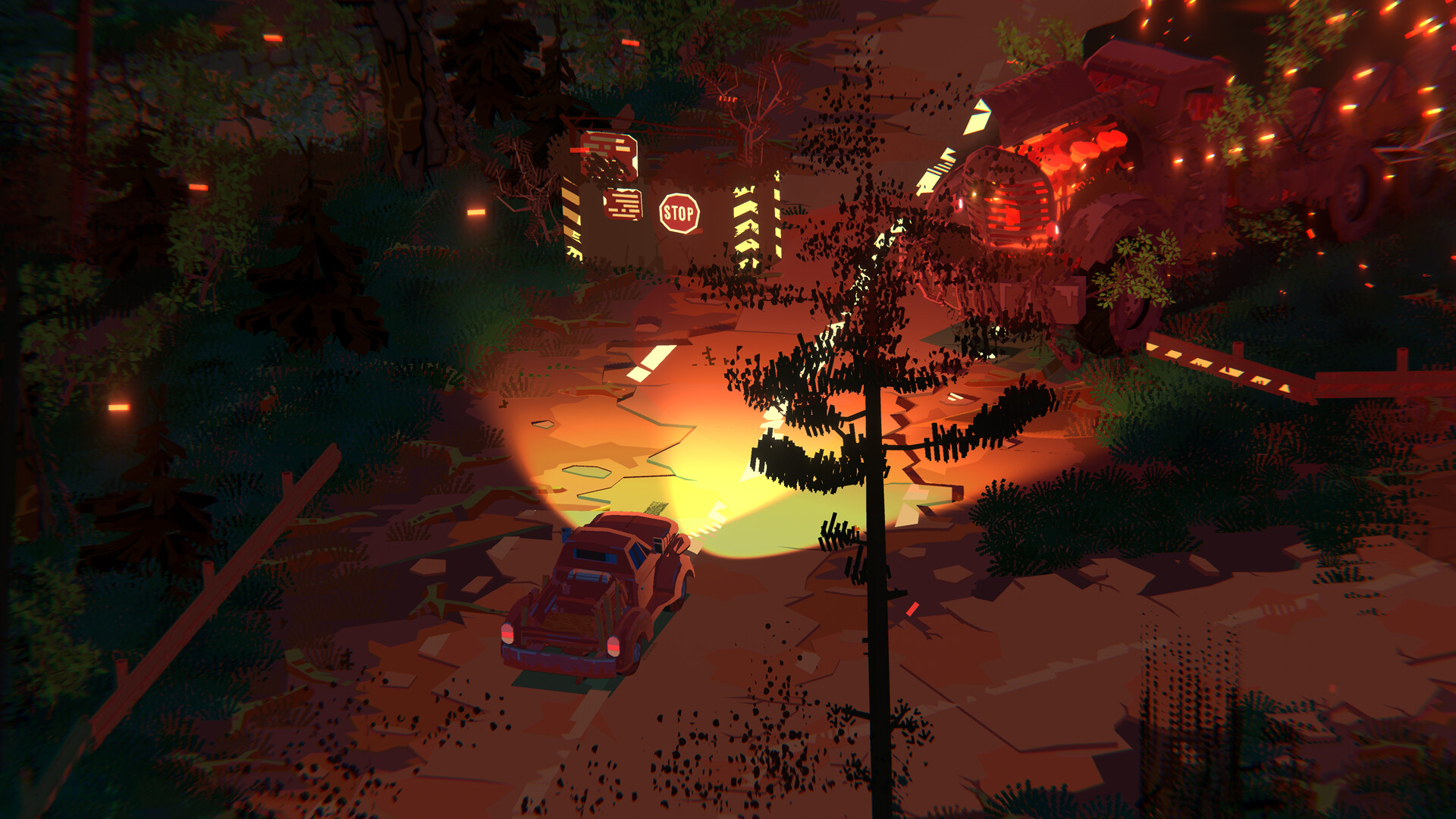
The Ghost Truck is the game's signature threat, an evil truck that roams the forest at night. The first demo introduced it. Demo 2.0 reworked the encounter, and the full game features it prominently. It is not a scripted cutscene: it is an active presence that chases, blocks and forces you to drive evasively while carrying cargo you cannot afford to drop.
Ghost Truck survival rules:
- Do not outrun it in a straight line. It is faster than you on open road.
- Use terrain. It struggles with mud, logs and tight forest turns where your lighter truck shines.
- Keep your bed loaded light when you know you will be in the forest at night.
- Save at a shrine before the encounter. Death after a rollover is optional, but recovery is easier with a recent save.
Upgrades, Customization and the Garage
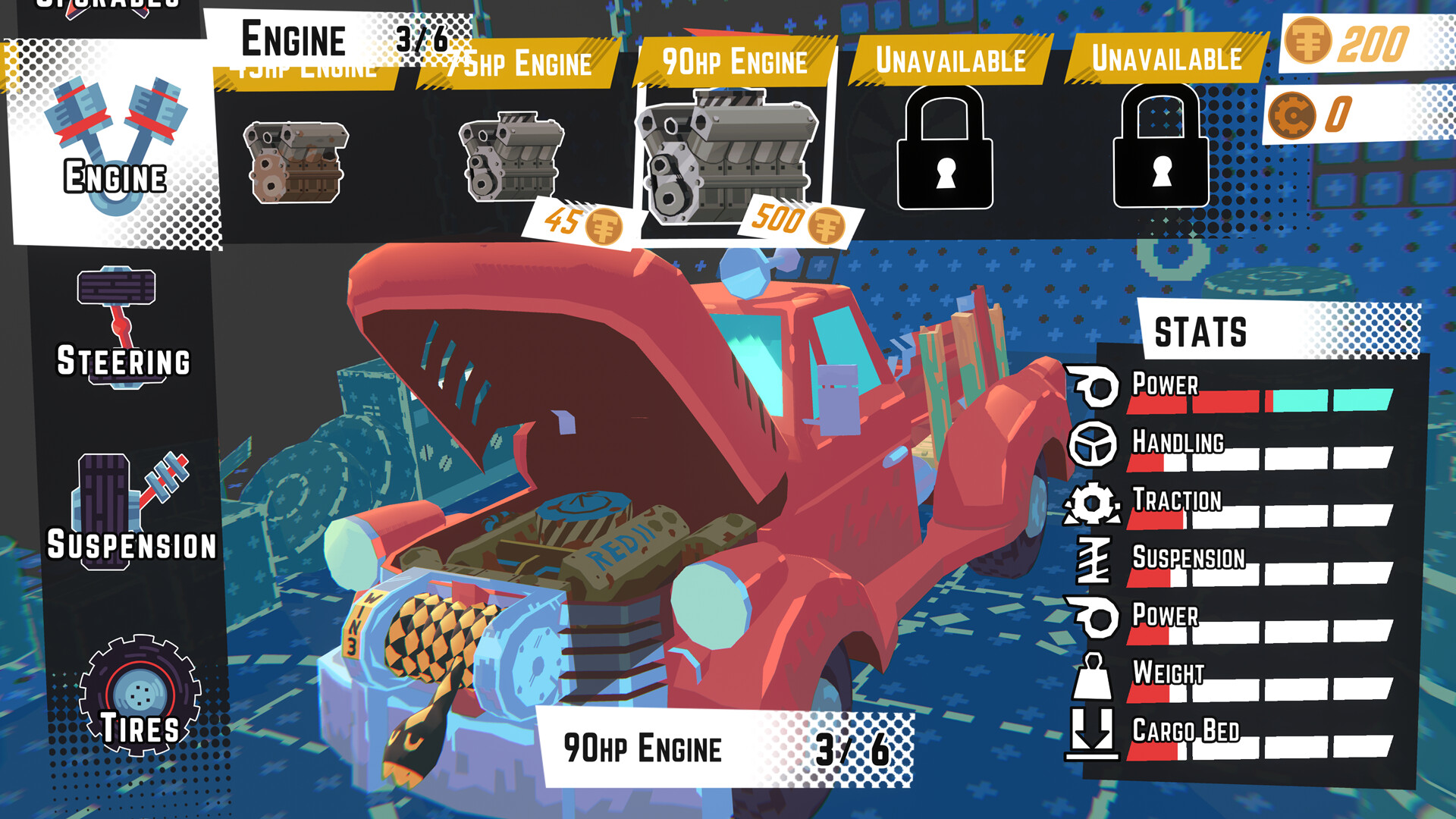
Theresa's Garage is the upgrade hub, and in demo 2.0 it became a fully interactive drive in space where you install equipment and paint your truck. Confirmed upgrade directions:
- Weight handling: The truck carries heavy loads without wallowing. Improves stability on hills.
- Load capacity: More cargo per trip. The economic backbone of the game.
- Boost equipment: Required for underground passages and steep traversal challenges.
- UV light upgrade: Reveals glowing footprints and supernatural evidence invisible to the naked eye. This is the mystery path.
- Paintjobs and customization: Six new paintjobs arrived in demo 2.0. Cosmetic, but they make the truck yours.
The upgrade philosophy: upgrades unlock the world, not just numbers. Truckful is metroidvania style in its exploration. New paths and roads open only when the pickup is upgraded enough to handle them. The boost opens caves. The UV light opens the mystery trail. Capacity opens longer routes.
Dual Currency: Money and Scrap
Completing missions pays money. Exploring pays scrap.
Scrap is the second currency and it comes from out of service equipment scattered around the countryside: old machinery, railway parts, abandoned gear. You haul it to Red's Scrapyard, park on the marked red spot at the scrap machine, and recycle it into value. Scrap upgrades your pickup.
This creates a beautiful loop: exploration feeds the garage, the garage feeds harder routes, harder routes reach new junk to recycle. Villagers also help with upgrades and scrap collection as you earn their trust, so the social layer and the economy are the same system.
The Notebook, Map and Shrines
The notebook is part menu, part in world object, and it is your command center: quests, unlockables, characters and the enemies glossary all live there. The map, added in the Tiny Teams demo, tracks objectives and helps you explore the countryside.
Shrines are savepoints. A new type of shrine was added in the Tiny Teams build. When you roll the truck, you choose: load the last shrine, or attempt a physics based recovery. Dropped cargo does not end the run. You can always drive back and collect it, assuming it survived.
The World: Characters, Locations and the Forest Mystery
The Valley
The entire rural region sits in a valley ringed by a dense, dangerous forest. Inside the valley: fields, small paths, regular roads, towns, settlements and facilities including an abandoned school, a clinic and a hotel. Signs of decay are everywhere: ruined houses, wrecked cars, abandoned military equipment. A rusting railway network crosses the whole region, with viaducts, tunnels and freight stations, and mine shafts and underground shortcuts run beneath everything.
Navigation has no GPS. Road signs are your best friend, and learning to read them is a core exploration skill. Place names in the demo are famously untranslatable, which is part of the charm.
The Characters
All sixteen characters are locked in. Confirmed cast so far:
| Character | Role | Notes |
|---|---|---|
| Rotti | First villager you meet | Your introduction to errands and the delivery loop |
| Grandma Theresa | Garage owner | Runs Theresa's Garage, the upgrade hub |
| Mick | Bar owner | Laid back retired rockman, local politics, bureaucracy shenanigans |
| Red | Scrapyard host | Ex military, dismissed in the 1970s for questionable activities, now runs the junkyard and knows the dangerous forest routes to the western logistics center |
| Hotelier | Hotel staff | One of the settlement faces |
| Baron | Town figure | More story than gameplay, so far |
Villagers are not quest dispensers. They reward trust with parts, scrap and lore, and their requests gradually reveal the countryside's personality. Red's backstory alone, the military past and the western logistics center, hints at a larger secret network under the valley.
The Old Forest Mystery
The forest is the narrative spine. Locals mention it in hushed tones. Legends say something lurks in the shadows of the branches, and the game's own marketing says it plainly: the old forest is watching.
The mystery is delivered through exploration:
- Hidden paths and misty wetlands tell stories of the past.
- Cave entrances hide around side roads, covered by branches. Inside: old ruins, puzzling structures, traversal challenges, and sun rays poking through holes in the ground.
- Glowing footprints are visible only with the UV light upgrade. Follow them and you will find baffling evidence of a supernatural presence.
- Landmarks and shrines sit behind tree branches and in foggy clearings.
- The Ghost Truck is both obstacle and clue: a truck that roams at night cannot be explained by rust and rain.
The story is gated by errands. Complete villager quests, earn trust, and the forest sections open up. Rushing the story is not possible and not wise: the mystery is in the details you would miss at speed.
Progression Strategy
Upgrade Priority Order
- Load capacity first. More cargo per trip is more money per trip. It compounds immediately.
- Weight handling second. Heavy loads become stable on hills, which means fragile cargo survives longer routes.
- Boost third. It unlocks the underground passages and cave network, which hold scrap, lore and shortcuts.
- UV light fourth. The mystery trail is endgame content and needs the boost routes to reach.
- Paint and cosmetics whenever. Fun, but zero gameplay value.
Route Economy
The most efficient delivery pattern is a triangle, not a line:
Town board → load full bed → deliver farthest job first
          → deliver nearer jobs on the way back
          → detour to scrap piles and shrines
          → return to town, sell scrap at Red's, repeat
Farthest first works because cargo spoilage and fragility scale with distance. A vase does not care whether it breaks at mile one or mile five, but the fish does. Deliver the time sensitive load to the far marker, then work backward.
Scrap Farming
Scrap is the hidden progression currency. Every trip should end with at least one piece of recyclable equipment found and hauled to Red's. Early game, the abandoned railway yards are the richest source: rusting freight stations and wrecked cars spawn consistently. Park precisely on the red spot at the scrap machine or the recycle fails.
Step by Step Strategy Sequences
Sequence 1: The Perfect First Delivery
- Accept the simplest errand from the board.
- Open the Packing View. Place the item dead center, low in the bed.
- Drive the first leg in second gear. Feather the throttle on the gravel section.
- Brake before the corner, not in it. Accelerate out gently.
- Park at the marker. Do not rush the parking: backing into the spot is smoother than nose first.
- Talk to the recipient. Check the notebook for the new quest entry.
- Before returning, scan the road edges for a shrine, a scrap pile or a collectible.
Sequence 2: The Fragile Cargo Run
- Read the job description. Vase means fragile. Plan a route with the least bumps, not the shortest distance.
- Pack the vase low and center, surrounded by soft items if any are available.
- Drive in a lower gear than feels natural. Momentum is the enemy of glass.
- On hills, take them straight. Angling across a slope shifts the load sideways.
- If the cargo indicator shows bouncing, stop, let the bed settle, and continue slower.
- Deliver and collect the bonus for pristine condition if the game offers one.
Sequence 3: The Time Sensitive Fish Run
- Identify the shortest viable route on the map, including any shortcuts through fields.
- Pack the fish last so it sits on top and unloads first.
- Drive fast but intelligently: full throttle on pavement, controlled slides on dirt.
- Accept minor cargo damage on the way. The fish's timer matters more than the box it sits in.
- Do not stop for scrap on this run. Time is the currency.
- Deliver, collect the speed bonus, and take the slow scenic route back to farm scrap.
Sequence 4: The Ghost Truck Escape
- Save at the shrine closest to the forest before nightfall.
- Enter the forest with a light bed. Heavy cargo kills your turning.
- When the Ghost Truck appears, do not brake. Braking lets it close the gap.
- Aim for the tightest mud and log sections. Your lighter truck turns where it cannot.
- Use the boost if installed to clear a log gap it has to slow for.
- Break line of sight around a hill or tree line, then change direction.
- Once the encounter ends, deliver the remaining cargo and claim the reward.
Sequence 5: The Underground Cave Expedition
- Equip the boost upgrade. It is mandatory for cave traversal.
- Find a cave entrance hidden off a side road, usually under branches.
- Drive slowly through the entrance tunnel. Sun rays through holes in the ground are pretty, but the terrain is uneven.
- Watch for glowing footprints. If you have the UV light, they reveal the supernatural trail.
- Collect the scrap and lore inside. Caves are dense with both.
- Exit via the underground shortcut to emerge on the far side of the valley, skipping a long surface detour.
Sequence 6: The Scrap Economy Loop
- Start a delivery run with an empty bed and a full route planned.
- Deliver the paid job first so the trip is profitable even if you crash.
- On the return, sweep the railway graveyard and wreck sites for recyclable equipment.
- Haul everything to Red's Scrapyard. Park on the red spot.
- Recycle into scrap, then spend scrap on the next upgrade tier.
- Repeat until load capacity and weight handling are maxed, then pivot to boost and UV light.
Advanced Tips
- The bed is a seesaw. Heavy cargo forward and low makes the front wheels bite on hills. Heavy cargo rearward makes the rear slide on corners. Use the packing grid to place weight where the terrain demands.
- Mud is a momentum game. Stop in mud and you are stuck. Keep a constant, gentle throttle and pick a straight line. Turning in deep mud digs ruts.
- Quicksand punishes panic. Full throttle spins the wheels and sinks you. Steady throttle, slight steering corrections, and you will crawl out.
- Road signs beat the map early. The map is new and helpful, but the full game world is built for sign based navigation. Train yourself to read them and you will never be lost when the map gets cluttered.
- Scrap spawns are farmable. Equipment respawns in known zones. If a wreck gave you scrap once, it will likely give it again after time passes.
- The notebook is a spoiler free checklist. It tracks unlockables and enemies. Use it to decide which forest route to attempt next.
- Night driving changes the route. Random events differ at night. If a daytime route is blocked, try it after dark, and vice versa.
- The Ghost Truck is beatable, not just escapable. Skilled players can bait it into mud and log traps where it gets stuck, then drive past. The reward for a clean escape is worth the risk.
- Upgrades change the map. A path that was a dead end at capacity one becomes a shortcut at capacity three. Revisit old areas after every upgrade.
- Steam Deck players: the demo runs 40 to 60 fps in most areas and the full release targets a native Linux build. Lower the reflection quality if the forest dips.
FAQ and Common Mistakes
When does Truckful release? The developers target September or October 2026. The Steam page currently says 2026.
Is there a demo? Yes. The Tiny Teams 2026 demo is live on Steam. It is shorter but more polished than the Next Fest build.
Is the demo representative of the full game? Partially. The full game has all levels, missions, dialogues, cargo types, truck upgrades, characters and animations complete. The demo is a polished slice of the loop.
How do I get scrap? Explore. Out of service equipment, railway parts and wrecked machinery across the valley can be hauled to Red's Scrapyard and recycled at the scrap machine. Scrap upgrades your truck.
What is the UV light for? It reveals glowing footprints and other supernatural evidence that is otherwise invisible. It is the key to the forest mystery content.
Can cargo break? Yes. Some items are destroyed in a crash. Others survive and can be recovered after a rollover. Fragile items like the grandma vase are the most likely to shatter.
What happens when I die? You choose: load the last shrine savepoint, or attempt a physics based recovery of the truck. Dropped cargo does not end the run.
Is the Ghost Truck a boss fight? It is a roaming encounter, not a traditional boss. It appears in the forest at night and chases you. You escape, trap it, or outmaneuver it.
Do I need a controller? No. WASD and arrow controls work, with the demo patching improved keyboard support. But the game recommends a gamepad and supports DualShock and DualSense.
Is there combat? No traditional combat. The Ghost Truck is the closest thing to an enemy, and the notebook's enemies glossary suggests more threats exist in the full game, but Truckful is a delivery and exploration game at heart.
Common mistake: buying engine upgrades early. Speed without capacity means you haul the same small loads faster. Capacity upgrades pay for themselves in trips saved.
Common mistake: ignoring the packing view. Players who load blind tip over on the first hill and blame the physics. The physics are fine. The packing was wrong.
Common mistake: treating every cargo like glass. The fish wants speed. If you crawl every run, time sensitive jobs fail. Read the job, adjust the driving style.
Common mistake: skipping the forest. The forest is where the scrap, the lore, the caves and the Ghost Truck live. Cozy players who stay on paved roads see a third of the game.
Final Verdict
Truckful is a delivery game with real stakes and a mystery with genuine pull. The physics give every trip a reason to be careful. The scrap economy gives exploration a purpose. The characters give the valley a soul, and the Ghost Truck gives the forest teeth. For fans of cozy games who want a little danger in their sunshine, this is shaping up to be the best delivery adventure of 2026.
Last reviewed by Game How To Editorial. We play each game, verify mechanics against official sources, and update guides when the game changes.
Launch Update: The Full Game Is Out (October 9, 2026)
Everything above was written against the demo. The full game launched October 9, 2026 on Steam and Google Play, and four patches landed in the first week. The core advice survives contact with the release, but several facts have changed. This section is the post-launch patch of the guide.
What Changed at Launch
| Topic | Demo-era advice | Current reality (patch 1.0.4) |
|---|---|---|
| Release window | Sept/Oct 2026, TBA price | Released Oct 9, 2026, $14.99 regional pricing varies |
| Camera | Fixed automatic camera | Manual camera control added: right stick or Numpad 4/6/8/2, R3 or Numpad 5 to reset |
| Monster name | Ghost Truck | Two threats exist: the Ghost Truck chases and the Ghost Train spawns near tracks (patch 1.0.3 rebalanced it) |
| Reset | Reset through checkpoints | Hotel Hub has an emergency escape route; a teleport cheat exists (below) |
| Map | Map in pause menu | Map opens with TAB/Select, arrow keys pan it, and your position shows without GPS |
| Endgame | Unknown | No free roam after the ending. Finish side content first; 1.0.3 added mission replay from the Journal |
| Steam Deck | Targeted | Verified-track, 60 fps on high settings in most areas, stability patches in 1.0.3 |
The First Hour, Corrected by Release Reviews
The most repeated complaint in launch reviews is a story initialization bug: some players spawned into the valley and drove around for an hour unable to interact with any NPC. If your opening feels aimless and nobody talks to you, restart the game before judging it. The story starts properly on a clean boot.
Second: the camera. The launch camera swings wide on turns and hides the road. Patch 1.0.4 answered it with manual control, so the advice now is simple: the moment you spawn, tap the right stick and learn the swing. Camera modes show as an icon next to the speedometer (Automatic, Manual, or Manual paused by a fixed-view zone). Turn the truck around and the camera returns to automatic.
Patch-by-Patch Survival Notes
1.0.1 fixed the double-input bug that rotated cargo twice per press and enabled PlayStation controllers. If you played the demo, the feather-touch cargo rotation you learned is obsolete; rotation is now single-step.
1.0.2 killed the worst softlocks and, importantly, added a cheat menu: open the Journal and press X (or click the green pine icon) ten times. From there you can teleport to Theresa or receive money. Use it if geometry eats your truck. The keyboard rebinding file lives at %USERPROFILE%\AppData\LocalLow\MythicOwl\Truckful\keyboard.txt and appears after your first run.
1.0.3 is the QoL patch. Safe travel to Theresa with a new respawn zone at her hub, bigger pickup radius for lost cargo, hidden optional mission markers while a story mission is active, and Ghost Train balancing. If the clinic escort mission through the mud flooded your engine with no route around it, this patch is your fix: Theresa's hub respawn gives the mud crossing a safety net.
1.0.4 is the camera patch described above, plus mission replay from the Journal's Missions tab, which partially softens the no-free-roam-after-ending problem.
Revised Upgrade Wisdom
Launch reviews surfaced a pacing truth the demo could not show: early story missions hand you truck bed upgrades faster than you can spend scrap, then dry up. So the priority order shifts:
1. Whatever the story gives you free, take immediately
2. Load capacity → still first purchased upgrade
3. Snorkel before any mud/water crossing mission (the clinic escort needs it; the water level gauge on the speedometer tells you when water is too deep)
4. Sticky cargo before fragile stacking runs
5. Boost for caves, UV light for the mystery trail
The snorkel is the single most common confusion point in negative reviews. The game routes one escort mission through deep mud and water with no obvious detour. The speedometer's water level detector warns you; the snorkel upgrade (listed in official materials as the water-crossing upgrade) is the answer, not a hidden road.
The No-Free-Roam Warning, Expanded
One launch review says it plainly: do everything you want before the ending game deliveries. Once the credits roll, the valley closes. The 1.0.3 endgame popup warns you, and 1.0.4's mission replay covers story missions, but scrap collecting, collectible hunting and free exploration are cut off. Before starting the final deliveries: clear the notebook, dump your scrap into upgrades, and grab any collectibles you skipped.
Known Rough Edges (Still Unpatched)
- Terrain jank: jagged fence protrusions can catch the truck in spots the camera hides. If you are wedged, use the cheat teleport rather than retrying.
- No in-cab radio. Reviews keep asking; the game ships muted by design. Expect it as future content.
- Loading screens reset your truck to stationary.
- The parking/bonus objectives in time attack missions need obstacles cleared first; scout the route before attempting the timer.
Verdict, Updated
The release reviews landed Very Positive (44 of 53 at review time) and the pattern is consistent: the packing-tetris loop, the art and the mystery carry the game; the camera (now largely fixed by 1.0.4), terrain jank and mission clarity are the friction. If you bounced off the demo's camera, the patch directly addresses your complaint. Buy it for the deliveries and the forest mystery; go in knowing the ending locks the world.
Screenshots