Daily Pick
One deeply researched guide worth reading today.
A practical route through the systems that matter most, written to help new players make confident decisions quickly.
Overview: One Desk, One Night, One Town's Fate
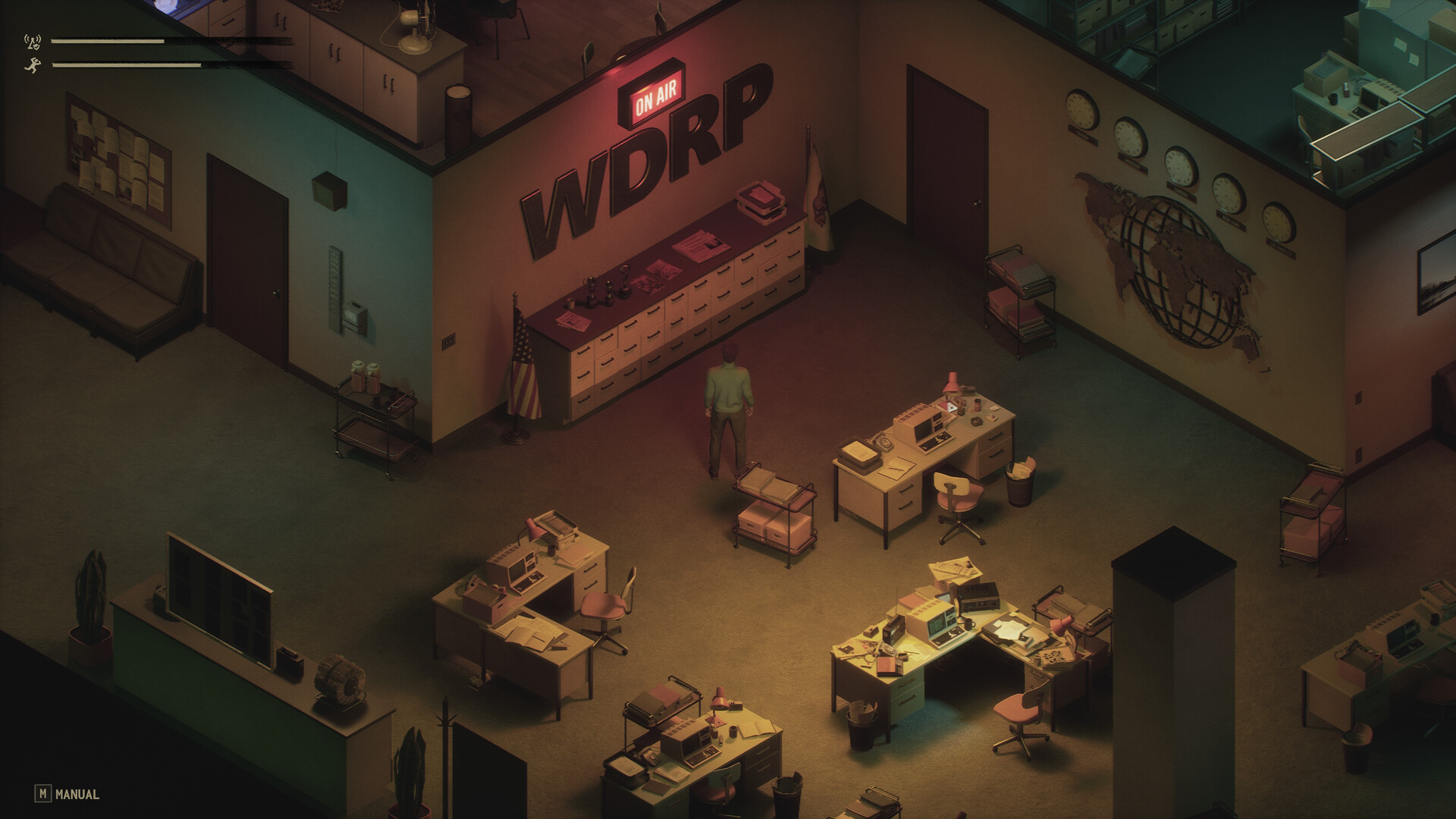
Static Hour is a narrative newsroom thriller from Barkbyte Interactive, the debut title from a studio founded by creative director Claire Sarmiento, a lawyer turned game developer. The setup: a small American town in the 1980s, midnight shift, and you are the only editor on duty when the reports start arriving. Violence is spreading. Families are attacking each other. Emergency rooms are overflowing. The government announces a lockdown and sends in troops. Nobody, including your own sources, agrees on what is actually happening.
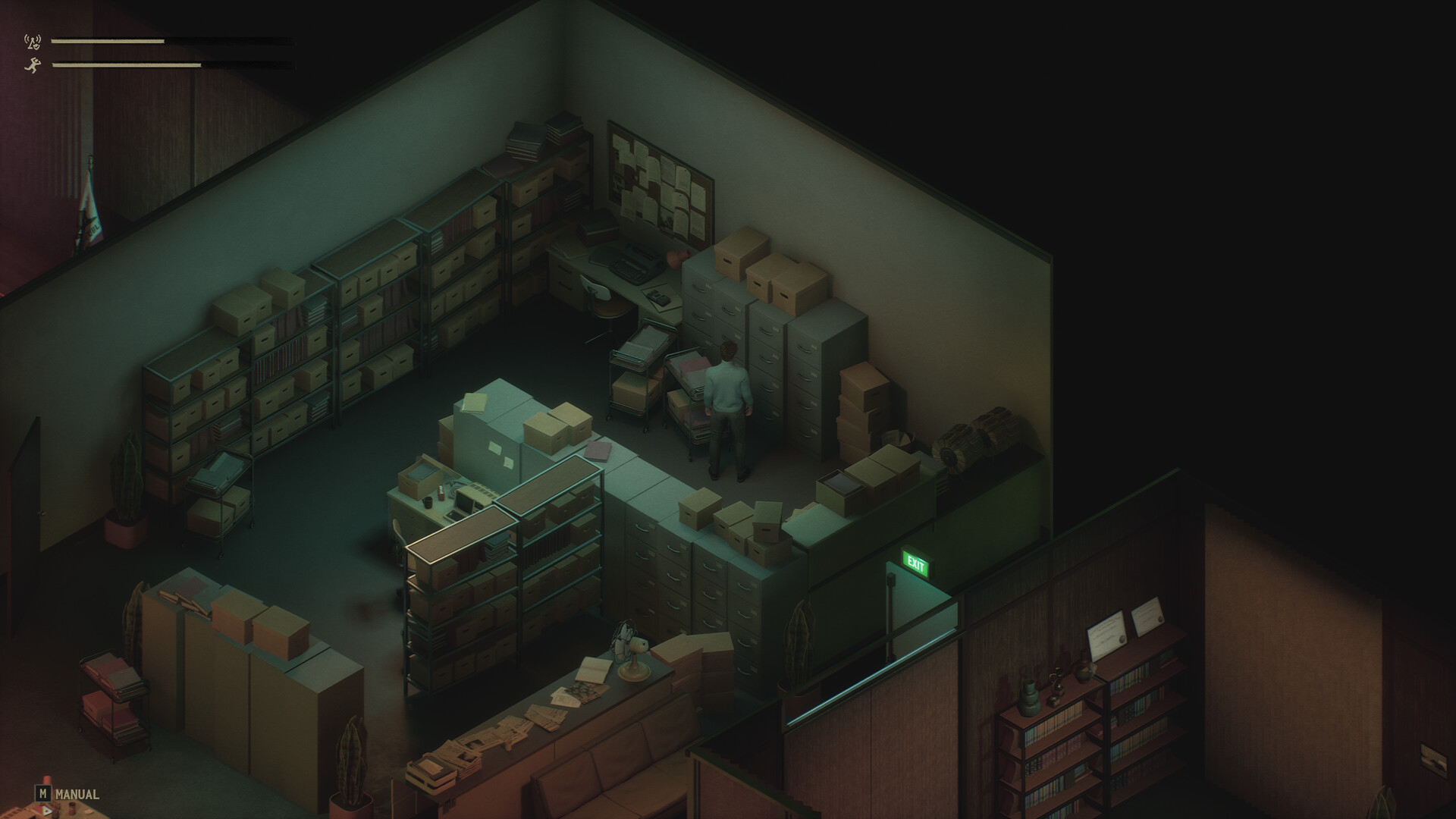
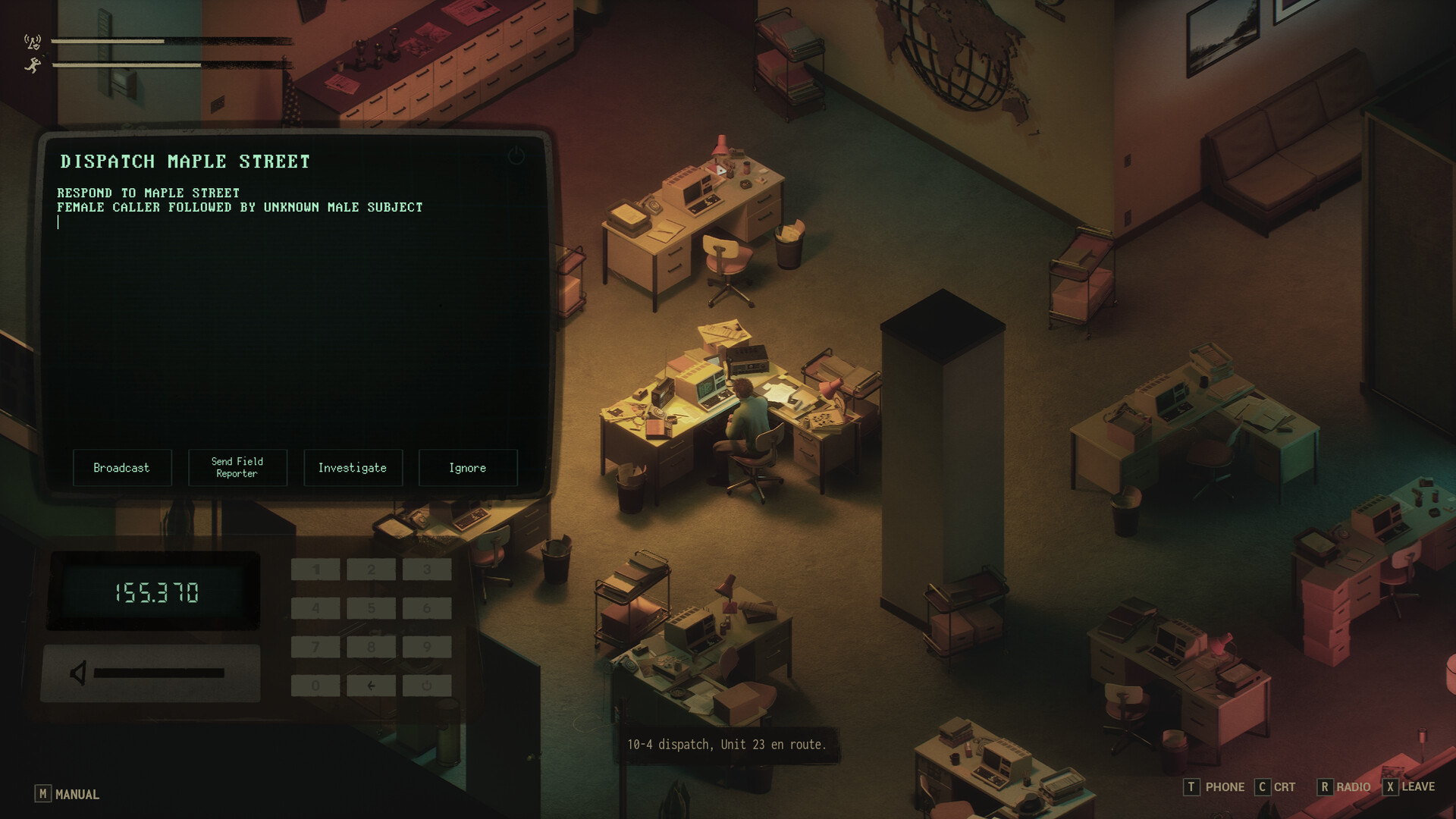
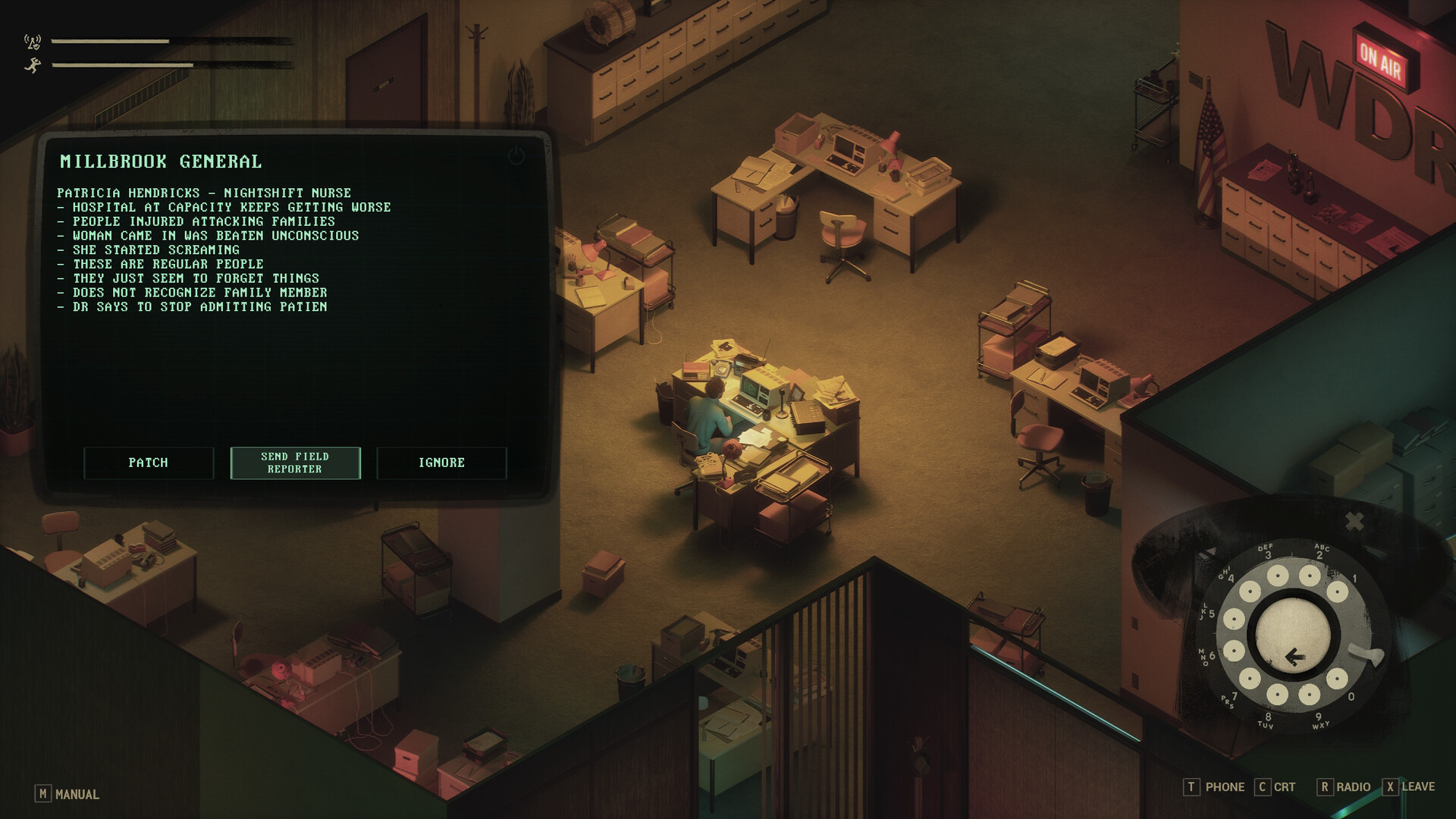
You never leave the newsroom. The entire mystery arrives through a rotary phone, a radio scanner, teletype feeds, paperwork, your colleagues' desks, and strange audio signals buried in static. You gather fragments, verify or discard them, dispatch field reporters, and decide what goes on air. Every broadcast moves two meters, public fear and public trust, and the town's reaction feeds back into the reports you receive. What you air, what you hold, and what you get wrong shapes the night in ways the game warns you may not be able to undo.
| Field | Detail |
|---|---|
| Genre | Narrative thriller, adventure, simulation, psychological horror |
| Developer | Barkbyte Interactive (debut) |
| Platform | Windows PC via Steam |
| Players | Single-player, Family Sharing, captions available |
| Release | "Coming soon" on Steam; Q3 2027 window reported from the press release |
| Perspective | Isometric 3D newsroom |
| Languages | English (full audio), French, German, Spanish (Spain + LatAm), Japanese, Simplified + Traditional Chinese, Portuguese-Brazil |
| Ratings | Brazil 14+, Germany 16+, Indonesia 18+ |
| Content notes | Audio/written references to injury and death; tobacco use |
| Steam | store.steampowered.com/app/4910010 |
Who it suits: players of Papers, Please, Not For Broadcast, Her Story, and The Occupation. Difficulty is judgment-based. There is no combat, no chase, and no reflex test. The horror is audio-driven and left to your imagination, in the lineage the press coverage traced to Twin Peaks and Severance.
The reveal trailer collected roughly 272,000 views in its first ten days, unusual attention for a solo-developer-adjacent debut, and the preview cycle landed on a consistent read: the game makes you the arbiter of what a panicked town hears, and it refuses to make the correct choice obvious.
The Analog Toolkit: Every Source and What It's Worth
Your desk is the game. Each tool feeds the investigation differently, and knowing which channel to trust in which situation is the core skill.
| Tool | What It Gives You | Reliability | Best Use |
|---|---|---|---|
| Radio scanner | Police, fire, medical chatter in real time | Highest, raw and unedited | Ground truth for any event |
| Rotary phone | Calls from townspeople, reporters, officials | Varies by caller | Leads, eyewitness detail, mood |
| Teletype/CRT feeds | Wire copy and internal messages | High for facts, slow | Confirming details callers garble |
| Notes and reports | Planted leads and red herrings in paper form | Mixed | Story threads that never come by phone |
| Colleagues' desks | Hidden clues the day shift did not share | High but incomplete | Filling gaps between reports |
| Audio static signals | Strange sounds buried in frequencies | Unknown by design | The mystery layer itself |
| Rolodex | Your contact ledger | Meta-tool | Tracking who said what and who was right |
The analog constraint is the design, not a limitation to work around. You cannot search the web, pull a map, or query an archive. Information arrives at 1980s speed, in the order the night delivers it. The press release's instruction is literal: scroll the rolodex, work the phones, listen to emergency alerts, peruse the police scanner, and leave no stone unturned, including rummaging through your colleagues' desks for the full scoop.
Core Mechanics Explained
The Investigation Loop
Everything starts with a signal: a ring, a frequency, a note surfacing in the pile. You engage it with the right tool, extract what it says, cross-reference it against what you already hold, and decide whether it graduates into a story. The loop runs all night. There is no timer punishing slow play in the traditional sense; the pressure is that the town's mood keeps shifting while you sit on information.
The Broadcast Decision
Gathering is half the job. The other half is choosing what airs. The options are deliberately unclean: a lead may point at a real threat or a false alarm, a source may be credible or panicking, a story may be defensible or need another hour of checking. The official framing puts the stakes in one line: every story you broadcast or leave unaired pushes the town closer to the truth or deeper into the static.
Fear and Trust, the Two Meters
Accurate reporting steadies the town. Alarming or uncertain information pushes it toward panic. The two resources interact with everything: a town that trusts you follows your guidance during the bad hours; a town in fear acts on rumor, and its panicked behavior arrives back at your desk as new reports you then have to triage. The feedback loop is the real difficulty curve. A calm night and a spiral night play out as completely different games.
FCC Regulations
The press release is explicit that you must verify each story and follow FCC regulations while managing public reaction. This is a legal floor stacked on top of the ethical question. Sloppy broadcasting carries consequences beyond the town's mood. The practical read: regulation punishes habitually unverified airtime, so build verification into your default loop and treat rule-breaking as a deliberate, expensive choice for the moments when lives outrank procedure.
Field Reporters
You are not limited to what arrives. You can dispatch field reporters to check stories, and the press release frames the choice as constant triage: which leads are worth sending a person into danger for, who to call for more information, and what is important enough to consume valuable air time. Every dispatch is a resource spend. A reporter chasing one rumor cannot cover another, and a reporter inside a live situation may come back with something other than what you hoped. You can also ignore leads entirely and let the town panic, which is sometimes survivable and sometimes the worst available option.
Information Shapes Reality
The design idea underneath everything: your broadcast does not describe the night, it produces it. Air an unverified story and people act on it. Suppress a real threat and people walk into it unprepared. The town's response changes the reports you receive, which changes your next decision. Coverage of the reveal hammered this point: you alone influence how the public responds, shaping events throughout the night.
Source Reliability: The Tier System
The game feeds you unreliable narrators on purpose. Sorting hard evidence from scuttlebutt is the stated core skill. Run a mental ledger and tier every source the moment they finish talking:
| Tier | Source | Rule |
|---|---|---|
| S | Scanner confirmation | Closest thing to ground truth. Air-worthy when urgent. |
| A | Caller with a track record | Right twice, trusted for a third. Verify fast, then air. |
| B | First-time caller | A lead, not a fact. Scanner-check before airing. |
| C | Secondhand rumor | Someone's neighbor heard something. Note it, never air it raw. |
| D | Panicked or hostile caller | Extract the detail, discard the framing. Facts may be right, tone never is. |
| ? | Official statements | Authoritative and self-interested. The lockdown has an agenda. |
Two habits make the ledger work. First, update it live: the caller who was reliable at 9 PM probably still is at 3 AM, and the one who was frantic at 10 needs a grain of salt every time after. Second, treat contradictions as leads, not noise. When a caller says the danger is in the north and another says the evacuation is heading north, that gap is the story.
Getting Started: Your First Shift
The game has not launched, so treat this as a preparation protocol built from the official feature set and press materials.
1. Answer everything. Every call is a data point, including wrong numbers. A wrong number tells you the town's mood. Silence tells you nothing.
2. Leave the scanner running. Emergency channels are your cheapest ground truth. Catch alerts as they break instead of hunting for them after the fact.
3. Build the ledger before broadcasting. First three calls: listen, tier, hold. Do not air anything from the first wave of rumors. The scanner will confirm or bury them within the hour.
4. Dig the paper. The notes pile and the desks contain leads that never arrive by phone. Check them during lulls.
5. Re-listen to the static. When a frequency sounds wrong, that is an investigation action, not ambience. Spend time on it.
6. Spend reporters on expensive leads, verify cheap ones yourself. A rolodex call costs seconds. A field reporter costs the whole resource. Match the spend to the lead.
7. Air your first verified fact early. Early accuracy is the trust deposit you withdraw during the bad hours. Boring and correct beats dramatic and wrong.
Beginner mistakes that will sink a night:
| Mistake | Consequence | Correction |
|---|---|---|
| Airing every rumor | Each alarming broadcast raises fear; panicked towns make worse decisions | Two-source minimum before airtime |
| Treating callers as equal | The game plants unreliable narrators deliberately | Tier every voice, weight by track record |
| Sitting on verified threats | People walk into danger unprepared | Confirmed threats air immediately, uncomfortable or not |
| Burning all reporters at once | No one left for the real emergency | Keep one on standby at all times |
| Trusting officials blindly | The lockdown has its own agenda | Cross-check every official statement against the scanner |
| Ignoring FCC habit | Consequences compound beyond town mood | Verify, attribute, then air, every time |
| Treating one broadcast as final | The town reacts and feeds new reports back | Every broadcast is a move in a loop |
The Night in Three Acts
Early hours: scattered and confusing. Reports conflict, sources contradict, and the correct plays are boring ones. Your objectives: build the ledger, establish the scanner habit, bank trust with one or two verified broadcasts.
Middle hours: the picture sharpens. The lockdown bites, emergency alerts stack, and the leads start connecting. Your objectives: spend reporters on the threads touching the central mystery, keep fear from spiking, and start refusing airtime to stories you cannot defend.
Late hours: the danger peaks. The government's version of events and the scanner's version diverge, and the town is watching you rather than them. Your objectives: prevent the panic spiral, close the verification gap on the central truth, and accept that the last broadcast of the night is the one the whole game remembers.
The escalation is deliberate. The developer's description promises a mystery that grows through the night, and the reports you receive, amnesia, families turning on each other, overflowing ERs, never converge on a single tidy cause. Every source has a theory. None agree. The ambiguity is the engine.
Six Step-by-Step Strategies
Strategy 1: The Opening Protocol
- Answer the first three calls without broadcasting anything. Tier each caller in the ledger.
- Leave the scanner on through everything. Log the first emergency alert and compare it against the calls.
- Sweep the notes pile and the nearest desk before the phone rings again.
- Select the one story with two independent sources. Air it plainly, without adjectives.
- Hold everything else. Re-tier callers whose claims the scanner contradicted.
- End the opening hour with a ledger: who is S, who is A, who is noise.
Strategy 2: The Verification Loop
- Receive a report and assign it a tier on arrival.
- Scanner-check the same event for independent confirmation.
- Cross-reference against every prior report. Contradictions become active leads.
- Cheap to verify: call a rolodex contact. Expensive or dangerous: dispatch a reporter, accepting the resource loss.
- Broadcast when the story survives two sources or one scanner match. Air early only for active threats, and only with explicit uncertainty in the wording.
- Update the ledger with the outcome. Right sources move up. Wrong ones never fully recover.
Strategy 3: The Broadcast Matrix
Before every airing, run three questions: Is it true? Is it urgent? Is it useful?
| Verified | Urgent | Play |
|---|---|---|
| Yes | Yes | Air immediately, plainly, with concrete guidance |
| Yes | No | Air with context at the next natural window |
| No | Yes | Air as a warning, uncertainty stated out loud |
| No | No | Hold. Verify. Revisit after the next scanner sweep |
The matrix earns its keep in the middle hours, when the newsroom queue fills faster than verification can clear it. Anything in the "no/no" cell is a story the town does not need yet, and airing it only spends trust you will want at 4 AM.
Strategy 4: Reporter Economics
- Hold one reporter in standby through the entire night. This is the emergency fund.
- Dispatch against the central mystery, not the loudest story. The quiet lead that connects two contradictions outranks the dramatic one that connects to nothing.
- Send reporters where a phone call cannot go: scenes, crowds, the places callers only describe.
- When a reporter's on-scene account contradicts a caller, the reporter wins, but both stay in the ledger.
- Track reporter availability like a clock. A reporter out since 1 AM is not a source, they are a question mark.
Strategy 5: Managing the Meters
- Early night: buy trust. Verified, calm, adjective-free broadcasts make later panic unnecessary.
- Middle night: spend trust deliberately. One alarming broadcast, fully verified, lands differently when the town believes you.
- Late night: defend against the spiral. Air the verified truth with guidance attached: what to do, where to go, what to avoid.
- When fear spikes, respond with a fact plus an instruction. Reassurance without content backfires.
- When trust is high, resist the urge to spend it on drama. It is cheaper to keep it.
Strategy 6: The Officials Gap
- Log every government statement with a timestamp.
- Log what the scanner showed in the same window.
- The gap between the two is the real story of the lockdown.
- Never air an official claim the scanner contradicts without noting the discrepancy on air.
- When the gap widens toward dawn, that is the endgame signal: the central truth is adjacent to whatever the officials are not saying.
Advanced Tips
-
The static is content, not atmosphere. Strange audio signals are an official feature. The horror is audio-driven and so are the clues. When a frequency feels wrong, sit with it.
-
Batch your contradictions. Three reports about one event are one story told three ways. Cross-check them against each other before airing any single version.
-
Reassurance needs content. A calm voice saying nothing erodes trust faster than a worried voice with facts. Pair every calming broadcast with something actionable.
-
Quiet moments are for paper. Between calls: notes, desks, rolodex updates, static re-listens. The night's lulls are where the planted leads live.
-
Officials have an agenda, sources have limits. Neither is evil and neither is complete. The truth assembles from the gap between them.
-
Your ledger beats your gut. Charismatic panickers and quiet experts sound similar at 3 AM. Weight the record, not the delivery.
-
FCC discipline is cheapest early. Build the verify-attribute-air habit in the calm first hour, and it holds during the loud one.
-
The boring broadcast wins. Dramatic options are usually trust traps. Verified and steady carries the night.
-
Play the gaps. The press materials frame the whole game as deciding what takes up valuable air time. Silence is also a broadcast; it just spends nothing and protects everything.
Preparation: System Requirements and Setup
| Minimum | Recommended | |
|---|---|---|
| OS | Windows 10 64-bit | Windows 10/11 64-bit |
| CPU | Core i5-8400 / Ryzen 5 2600 | Core i5-10400 / Ryzen 5 3600 |
| RAM | 16 GB | 16 GB |
| GPU | GTX 1060 6GB / RX 580 8GB | GTX 1660 Super / RX 5600 XT |
| DirectX | 12 | 12 |
| Storage | 4 GB | 4 GB |
The 16 GB RAM floor is the notable number for a single-room game. Windows-only for now, no Linux or Steam Deck listing, captions available at launch, and Family Sharing supported. Headphones are the correct way to play: the mystery is audio-driven, and the static layer is designed for careful listening.
Developer Background
Barkbyte Interactive is an independent studio crafting immersive, story-led experiences, and Static Hour is its debut. Founder and creative director Claire Sarmiento practiced law before making games, and the game's obsession with verification, regulation, and the weight of words reads clearly through that background. Her stated goals in the press materials: a retro psychological thriller about isolation and misinformation, staggering responsibility resting on your judgment of what is accurate, spooky small-town horror driven by audio and left to the imagination, and the specific flavor of horror in sorting junk data, red herrings, and scattered facts into truth. The studio runs an active Discord alongside Bluesky, X, Instagram, and YouTube channels.
How It Compares
- Papers, Please: the desk-bound decision loop with moral weight; Static Hour swaps borders for broadcasts.
- Not For Broadcast: the other 1980s newsroom game; that one simulates the control room, this one simulates the judgment.
- Her Story: piecing truth from fragments; Static Hour's fragments are voices instead of clips.
- Return of the Obra Dinn: deduction from incomplete evidence under strict rules.
- The Occupation: 1980s investigative tension in real time.
- Firewatch: audio-driven mystery just out of sight.
- Twin Peaks and Severance: the tone references the press cycle reached for, small-town strangeness and institutional unease.
FAQ
When does Static Hour release? The Steam page says "coming soon" and press coverage of the August 2026 reveal cites a Q3 2027 window from the press release. Wishlisting is the reliable way to catch the date announcement.
Is it horror? Psychological thriller with horror tension. Content notes flag references to injury and death plus tobacco use. No combat, no jump-scare machinery; the dread is atmospheric and audio-driven.
Do you ever leave the newsroom? No. The mystery is contained within the building. Field reporters go outside on your behalf; you stay at the desk.
Is there combat or action? None. Interaction is calls, scanner tuning, paperwork, desk rummaging, reporter dispatch, and broadcast choices.
What do the FCC regulations do? They add legal consequences to sloppy broadcasting on top of the fear and trust meters. Verify, attribute, air.
Can you really choose to do nothing? Yes. You can ignore leads and let the town panic. Sometimes it is survivable. The game does not promise which times.
What languages are supported? English with full audio, plus eight interface/subtitle languages including Simplified and Traditional Chinese, Japanese, Spanish, German, French, and Brazilian Portuguese. More planned post-launch.
How long is the game? Unannounced. The single-shift structure points to a contained run of a few hours, shaped by replay.
Is there replay value? The structure implies it. Different airing choices produce different town reactions, different reports, and different nights.
Who is making it? Barkbyte Interactive, founded by creative director Claire Sarmiento. Static Hour is the studio's first title.