Official game
Play PAO PAO
This game is hosted by Steam. Continue to the official page to play or download it.
Wishlist on SteamOverview
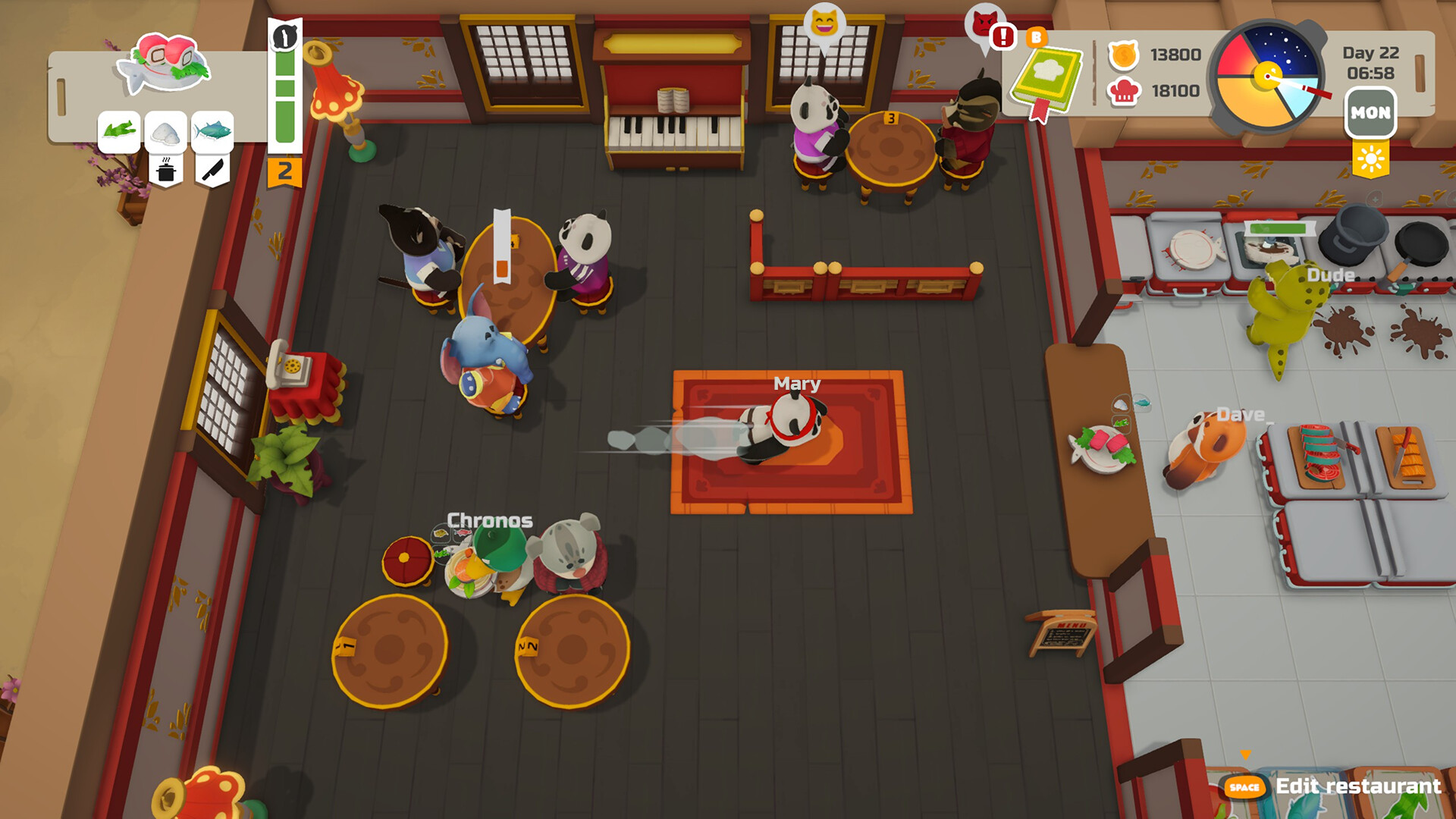
PAO PAO is a cozy seaside life sim from ArtDock, published by Dreland Enterprises, built around one specific fantasy: the restaurant you run with friends instead of alone. You play a customizable fluffy animal (cats, foxes, raccoons and more) who inherits a run-down restaurant on a small island and builds it from a two-burner starter into a packed house. The island around you carries everything the cozy genre expects: fishing from the shore or a boat, farm plots that follow the seasons, a forest to gather in, quirky residents with their own quests, an arcade, a basketball court, boat races, and water guns for when the work is done. Up to four players share one island online, and the whole thing launches into Steam Early Access on October 26, 2026.
The world runs on the cozy-genre clock: weather changes, seasons turn, and a full day-night cycle reshapes what the island offers hour to hour. The economy anchors to the restaurant, and everything else feeds it. Fish from your boat become tonight's menu. Crops planted in spring feed recipes in summer. Coins from service upgrade the kitchen, the farm, and your house.
This guide covers the demo and playtest state going into Early Access, with the strategies that separate a smooth four-player shift from a meltdown.
| Fact | Detail |
|---|---|
| Developer / Publisher | ArtDock (dev), Dreland Enterprises (pub) |
| Genre | Cozy seaside life sim with restaurant management |
| Platform | Windows (Steam), full controller + DualSense support |
| Release date | Early Access on October 26, 2026; demo available now |
| Multiplayer | Online co-op, up to 4 players, shared persistent island |
| Core loop | Restaurant service, fishing, farming, gathering, town life |
| World systems | Weather, seasons, full day-night cycle, calendar with special days |
| Activities | Cooking, fishing (shore + boat), farming, diving, arcade, basketball, boat races, water guns |
| Customization | Character look on the go, house, restaurant, and yard decoration |
| Save transfer | Demo saves transfer to the full game (added in the September demo patch) |
| Min specs | i3-10100, 4 GB RAM, GTX 1050, 2 GB storage |
Who it is for: friend groups who burned out on Overcooked's screaming and want cooperation with an off switch, Animal Crossing players who want an actual economy, and solo cozy gamers who want a world that keeps moving without them.
Who it is not for: players who need a finish line. Early Access is explicit about being a beginning, and the systems favor routine over progression sprints.
Getting Started
Download the demo first. It contains the restaurant, fishing, farming basics, co-op with the full four-player count, and a slice of the town with quests. The team patched it once based on playtest feedback, and demo saves now transfer to the full game, so time spent in the demo is not throwaway.
Your first day, step by step
- Create your animal and run the tutorial shift solo before inviting anyone. Co-op is the point of the game, but your first kitchen shift teaches the recipe flow, the ingredient boxes, the plating station, and the customer patience timer without network variables. Learn the stove before you learn the ping.
- Fish before you open. Shore fishing needs nothing but the rod (left mouse button or right bumper starts the cast). The catch sells or cooks, and early cash comes faster from a rod than from waiting tables.
- Plant the seeds Haze gives you the day you get them. The rabbit NPC's farm questline hands out seeds; planting on day one means harvest by day three, and menu variety is what pulls customers past your starter dishes. (Watch the quest text: a known bug says potato when it means carrot.)
- Save before you sleep, every night. The demo's history includes save and co-op session bugs. The September patch fixed most, and saves now transfer, but the sleep-save rhythm costs nothing and protects a day's work.
- Read the town, not just the tutorial. The island's residents, landmarks, and little spots are where side content hides: the arcade, the basketball court, the boat dock, the lighthouse. The map rewards wandering more than it admits.
Beginner mistakes to avoid
- Treating it like Overcooked. There is no failing grade. A slow service earns less, and that is the whole punishment. The game wants long sessions, not perfect ones.
- Skipping the demo patch notes. The first major patch fixed multiplayer joining, piggy bank duplication, plate physics, crop-harvesting control locks, and tool switching. Players who tried the demo at launch and quit hit bugs that no longer exist.
- Ignoring the day-night cycle. Certain activities and town states only exist at certain hours. Players who chain services back to back see half the island's content.
- Solo-running a four-player kitchen. The kitchen scales with staff. One player cooking while a partner front-of-houses doubles throughput without either player stressing.
- Spending everything on decoration before seeds. A documented softlock: spending too much money on accessories before buying tomatoes and carrots can leave the demo without a way to earn. Buy the economy first, furniture second.
- Expecting restaurant upgrades from the mailbox in the demo. The upgrade mail is not in the demo; restaurant upgrades go through Nancy, who stands to the right of the restaurant in the first house.
Core Mechanics
The restaurant: layout, menu, service
The restaurant is the spine. You arrange equipment (stoves, prep stations, plating counters) in a layout you design, then build a menu from recipes you have learned. Service runs in real time: orders arrive, kitchen stations produce, plates go out, coins come back. The loop deepens with equipment and recipe variety, and the four-player version splits roles naturally: one on cold dishes, one on the stove, one running plates, one charming the room.
Menu strategy matters more than kitchen speed as the game opens up. Simple meals sell steadily; packed-house nights need higher-value dishes. Hovering a recipe icon in the menu screen shows your current ingredient count, which is how you decide what stays on the menu. Your farmed crops and caught fish feed recipes directly, which ties the island's other loops into your income.
Two layout rules the community learned the hard way:
- Leave walking lanes. Characters collide, and players can shove each other into gaps that become traps. A kitchen with open lanes prevents the corner-trap bug and speeds every plate run.
- Put plating near the counter, cooking near the ingredient boxes. The fewer tiles between raw fish and served plate, the less your runners walk. The demo's backwards counters drew complaints precisely because bad layouts punish you twice per dish.
Cooking and recipes
Recipes list ingredients and station steps. You cook what is on your menu; you cannot serve off-menu dishes. Known friction points: there is no recipe book listing every combination in the demo (players got stuck on Fried Catfish trying combos blind), and once the restaurant opens, the menu screen locks until closing. Practical workarounds:
- Screenshot the recipe list before opening. The cookbook updates as you learn dishes, and the daily menu screen shows what customers will order.
- Set your menu to match your ingredient stock every morning. If you have four rice and two seaweed, seaweed rice rolls cap at two servings; a customer ordering a third waits and walks.
- New recipes come from quests, the shop, and story progression rather than experimentation, so the quest chain is your recipe unlock pipeline.
Fishing, farming, gathering
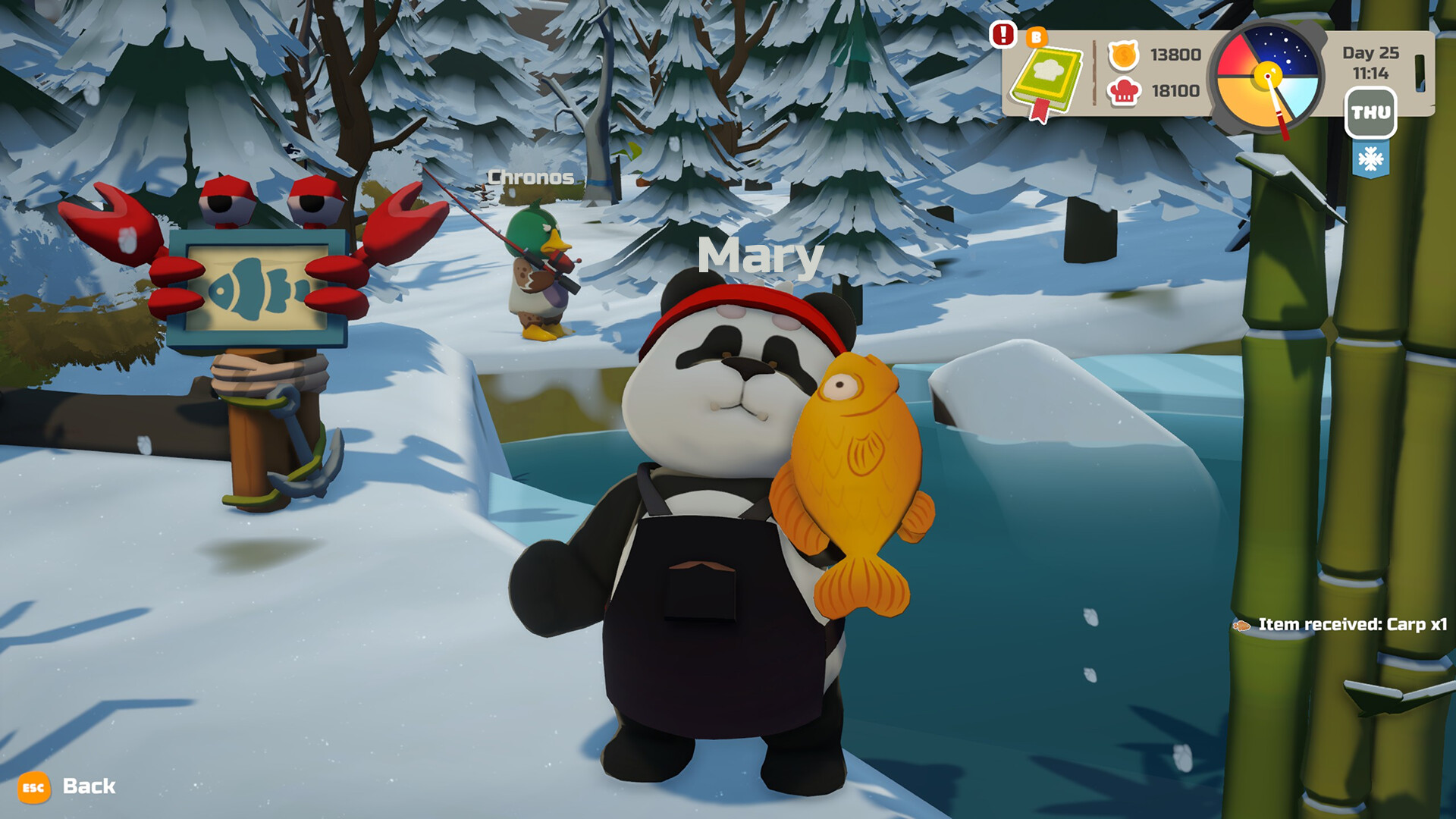
Three resource loops feed the restaurant. Fishing works from the shore or from a boat, and the boat reaches richer waters plus diving spots (the store page calls the mix culinary diving). Farming turns cleared land into plots seeded from Haze's questline, with crops that follow the season calendar. Forest gathering fills gaps with wild ingredients. Each loop runs on the island clock: seasons change what grows, weather changes what bites, and the day-night cycle gates certain catches and visits.
Fishing practicalities the demo community mapped:
- Saltwater and freshwater fish live in different spots. Fish at the docks and from the boat for saltwater; the pond and streams hold freshwater.
- Bait types change catch rates and quantity; the September patch improved fish behavior and effects.
- The boat is money fishing. One player runs the boat during slow morning hours while another preps the kitchen.
- Boat controls: E boards as driver, F boards as passenger, E near a parking spot (marked P) to disembark. If the driver disconnects the boat can strand; relog resets it.
The island as a second game
PAO PAO's town is not a backdrop. Nancy runs restaurant upgrades from the first house right of your restaurant, Brock and Rusty hand out early quests (and one of them is not the broski he appears to be), Haze runs the farm questline, the lighthouse anchors the first big quest chain, the arcade holds rhythm minigames (Zippy's record quest is the famous wall), and the special day screen on the calendar marks island events. The developer's own framing is that there is a whole life outside the restaurant, and the systems back it up.
The early quest curve worth knowing before you trip on it: the lighthouse quest asks for a 500-coin magnet, and finishing two full days of orders nets about 475. The gap closes in one more service day, so do not panic-sell your stock. The dancing machine quest (beat 2000 points at Zippy's arcade record) is the hardest skill check in the demo and fully optional; skip it without guilt and come back later, the rhythm track desyncs for some players.
Weather, seasons, and the clock
The island lives on a cycle. Weather shifts, seasons rotate, and every in-game day moves the sun across a full arc. Practically, the island you fish at noon is a different economy at midnight, and the crops that made you rich in one season underperform in the next. Long-term planning in PAO PAO means planning around the calendar. The September patch added category icons to the tool wheel and a special day screen to the calendar, which makes seasonal planning legible instead of guesswork.
Co-op specifics
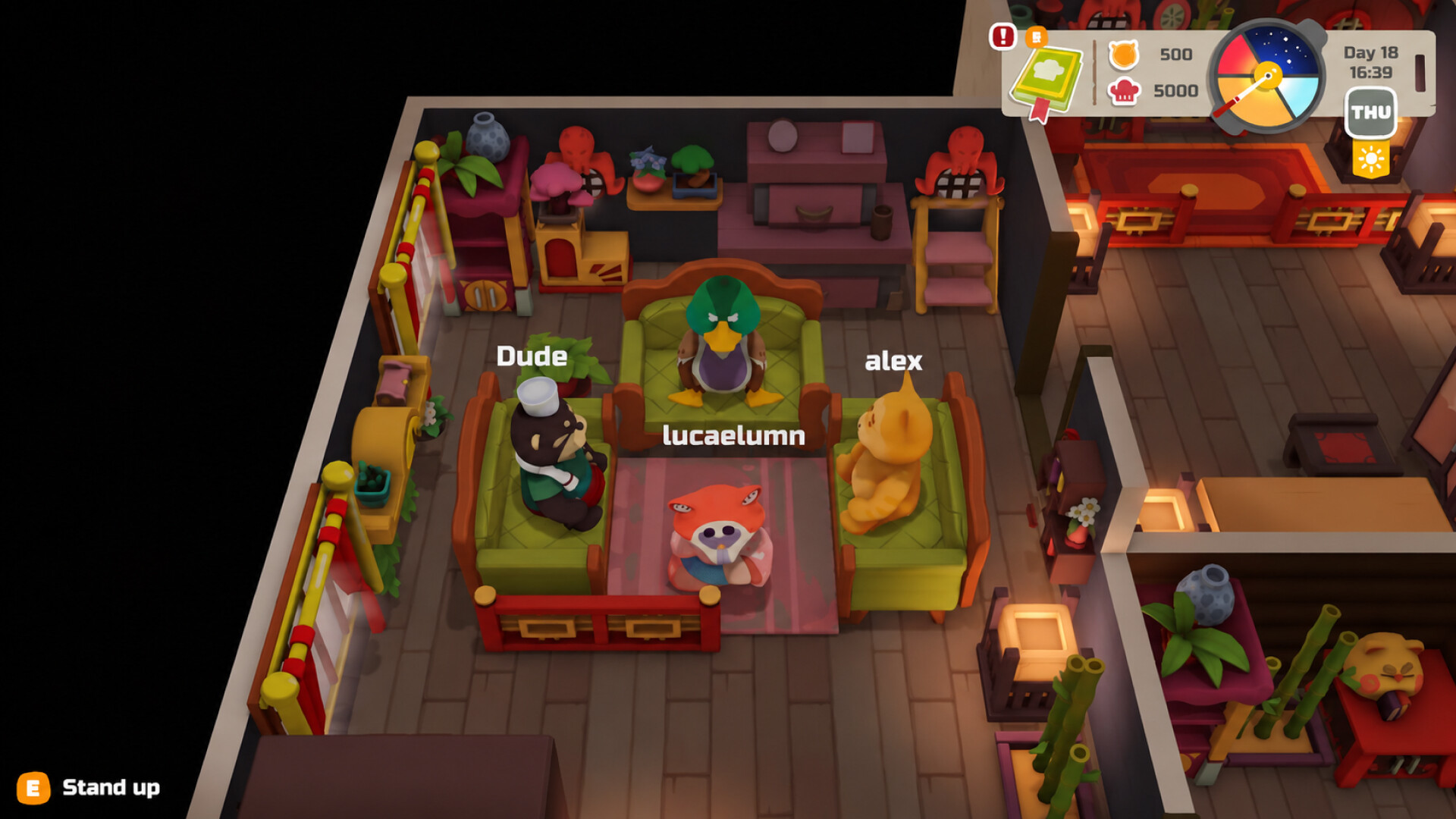
Online co-op supports up to four players on one island, with session joining and world loading already optimized in the demo patch. The host's island state (restaurant, farm, buildings) persists for the group, sleep runs on server-side logic so players stop getting stuck in beds, and lobby codes can be entered with the Steam keyboard. Playing with friends changes the game's texture more than its rules: the same loops, executed by a group that can split up to explore and reconvene for dinner service.
Known co-op edges after the patch: role assignment is informal (the game does not force stations), a player can be shoved into unreachable corners (avoid tight corner layouts), boat fishing supports one active fisher comfortably, and players who join mid-day sometimes see time desync. Host on the strongest connection and relog on weirdness; the patch made sessions stable enough that relogging is cheap.
Customization and home
Character look changes on the go, and the decoration system covers your house, the restaurant, and the yard. Furniture, decorations, and styles mix freely, from a cozy little home to what the store page calls a restaurant fit for a king. Decoration has no mechanical effect, which is the correct cozy-genre choice: it is expression, not optimization. Budget it after your economy works, per the softlock warning above.
Progression Strategy
The money ladder
- Days 1-2: fishing plus starter dishes. Shore fishing and the starter menu fund your first real kitchen tool. Serve everything; a slow day still pays.
- Day 3: Haze's harvest comes in. First crop rotation doubles your recipe options and menu slots fill with something more valuable than rice.
- Days 4-6: buy the economy. Kitchen equipment upgrades first (faster stations), then farm upgrades (automatic watering), then the boat if playing with a group.
- Week 2: Nancy's restaurant upgrades. With the kitchen producing, seating and service upgrades raise customer volume, which compounds every other loop.
- Always keep a cushion of a few hundred coins. Quest gates like the lighthouse magnet land when they land; a cushion means you never stall a chain.
Role assignments for co-op
| Role | Job | Best animal temperament |
|---|---|---|
| Chef | Stoves, hot dishes, timing | Someone who can ignore chaos |
| Prep | Ingredient boxes, chopping, plating | The tidier player |
| Runner | Plates to tables, order pickup, clearing | The fastest walker |
| Angler | Boat, diving, stocking ingredients | The wanderer who wants alone time |
Rotate roles each in-game day. The game's best conversations happen when the group swaps jobs and feels each other's station.
What to unlock first
- Kitchen stations before decoration. Every second saved per dish compounds across a whole service.
- Farm automation before more plots. Watering by hand eats your morning; automatic watering frees the group for fishing.
- The boat early in co-op. It is the group's income engine and its favorite toy at the same time.
- Restaurant seating after the kitchen keeps up. More seats with the same kitchen means angrier customers, not more money.
Builds and Templates
PAO PAO does not have builds in the combat sense; it has kitchen layouts and menu templates. These are the three archetypes that work.
Template: The Assembly Line (solo or duo)
[Ingredient boxes] [Prep] [Stove] [Stove] [Plating] [Counter]
        single straight lane, no backtracking
- Menu: 3 dishes max, all sharing ingredients (rice + fish dishes)
- Solo rhythm: prep three orders ahead, cook two, plate one
- Duo split: one player owns boxes through stoves, the other plating through tables
Template: The Brigade (3-4 players)
[Boxes] [Prep x2] [Stove x2] [Plating x2] [Pass] [Tables]
   prep wall on one side, cook wall opposite, pass in the middle
- Menu: 5-6 dishes, one per station pair
- Roles declared before the doors open; switching mid-service costs more than it gains
- The fourth player floats: plates, restock, and handles walk-in rush at the counter
Template: The Island Diner (cozy pace)
[Small kitchen] [2 tables] [Window bar]
- Menu: 1-2 signature dishes, whatever your farm and boat produce that week
- Open only on special days or when friends visit
- Decoration budget goes here; this build is for the screenshot, not the coin
Menu economics
| Dish tier | Ingredient load | When to serve |
|---|---|---|
| Starter (rice rolls, simple plates) | Cheap, farmed | Days 1-5, learning the flow |
| Mid (fried catfish and friends) | Fish + farmed mix | Once fishing is routine |
| High (multi-ingredient specials) | Boat fish + multiple crops | Packed-house nights, special days |
Rule of thumb: never stock a menu item whose ingredients you cannot make twice over. A third order you cannot fill burns the customer and the coin.
Step-by-Step Strategy
Sequence 1: The profitable first week (solo)
- Day 1: tutorial, then shore-fish until you can afford the first kitchen upgrade. Plant Haze's seeds. Sleep-save.
- Day 2: open with a 3-item menu matching your stock. Serve everyone even if slow. Do not buy decoration.
- Day 3: harvest crops, expand the menu to 4-5 items, upgrade the second stove.
- Day 4: take the lighthouse quest; fish until the 500-coin magnet is covered, then buy it.
- Days 5-7: automate the farm, buy the boat if you have surplus, and push Nancy's first restaurant upgrade.
Sequence 2: The four-player dinner service
- Before opening: everyone declares stations, menu gets set to five dishes you can all produce blind.
- Pre-prep pass: boxes filled, plates stacked, two orders of each dish pre-cooked where the recipe allows.
- During service: chef cooks in batches of two, runner clears and seats, prep never leaves the prep wall, angler only enters if a station collapses.
- Between waves: full restock while the last customers eat. Do not close with empty boxes.
- After close: count coins, queue tomorrow's menu to today's sales data, sleep-save together.
Sequence 3: The boat money loop
- Morning: angler takes the boat out while the kitchen preps. Saltwater spots first.
- Fish the rich waters until the hold is full or the first customers arrive, whichever comes first.
- Sell half the haul, cook half into menu items. Raw fish sells; cooked fish sells for more.
- Rotate the angler role daily so everyone learns the spots and the controls.
Sequence 4: The quest chain speedrun
- Follow Nancy, Brock, and Haze quests in the order offered; they gate the farm, the upgrades, and the recipe list.
- Keep 200-300 coins above every stated quest cost. The magnet lesson applies to every later gate.
- Skip the arcade record quest until your hands are warm; it is optional and the hardest reflex test in the game.
- The lighthouse chain unlocks the lift mechanism hunt: check the shops before the wilds, the mechanism is bought, not found in the demo's early builds.
- Quest rewards feed recipes; a quest day is also always a menu-expansion day.
Sequence 5: Season transition planning
- Two in-game days before the season turns, check the calendar's special day screen.
- Sell down crops that will underperform next season; cook them into long-shelf menu items if possible.
- Buy next season's seeds the day the season changes, plant immediately.
- Re-fit the menu to the new season's ingredient reality, not last season's habits.
- Treat the first day of each season as a light-service day: explore what changed on the island instead.
Sequence 6: The demo-to-Early-Access handoff
- Patch the demo to the latest build before playing; the September patch is the one that matters.
- Play until your save state is clean: end of a day, after sleeping, with the menu stocked.
- Verify the save transferred by launching after October 26 and checking the load screen.
- Spend Early Access day one on the new content, not re-learning: your island knowledge carries, the world just got bigger.
Advanced Tips
Batch your cooking between waves, not during them. The patience bar forgives one slow dish; it does not forgive six. Cooking two of everything during the lull between customer waves keeps every plate under the timer.
The menu is a stock statement. Set it every morning to exactly what your boxes and hold can produce. Removing an item you cannot make beats serving it and burning a customer.
Boat time is solo time by design. Do not feel guilty fishing while friends decorate. The boat haul funds the decorations; the island economy runs on division of labor, not togetherness.
Tool wheel categories exist; use short-press switching. The patch added quick tool switching with a short press and category icons. Long-press menus mid-service are how orders die.
Ingredient hover is your inventory. Hovering recipe icons shows counts. Build the habit of one hover-sweep before opening; it replaces the missing menu screen inside the restaurant.
Sleep is the save button and the server tick. In co-op, sleep together. Desynced sleeps are behind most of the surviving co-op oddities, from time drift to task counts that reset.
Special days are menu days. The calendar's special day screen marks island events; customer volume and patience shift. Cook your high tier on special days, not your staples.
Watch the piggy bank. The demo's duplication bug is patched, but the pattern stands: keep a coin cushion, screenshot your balance before big spends, and remember saves transfer to 1.0.
Known Issues and Open Questions
- Early Access is explicitly unfinished. ArtDock's own statement: the main loop and core systems are playable while content variety, balance, and progression depth continue to be refined. Expected Early Access window: roughly 6 to 12 months.
- Roadmap items: expanded character progression, more customization, additional areas and activities, deeper cooking, customer service, fishing, and gardening, plus town progression, NPC interactions, and seasonal activities.
- Price will not change at 1.0. Buying into Early Access is the full price of the finished game.
- Demo-era bugs the patch addressed: multiplayer joins, piggy bank duplication, negative coins, plate physics, crop-harvest control locks, sleep traps in co-op beds, tool switching. Residual quirks: occasional time desync on late joins, task counters that reset in co-op, quest text saying potato instead of carrot, and the arcade rhythm track desyncing for some players.
- No local split-screen yet. Online co-op only; the team called couch co-op something they would like, not a promise.
- No console versions announced. Windows via Steam at Early Access launch.
Steam Deck and Platform Notes
The demo runs on the Steam Deck (the patch specifically fixed lobby-code entry with the Steam keyboard and DualShock 4 modal windows), and the specs floor (GTX 1050-class) sits below Deck capability. No official Deck verification is listed yet. Controller support ships day one with full pad navigation, and theDualSense is explicitly supported.
System Requirements
| Tier | Minimum | Recommended |
|---|---|---|
| OS | Windows 10/11 x64 | Windows 10/11 x64 |
| CPU | Intel Core i3-10100 | Intel Core i5-12400 |
| RAM | 4 GB | 8 GB |
| GPU | NVIDIA GeForce GTX 1050 | NVIDIA GeForce RTX 3060 |
| DirectX | Version 11 | Version 11 |
| Storage | 2 GB | 2 GB |
The gentlest specs of this season's cozy launches. A five-year-old office laptop runs it, which matters because PAO PAO's audience includes plenty of players whose main machine is exactly that.
Developer Background: ArtDock
ArtDock is a small studio with a history of stylized interactive projects (SOS OPS!, Penguin Helper, and the upcoming Lootbound, which won them a second Nordic People's Choice Award after Pao Pao took one in 2025). Pao Pao's development ran through closed playtests in 2025 (over 9,000 playtesters and 500+ feedback items), an open playtest in June 2026, a pre-release demo on September 14, 2026, and a major demo patch on September 18 alongside the Early Access date announcement. Their communication runs through the Steam news feed and their Discord (discord.gg/artdock), where the team has posted patch notes in detail and framed Early Access as a collaboration: we want the island to grow bigger, cozier, and more alive together with you. They have answered individual bug threads personally, including boat controls and quest gates.
How It Compares
| Game | Shared DNA | Where PAO PAO differs |
|---|---|---|
| Overcooked | Kitchen chaos, order fulfillment | No fail state, no screaming; a shift you work at your own pace with a whole island around it |
| Animal Crossing | Cozy island life, seasons, decorating | PAO PAO puts a working restaurant and a shared persistent economy at the center |
| Stardew Valley | Farming, fishing, seasons, town quests | Trades solo farm depth for a shared island and a service-industry spine |
| PlateUp! | Restaurant growth, roguelite-ish expansion | PAO PAO is persistent and cozy, not run-based; decoration and town life matter |
| Garden Together / Coral Island | Co-op farming sims | The restaurant focus is the niche: restaurant-forward co-op with this much island around it is rare |
FAQ
When does PAO PAO release? Early Access on October 26, 2026. Price not yet announced, and it will not change at 1.0.
Is there a demo? Yes, free on Steam with the restaurant, fishing, farming, and 4-player co-op, already patched for the major multiplayer bugs.
Do demo saves carry over? Yes. The September patch added save transfer to the full version, so you will not start everything from scratch.
How many players in co-op? Up to four, online, sharing one persistent island.
Is there couch co-op? Not yet. Online only; the team has said they would like local co-op but nothing is promised.
Can I play solo? Yes. Every system works solo, and the pacing is built for it. Friends make the kitchen faster and the island louder.
How do I upgrade the restaurant? Through Nancy, in the first house to the right of the restaurant. The upgrade mailbox is not in the demo.
Where do new recipes come from? Quests, the shop, and story progression. There is no full recipe book in the demo; screenshot your cookbook.
How do I get off the boat? Press E near a parking spot marked P. E boards as driver, F as passenger.
What do you actually do all day? Run the restaurant, fish, farm, gather, explore, decorate, and get into low-stakes trouble with friends. The loop is yours to weight.
Is there combat? None. The wildest it gets is water guns and food fights.
Will Early Access add content? Yes. The roadmap promises a bigger island, more activities, deeper cooking and fishing systems, and expanded town and NPC life, shaped by player feedback over roughly 6 to 12 months.
Quick Reference
| Topic | Answer |
|---|---|
| Release | Early Access, October 26, 2026 |
| Demo | Live now, patched, 4-player co-op included |
| Save transfer | Demo saves move to the full game |
| Players | Solo or online co-op up to 4 |
| Core loop | Restaurant service + fishing + farming |
| World | Weather, seasons, day-night cycle, special days |
| Restaurant upgrades | Nancy, first house right of the restaurant |
| Boat controls | E driver, F passenger, E at P to disembark |
| Money rule | Economy before decoration; keep a coin cushion |
| Side content | Arcade, basketball, boat races, water guns, quests |
| Community | discord.gg/artdock |
| Specs floor | i3-10100, 4 GB RAM, GTX 1050, 2 GB storage |
Screenshots