Official game
Play Can you cook my last meal?
This game is hosted by Steam. Continue to the official page to play or download it.
Wishlist on SteamOverview
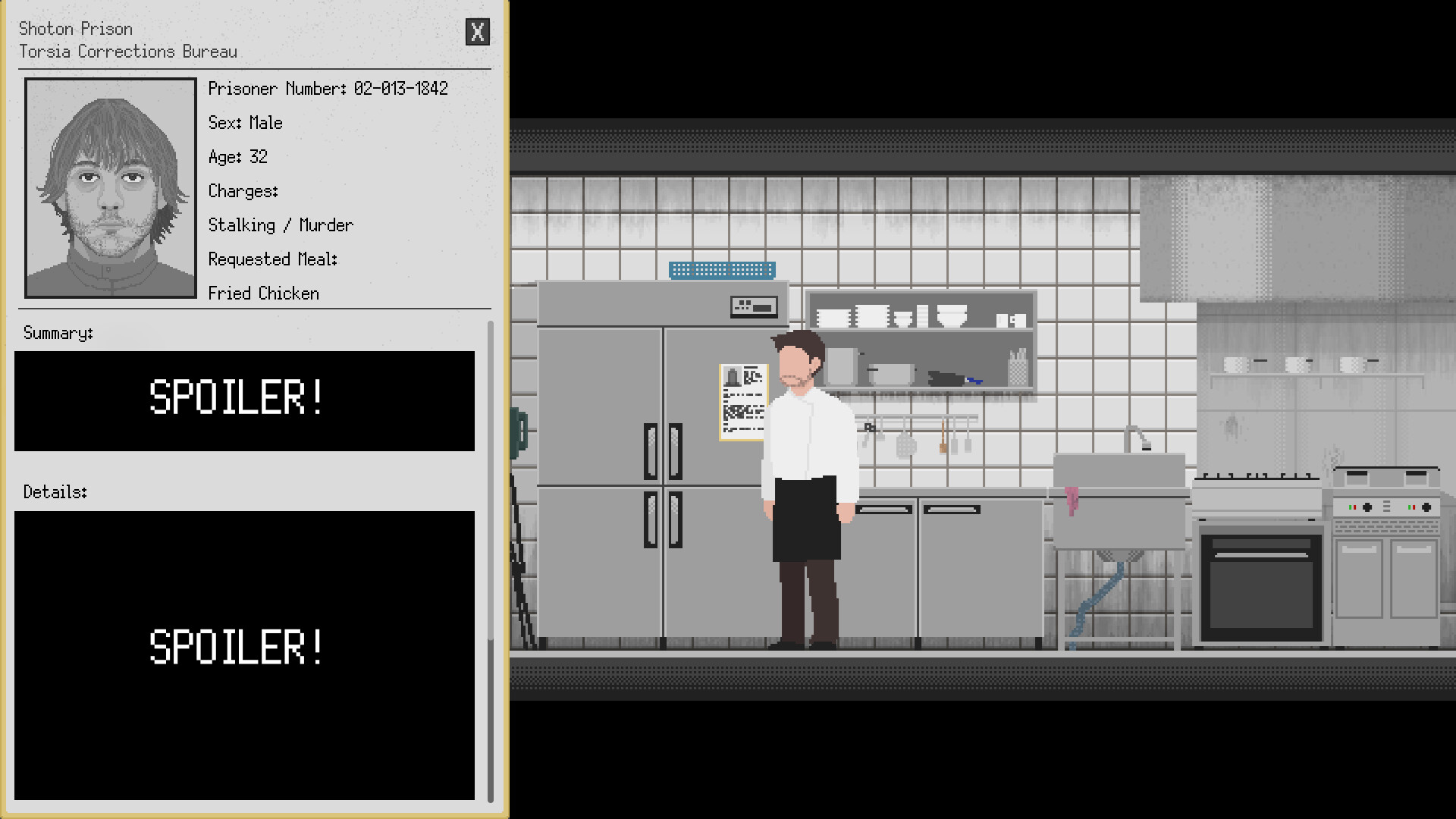
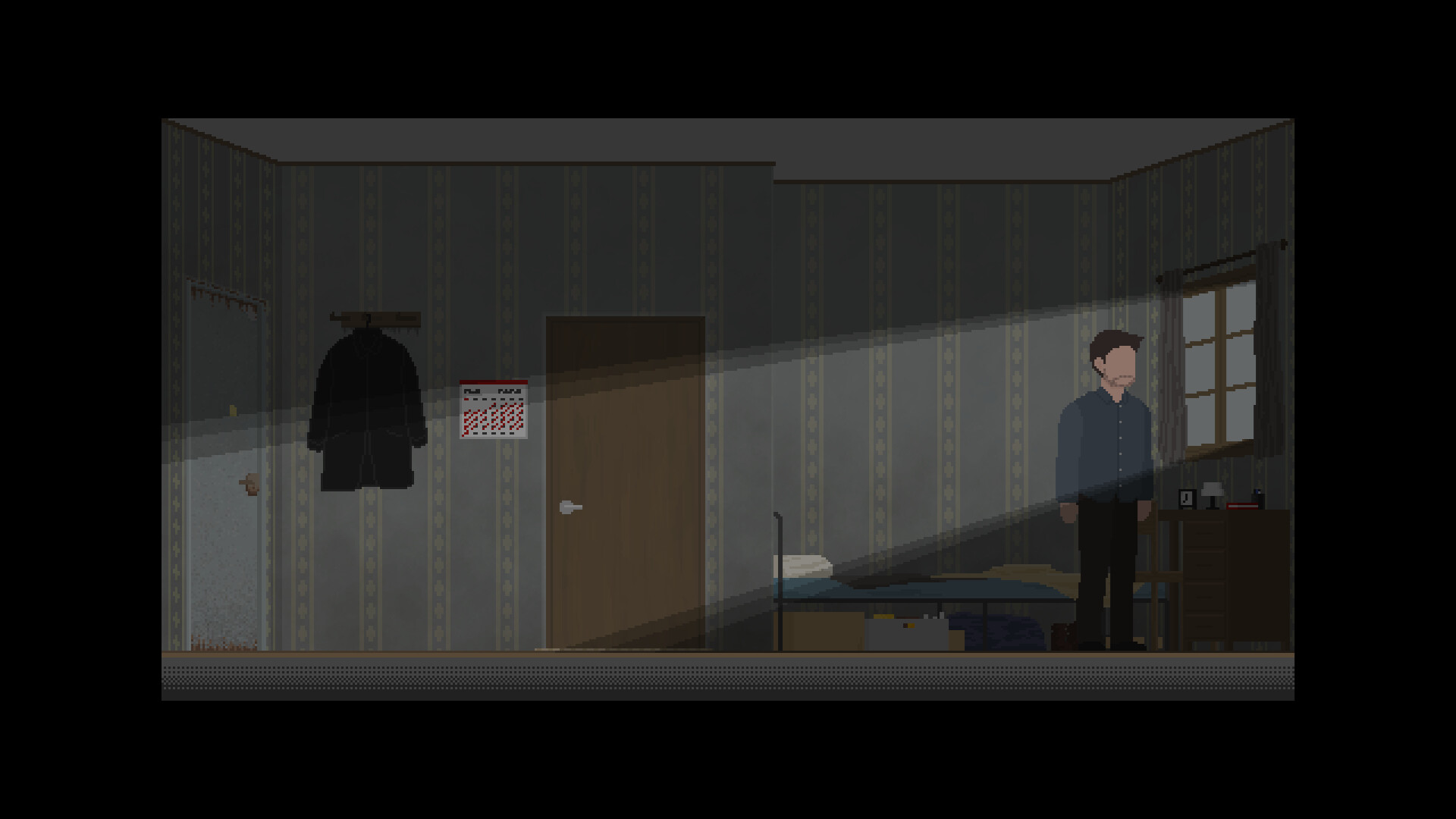
Can you cook my last meal? is a story-driven simulation from solo developer Mr.Spoon. You play Dutch, a chef with an elusive past who takes a job at Shoton Prison in Torsia, a nation where the "Enhanced Death Penalty System" is in effect. Your assignment: prepare the final meals of death row inmates. You read each prisoner's profile, choose ingredients, cook the meal, serve it, talk with them, and send them on to the final procedure.
The game is deliberately quiet and uncomfortable. It is not a cooking sim with a prison skin. The cooking is the framework; the real content is the conversations and the moral questions. The store page lays them out plainly: How did the chef become a prison chef? What is he waiting for in this place? What will death row inmates say when death is near? Will they claim injustice, give up and accept death, or something else entirely? The game asks you to sit with the question of whether anyone deserves to die, and whether a final meal is mercy, ritual, or something crueler.
The developer confirmed the core facts in a July 29, 2026 announcement: the game is story-driven, features multiple endings that change with your choices, and the choices that determine the ending are entirely separate from how you prepare each inmate's meal. That design decision matters. It means you can cook experimentally, change your approach from prisoner to prisoner, and never worry about locking yourself out of a good ending. The release is planned for spring 2027, with English, Japanese, and Korean confirmed at launch and more languages possible depending on wishlist growth.
The game is pixel art, built around choices, and tagged by its own store page as philosophical. Steam confirms the design philosophy: single-player, playable at your own pace, playable without timed input, save anytime, and family sharing. By August 2026 the game had passed 20,000 wishlists, and the developer released an early OST preview whose opening track, "Take My Mugshot," is Dutch's theme.
Game Details
| Field | Detail |
|---|---|
| Genre | Simulation, story-driven indie |
| Developer | Mr.Spoon (solo) |
| Publisher | Mr.Spoon |
| Platform | Windows |
| Price | TBA (paid title) |
| Players | Single-player |
| Release | Spring 2027 (planned) |
| Featured tags | Choices Matter, Simulation, Story Rich, Cooking, Philosophical, Pixel Graphics, Singleplayer, Indie |
| Categories | Single-player, playable at your own pace, no timed input, save anytime, family sharing |
| Languages | English, Japanese, Korean (more possible) |
| Setting | Torsia; Shoton Prison; Enhanced Death Penalty System |
| Protagonist | Dutch, a chef with an elusive past |
| Themes | Death penalty, last meals, moral choice, innocence, remorse |
| Minimum specs | Windows 10, Intel i5-1135G7 / AMD Ryzen 5 7530U, NVIDIA MX250 / GTX 750 or AMD Radeon Vega 7, DirectX 10, 500 MB storage |
| Steam | store.steampowered.com/app/4924160 |
Target Audience
This is a game for players who use games to sit with hard questions, not to escape them. If you appreciated the moral weight of Papers, Please, the quiet tragedy of This War of Mine, or the uncomfortable intimacy of games about ordinary people inside terrible systems, Can you cook my last meal? is squarely aimed at you. It is a narrative-first experience: no timed input, save anytime, play at your own pace. The design is built for reflection, not reflexes.
Skip it if you want a mechanical cooking game, a prison escape power fantasy, or a game that tells you what to feel. This one hands you the questions and lets you answer them. The subject matter, executions, last meals, whether anyone deserves to die, is heavy, and the game does not soften it. It also helps to be comfortable with slow pacing; nothing here will push you forward.
Getting Started: First 30 Minutes
1. Read the setting before you cook. The game opens in Torsia, where the Enhanced Death Penalty System is in effect, and Shoton Prison is one of its execution sites. The fictional system is harsher than most real-world ones, and every prisoner's story is framed by it. The game never questions the system out loud. That silence is deliberate, and it is the point.
2. Read each prisoner's profile completely. The profile is not flavor text. It is the mission briefing. The game's flow is: read the profile, choose ingredients, prepare the meal, serve it, talk with them. Skipping profile details means walking into the conversation blind. Look for three things in every profile: what the prisoner wanted, what they feared, and what their crime was. The developer's announcement warns that the inmates' pasts are as mysterious as Dutch's own. Are the crimes they are accused of accurate? Are their deaths warranted? The profile is your only evidence.
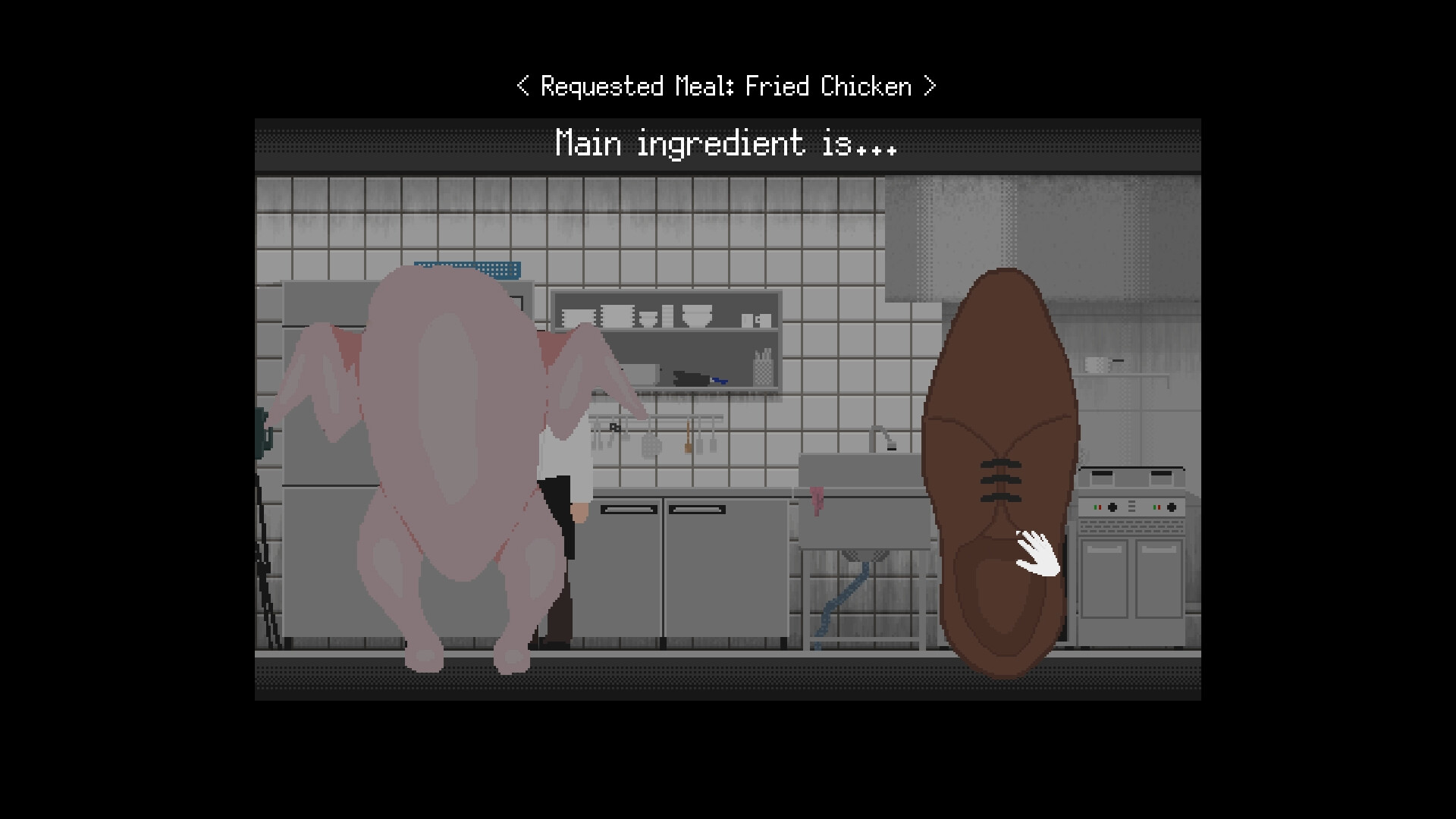
3. Choose ingredients deliberately. Ingredient choice is the first real decision. What you cook, and how you cook it, is a form of communication before a word is spoken. Consider what the prisoner's profile suggests they might want, and what you think they deserve. These are not always the same answer.
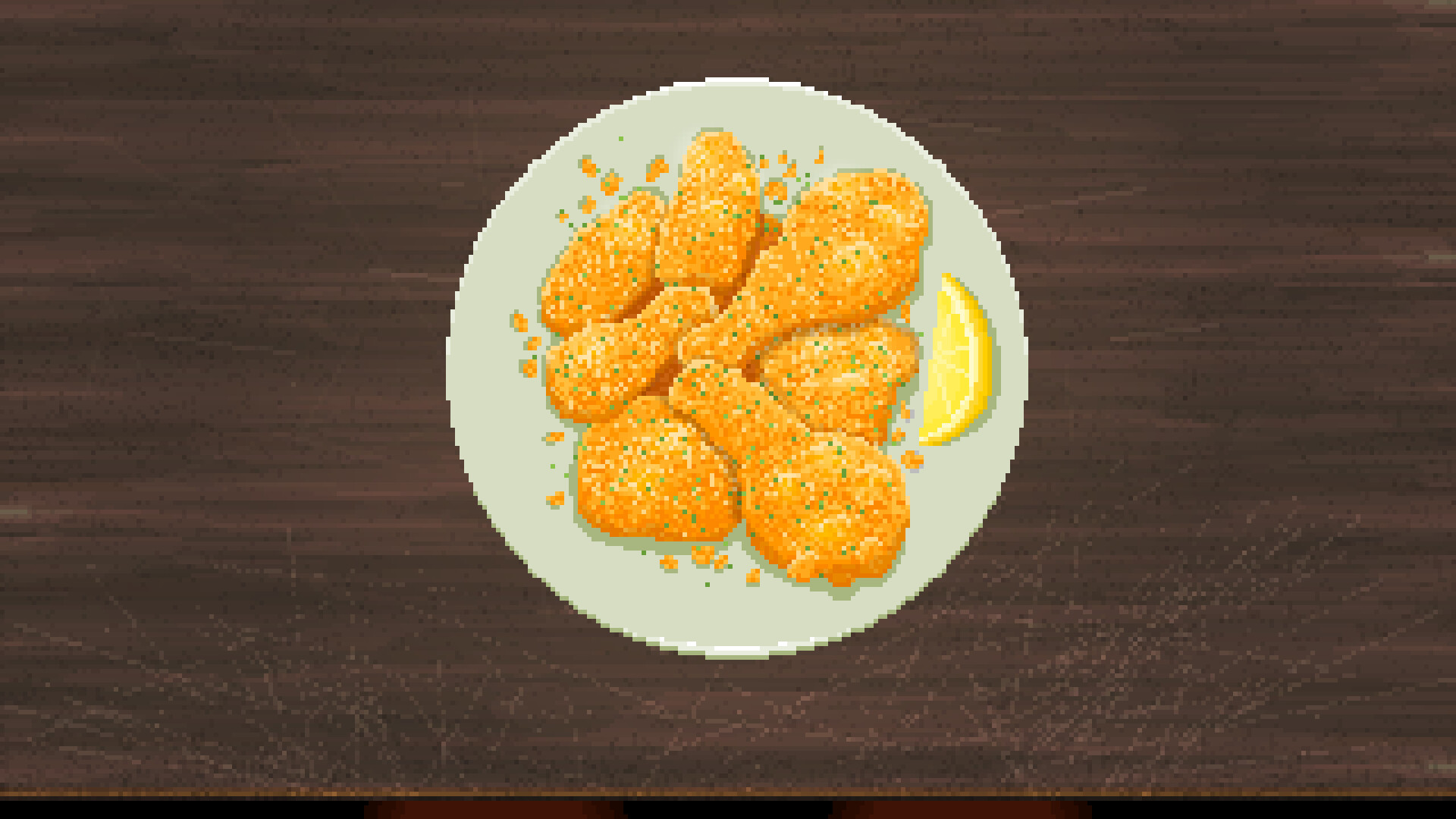
4. Prepare the meal with care. The preparation phase is the game's mechanical core. Take your time. There is no timer and no fail state; the point is the act of cooking for someone who is about to die. Treat the preparation as part of the conversation, not a chore between dialogue boxes.
5. Talk with the inmate before the final procedure. The conversation is the heart of the game. What you say, and what you choose not to say, matters. The game asks: in the moments before execution, how will you treat the death row inmate?
6. Expect the story to be about more than the meals. The game promises three story threads: Dutch's Story (how did he become a prison chef, what is he waiting for), the Prisoners' Stories (what they say when death is near), and Your Story (what you choose). The meals are the frame; the stories are the picture.
Beginner Mistakes to Avoid
| Mistake | Why It Hurts | Fix |
|---|---|---|
| Skipping prisoner profiles | The profile is the briefing; without it you cannot make meaningful ingredient or conversation choices | Read every profile fully before cooking |
| Rushing ingredient selection | Ingredient choice is the game's first moral decision, not a menu pick | Consider what the meal says about how you see the prisoner |
| Treating it as a cooking game | The cooking is the framework, not the point; the conversations carry the meaning | Slow down; the game is designed for reflection |
| Expecting fail states | There are none: no timer, no wrong answers | Let that freedom change how you play; the choices are yours |
| Skipping dialogue | The dialogue is the entire point of the game | Read everything, including what is implied |
| Assuming the chef is a blank slate | Dutch has his own story, his own theme song, his own waiting | Pay attention to his history and reactions |
| Playing every prisoner the same way | Each inmate has a distinct story; a one-size-fits-all approach flattens the game | Treat every profile as a new person with new stakes |
| Rushing to "finish" | The game is built for reflection; rushing wastes its only resource, your attention | Plan one inmate per sitting if the material is heavy |
Core Mechanics Deep Dive
The Prison Chef Loop
The core loop is deceptively simple: meet the inmate, read their profile, choose ingredients, prepare the meal, serve it, talk, and send them to the final procedure. Each step is a chance to engage with the game's central questions. The loop repeats per inmate, but the game is structured so that each repetition deepens the story rather than just repeating the mechanics.
The store page describes the role bluntly: "You are assigned as a chef responsible for preparing meals for death row inmates." There is no escape from the role and no way to refuse the system. The game is about how you behave inside that role, not how you break out of it.
Ingredient Choice as Moral Language
Choosing which ingredients to cook with is the game's first meaningful interaction. The meal you prepare is a statement: comfort, indifference, respect, or cruelty. The game does not appear to grade these choices. There is no "right" meal. Instead, the ingredient selection sets the tone for the conversation that follows.
Think of the ingredient list as a vocabulary. A prisoner who grew up poor and hungry gets a different meal from one who ran a restaurant. A prisoner still claiming innocence gets a different meal from one who has accepted death. The profile tells you which words to use.
The Final Conversation
The conversation with the inmate before execution is the emotional core. The game asks directly: "In the moments before execution, how will you treat the death row inmate? What will you say to them?" The prisoners are not props. Their stories can go three directions according to the store page: claim injustice, accept death, or reveal something else entirely.
Press coverage adds a useful frame: prisoners can be remorseful, defensive, or insistent on their innocence, and they choose whether to open up about what led them to this moment. Your read of their remorse changes how you treat them. Two things to watch in every conversation: what the prisoner says, and what they do not say. The gaps are where the writing does its work. A prisoner who talks about the weather is not talking about the weather.
The Ending System: What Actually Counts
This is the most important mechanical fact about the game, confirmed by developer Mr.Spoon on July 29, 2026: the game features multiple endings that change depending on your choices, but the choices that determine the ending are entirely separate from how you choose to prepare each inmate's meal. The developer said it plainly: you can play without worrying that every choice you make might affect the ending.
What that means in practice:
- Meal prep is free play. You can cook the comfort meal for one inmate, the statement meal for the next, and flip approaches between playthroughs without risking the ending. The game rewards treating each meal as its own question.
- The real branches are elsewhere. Ending-determining choices live outside the kitchen: likely in how you respond to the prisoners' revelations, what you do with the information you gather, and how Dutch's own story resolves. Pay attention to the full conversation, not just the plate.
- Replay value is structural. Because meals and endings are decoupled, you can experiment with the cooking freely on a first run, then go back to chase specific endings without redoing every meal exactly.
This design is unusual for choice-driven games, and it removes the anxiety that usually comes with "every choice matters." The developer wants the cooking to be expressive, not strategic.
The Three Stories
The game structures its narrative around three threads:
- Dutch's Story: how he became a prison chef, what he is waiting for in this place, and how his story ends. His theme, "Take My Mugshot," plays on the title screen, and the developer calls it the track that immerses you in his world.
- The Prisoners' Stories: what death row inmates say when death is near; whether they claim injustice, give up, or do something unexpected, and what their final moments look like.
- Your Story: the player's own answers to the game's questions: Is their death unjust? Do they deserve to die? Do they deserve to be served one final meal, or is even that more than they deserve?
This three-thread structure signals that the game is not a linear moral fable but a series of intersecting stories, all filtered through the act of cooking and serving.
The Enhanced Death Penalty System
The worldbuilding matters. Torsia's "Enhanced Death Penalty System" is the fictional legal framework that makes the game possible, and Shoton Prison is one of its execution sites. The system is presented as settled fact. No one in the game is questioning whether it should exist, which makes the player's private questions about it all the more pointed. The final meal is part of the system: a ritual of dignity (or its illusion) within a machine built to kill.
The Last Meal in Context
Understanding what a last meal actually is helps you read the game's choices. The ritual is far older than modern prison systems. In ancient Greece, prisoners were fed before execution so the dead could enter the underworld and not return as hungry ghosts. In 18th-century Germany, the "Hangman's Meal" was a feast attended by lawyers, judges, clergy, dignitaries, and the executioner himself; in Nuremberg, a roasted goose for the condemned was established tradition. London prisoners could hold a celebration with outside guests, and the procession famously stopped at a pub for a "last refreshment in life." The meal was never just food. It was forgiveness, control, comfort, and spectacle rolled into one plate.
Modern practice is stricter. In the United States, most states give the meal a day or two before the execution, under the euphemism "special meal," and within reason the prisoner picks what it will be. The most requested foods are mundane: steaks, fried chicken, cheeseburgers, pizza, ice cream. A Cornell University study of 193 requests found prisoners overwhelmingly chose familiar junk food over anything experimental. The requests are almost never about luxury. They are about comfort, memory, and home.
Some states cap the cost. Texas ended special last meals entirely in 2011 after one extravagant request went uneaten. And some prisoners refuse the meal altogether. Ted Bundy famously did. Refusal is itself a statement, and it is worth remembering that the game may give you inmates who do the same.
That context reframes the game's ingredient choices. A prisoner asking for something plain and familiar is not being modest; they are reaching for the last taste of an ordinary life. A prisoner who requests something elaborate might be testing the system, or making a final gesture of control. When you choose ingredients in the game, you are deciding whether to honor the request as asked, improve on it, or impose your own idea of what they deserve.
Choice Framework: The Four Meal Archetypes
| Archetype | What You Cook | What It Says | Best When |
|---|---|---|---|
| The Comfort Meal | Something plain and familiar from the prisoner's profile | "I see you as a person, and I want you to feel safe one last time" | The prisoner seems frightened or regretful |
| The Respect Meal | The best version of what they requested, cooked carefully | "I take this seriously; your life mattered" | The prisoner is calm or dignified |
| The Formal Meal | Correct, complete, but emotionally neutral | "I am doing my job, nothing more" | You are not sure how you feel yet |
| The Statement Meal | Deliberately different from what they asked | "I am making a point about who you are" | You believe the prisoner does not deserve comfort |
None of these are mechanically "correct." The game is structured around what you intend. But the archetypes are useful for planning: decide which message you want to send before you touch the ingredient list, then let the profile tell you how to send it. Because meal choices are separate from the ending, you can switch archetypes freely without strategy risk.
Conversation Strategies
Match the meal to the conversation you want. The meal sets the tone. If you want a real conversation, cook something the prisoner will recognize as care. If you want distance, cook something neutral. The prisoner will read the meal before you say a word.
Let them lead. People about to die talk about what matters to them. Follow their topic. If they want to talk about their crime, let them. If they want to talk about their mother, let them. The conversation is theirs; your job is to be present in it.
Weigh guilt against the evidence. The game invites you to judge: are the crimes they are accused of accurate? Are their deaths warranted? Watch how each prisoner speaks about their crime. Remorse, denial, and silence each read differently. A claim of innocence is not automatically proof, and neither is an admission under duress. You are the jury, and you only have what they tell you.
Do not rush to comfort. Platitudes ("it will be okay") are hollow when the execution is in the next room. The game's strongest conversations are likely to be the ones where you sit with the reality instead of deflecting it.
Silence is a choice. Not every question needs an answer. Sometimes the honest response to a person about to die is to say very little. Treating silence as a valid choice, rather than a failure to engage, opens up a different reading of the game's conversations.
Watch Dutch's own thread. Every conversation is also revealing something about Dutch: why he took this job, what he is waiting for. Pay attention to your own character's reactions as much as the prisoner's words. The ending branches live outside the kitchen, and the kitchen is where you will notice Dutch reacting.
Step-by-Step Play Sequences
Sequence 1: The First Meal.
- Read the profile twice. First pass: the facts. Second pass: what the prisoner wanted, feared, and did.
- Decide your message before choosing ingredients. Comfort, respect, formality, or statement.
- Choose ingredients that match both the message and the profile. A comfort meal for a homesick prisoner is not the same as a comfort meal for a defiant one.
- Cook slowly. The preparation is part of the conversation.
- Serve, then sit. Let the prisoner speak first.
- Answer honestly, or choose silence. Then send them on.
Sequence 2: The Defiant Prisoner.
- Expect a prisoner who claims injustice to test you. They may be angry, sarcastic, or calculating.
- Do not argue. Your job is not to convince them of anything.
- Use the meal to establish who you are: the cook who will not be baited, or the cook who engages.
- Ask what they actually admit to. Remorse and denial produce different conversations, and what they own up to should shape what you decide about them.
- If they ask whether you believe them, decide in advance what honesty means to you here.
- Let the anger exist. The game is not asking you to fix them.
Sequence 3: The Remorseful Prisoner.
- A prisoner who has accepted death will often want to talk about their life, not their crime.
- Follow their lead. Ask about the people they loved, the work they did, the things they will miss.
- The meal matters more here: this is the last experience they will have as a living person.
- Do not offer false hope. There is none in this building.
- Be present. That is the whole job.
Sequence 4: The Dutch Investigation.
- On every playthrough, track what the game reveals about Dutch: his history, his elusive past, his reasons, his waiting.
- Note the moments when Dutch's own reactions surprise you.
- Ask how his story intersects each prisoner's story. The game promises his story ends. Watch for the shape of that ending.
- Because meal choices are decoupled from the ending, use the kitchen as your observation post. How Dutch cooks, and how he reacts while cooking, is data.
- The chef is not a window; he is a character. Treat him as one.
Sequence 5: The Replay for Endings.
- Finish one run without worrying about optimization. Cook expressively and see where the story lands.
- Before a second run, write down the moments that felt like pivots: revelations, accusations, offers, silences.
- Replay with different conversation choices at those pivots. This is where the ending actually branches.
- Change your meal archetypes too, but treat that as flavor, not as ending pressure. Compare how the tone shifts even when the destination does not.
- Compare the two readings. The differences between runs are the game's real content.
Advanced Tips
The "Profile-First" Reading Method. Treat every prisoner profile as a story document, not a stat sheet. Look for what the prisoner wanted, what they feared, and what their crime was, then let the meal answer those. A prisoner who loved their mother's cooking gets a different meal than one who is still claiming innocence. The game rewards paying attention.
The "Guilt Audit" Discipline. Before each conversation, form an explicit stance: guilty and remorseless, guilty and remorseful, innocent, or unknown. Let the prisoner's own words update that stance in real time. Press coverage notes that inmates may proclaim innocence, admit to their actions, or stay vague; your treatment of them should track their honesty. The disgust you feel toward a guilty inmate is part of the game's design. Sit with it, but do not let it automate your choices.
The "Kitchen as Observation Post" Method. Since meal choices do not decide the ending, the kitchen is the safest place to study Dutch. Watch how he reacts to each profile, each ingredient, each served plate. Those reactions are the connective tissue to the ending branches. The recipe for finding the real choices is simple: notice where the game pushes you to react.
The "Silence as Choice" Approach. Not every question needs an answer. The game asks what you will say to a person about to die, and sometimes the honest response is to say very little. Treating silence as a valid choice, rather than a failure to engage, opens up a different reading of the game's conversations.
The "One Inmate Per Sitting" Rule. The material is heavy. The game's own pacing gives you no reason to rush. Play one prisoner per sitting if the conversations land hard. Reflection is part of the experience, not a pause from it.
The "Read Twice" Discipline. Profiles deserve two passes. The first pass gives you facts; the second pass gives you the person. Most meaningful choices in this game come from the second pass.
FAQ / Common Mistakes
When does Can you cook my last meal? release? The developer announced in July 2026 that the game is planned for release in spring 2027. No exact date is confirmed.
How much will it cost? Not announced. It is a paid title, not free-to-play.
What platforms is it on? Windows. No console or macOS/Linux builds are listed.
Who is the main character? Dutch, a chef with an elusive past. His theme, "Take My Mugshot," plays on the title screen.
Is it a cooking game? It is a story-driven simulation. Cooking is the framework, but the conversations and moral questions are the content. The developer says it cannot be fully explained by calling it a cooking game.
Do meal choices affect the ending? No. The developer confirmed that the choices determining the multiple endings are entirely separate from how you prepare each inmate's meal. You can play without worrying that every choice affects the ending.
Does it have timed inputs? No. The store page lists "playable without timed input" and "play at your own pace" as features. You can save anytime.
Is there a fail state? The design suggests no: no timed input, no pressure mechanics. The choices are moral, not mechanical.
What languages are supported? English, Japanese, and Korean are confirmed. More languages may be added depending on wishlist growth.
Who is the developer? Mr.Spoon, a solo developer.
What are the system requirements? Minimum: Windows 10, Intel i5-1135G7 or AMD Ryzen 5 7530U, NVIDIA MX250 / GTX 750 or AMD Radeon Vega 7, DirectX 10, 500 MB storage.
Is the subject matter graphic? The store page lists no content descriptors. The game's weight is thematic, executions, last meals, and moral questions, rather than explicit violence.
Will my choices matter? Yes. The game features multiple endings that change depending on your choices, and the developer says each choice you make has an impact. The twist is where the impact lands: not on the plate, but in the conversations that surround it.
Final Tips & Verdict
The best way to play is slowly. This is a game with no timer, no fail state, and no mechanical pressure. The only thing you can rush is your own reflection. Read the profiles like they matter, choose the meal like it matters, and let the conversations breathe. The game is asking you to decide what you think; the least you can do is take the time to answer honestly.
The habit that will get the most out of this game is the Read Twice discipline. Facts first, person second. Every profile, every conversation, every ingredient choice rewards the second look. That is where the game lives.
The decoupled ending system is the game's most interesting design choice. It removes the anxiety of "every choice matters" and replaces it with freedom: cook what you mean, say what you think, and let the endings grow out of the conversations themselves. That is a rare trust to place in a player, and it fits a game about trust at the end of a life.
Verdict: a promising, quietly provocative narrative sim for players who want games to ask hard questions. The subject matter is heavy and the mechanics are deliberately minimal, so it is not for everyone, but for its audience, it is exactly the kind of game the medium needs more of. 4/5 for its target audience. Watch for a release date announcement and a demo; the 20,000-wishlist milestone and the early OST preview suggest the developer is building momentum toward a spring 2027 launch.
Last reviewed by Game How To Editorial. We play each game, verify controls against official sources, and update guides when game mechanics change.
Expanding the Guide: Updated Facts From Late 2026
Several announcements have landed since this guide was first written, and they change practical advice for anyone planning a playthrough or deciding whether to wishlist.
Localization Is Broader Than First Announced
The launch languages were English, Japanese, and Korean. Two updates have expanded that picture considerably:
- Simplified Chinese is confirmed. The developer initially named it as a maybe, contingent on funding. A later announcement confirmed official support for both Simplified and Traditional Chinese, with the localized store page and official Chinese title to follow once in-game localization work begins. If you were holding off because of language, that concern is resolved.
- Why it matters for players: text is the entire game. There are no action mechanics to carry you past a translation that misses nuance, so the developer has said publicly that choosing a translator will be handled with unusual care. Expect the Chinese release to be treated as a first-class version, not a machine-translated afterthought.
The Cooking System Is Recipe-Following, Not Freeform
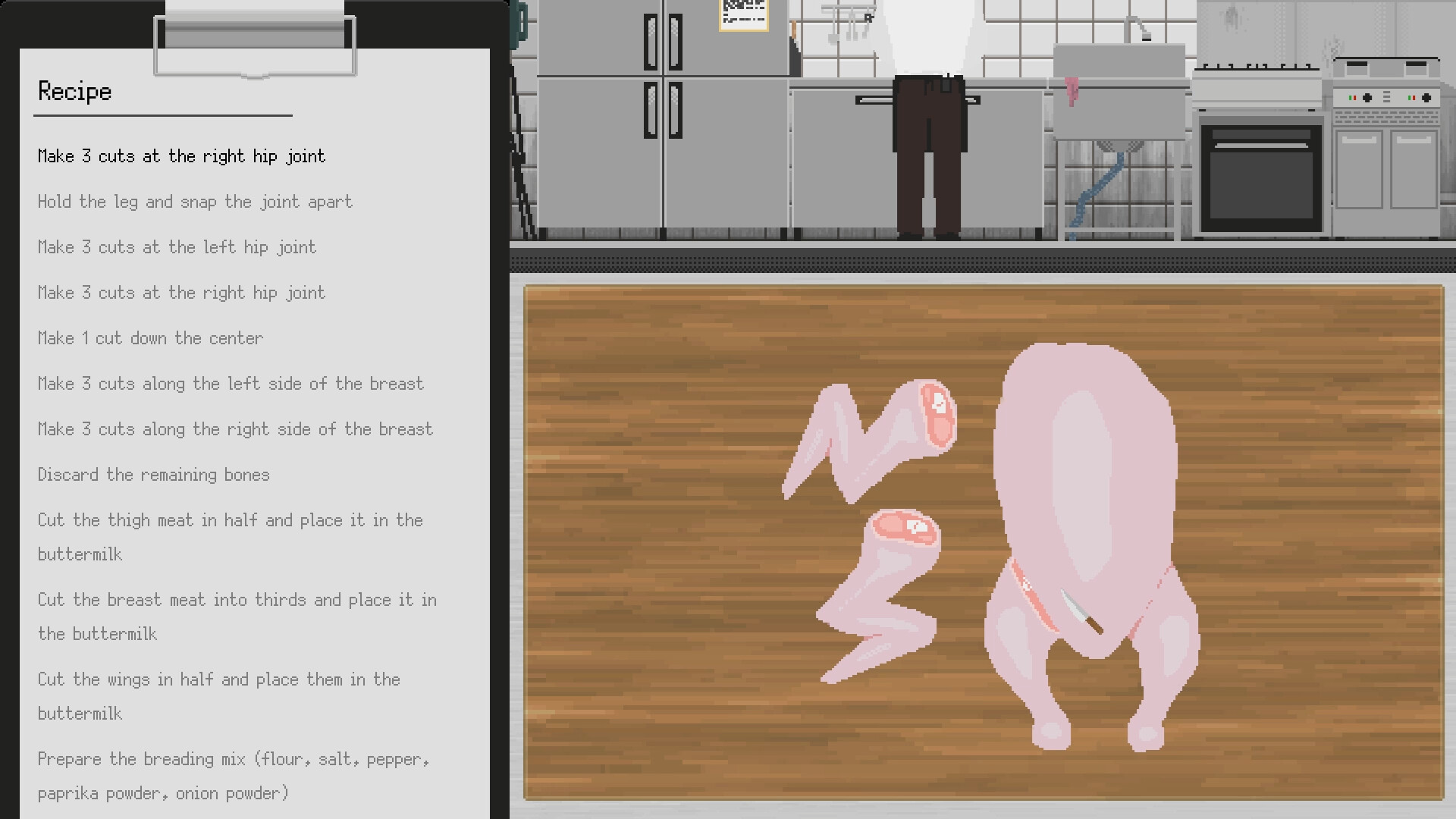
This is the single most misunderstood part of the game, cleared up in the developer's crowdfunding commentary video: the cooking system is not about freely mixing and matching ingredients into custom recipes. You choose a main ingredient, and then follow a predetermined recipe built on that choice.
That reframes the ingredient decision. Your creativity expresses itself in which main ingredient you commit to, not in how you combine a pantry. Practically:
- The "Four Meal Archetypes" above still work as intentions, but their execution is narrower. A Comfort Meal means identifying the one main ingredient that connects to the prisoner's history and letting the recipe do the rest.
- Do not expect cooking-minigame depth or branching recipes. The developer deliberately scoped the game to run 2 to 3 hours total. Every system serves the story, none serves simulation depth.
- If you were hoping for PlateUp!-style kitchen mechanics, adjust expectations before buying. If you were worried the cooking would overwhelm the narrative, rest easy: it will not.
Playtime Is 2-3 Hours, Scoped Deliberately
The developer stated the target length directly in the crowdfunding commentary: around 2-3 hours, with the game's scope kept focused around that length. Combined with no timed input and save-anytime support, this is a single-sitting game for most players, or two sittings if you pause between inmates.
Budget accordingly. This is priced and paced like a short narrative experience, closer to a visual novel with a cooking frame than a simulation with hours of content. The replay value comes from the multiple endings and from re-reading the same inmates through different conversation choices, not from content volume.
Crowdfunding Context
A Tumblbug crowdfunding campaign (Korea only) accompanied the developer commentary video. For players outside Korea this matters mainly as a signal: solo developers who crowdfund are committing to a completion timeline, and the campaign materials doubled as the clearest explanation yet of how the cooking actually works. If you want to follow development, the Steam news hub is the reliable feed; the developer posts there directly and has answered player questions about mechanics in those posts.
Wishlist Momentum
The game passed 20,000 wishlists by August 2026, celebrated with the early OST preview of "Take My Mugshot." Wishlist count matters for a solo developer beyond vanity: it drives Steam visibility, and the developer has explicitly tied additional language support to wishlist growth. Adding it to your wishlist is the concrete way to support a broader release in your language.
Updated FAQ
Is Simplified Chinese supported? Yes. Both Simplified and Traditional Chinese are confirmed. The official Chinese title and localized store page arrive when in-game localization begins.
How does cooking actually work? You pick a main ingredient, then follow a fixed recipe for it. There is no freeform ingredient mixing. The choice that matters is the main ingredient; everything downstream is predetermined.
How long is the game? Around 2-3 hours for one playthrough, per the developer. Multiple endings and conversation branches provide the replay.
What is the crowdfunding about? A Korean campaign on Tumblbug to fund development. It does not block the Steam release; the store page remains live with a spring 2027 window.
Will there be a demo? Nothing announced. Given the 2-3 hour runtime, a demo would risk giving away a large fraction of the game, so a release-date announcement is more likely than a demo drop.
Revised Verdict
The new information strengthens the case for narrative-first players and tempers it for mechanics-first players. Recipe-following cooking means the ingredient choice is a narrative decision dressed as a mechanical one, which fits the game's thesis but will disappoint anyone expecting kitchen simulation. The 2-3 hour scope is honest and focused. Simplified and Traditional Chinese support widens the audience substantially and signals a careful localization. If the pitch, a prison chef, last meals, and conversations with the condemned, interests you at all, wishlist it now and let the release date announcement decide the rest.
Screenshots