Official game
Play Bibdu
This game is hosted by Steam. Continue to the official page to play or download it.
Wishlist on SteamOverview
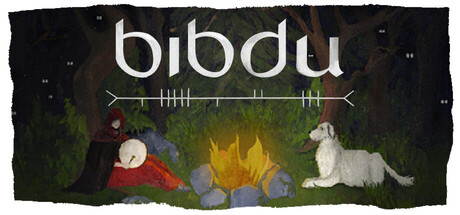
Bibdu is a hand-painted Irish mythology RPG from Rat and Monkey Studio, a two-person indie team based between Galway and Dublin. Artist Lara hand-paints every scene in watercolour after visiting real Irish locations; developer Barry builds the card combat engine and open-world systems. The result is a game that looks like nothing else on Steam — 300+ hand-painted landscapes depicting ancient Ireland as it might have appeared 2,000 years ago. Every background, character, and creature is painted by hand, scanned, and animated. The soundtrack is built from field recordings captured at sites like Newgrange, Rathcrogan, and the Hill of Tara, mixed with traditional Irish instrumentation played by local musicians.
You play as one of the Tuatha Dé — an immortal goddess who ruled Tír na nÓg, the Land of the Young. You've been banished and cursed with mortality. Your only companion is your hound, Cú. Roaming mortal ancient Ireland, you must decide: embrace your earthly existence and the humans you encounter, or fight to reclaim your immortality alongside your divine siblings. Every dialogue choice, faction alignment, and moral trade-off shapes which of the multiple endings you reach. The Kickstarter campaign launched on July 14, 2026 and hit its funding target in 51 minutes — the appetite for a game that treats Irish mythology with this level of craft and authenticity is real.
Combat is turn-based deck-building. You collect cards representing native Irish animals (red deer, fox, badger, otter, Irish hare), native plants (clover, heather, ivy, yew), historical relics, and mythic concepts. Each card costs mana, carries elemental affinities, and can inflict status effects. You build a deck of 20–40 cards and take it into encounters against wild animals, mythological bosses, and rival factions. The deck-builder DNA means every card added or removed changes your combat identity — there is no single "best deck," only what works for your chosen path.
Game Details
| Field | Detail |
|---|---|
| Title | Bibdu |
| Developer | Rat and Monkey Studio |
| Publisher | Rat and Monkey Studio |
| Release Status | Not yet released (Kickstarter funded July 2026) |
| Platform | Windows (64-bit) |
| Steam App ID | 4747050 |
| Genres | Adventure, Indie, RPG |
| Players | Single-player |
| Controller Support | Full controller support, DualSense compatible |
| Languages | English; Gaeilge (Irish) full translation planned; "Cúpla focal" hybrid mode |
| Age Rating | PEGI 14 / USK 16 (violence, nudity, alcohol/tobacco references) |
| Minimum Specs | Windows 10 64-bit, Intel Core i3 3.0 GHz, 4 GB RAM, NVIDIA GTX 760 / AMD R9 280X, DirectX 12, 10 GB storage |
| Steam Features | Family Sharing, Steam Cloud (expected) |
| Price | To be announced (Kickstarter backer tiers from ~€15 digital copy) |
Target Audience
Bibdu is for you if any of these ring true:
- You want a mythology game that isn't Norse or Greek. Irish mythology is staggeringly underused in gaming. If you've ever wondered why nobody made an RPG about the Tuatha Dé, the Morrigan, or the Táin Bó Cúailnge — this is that game.
- You play deck-builders but want a story that matters. Bibdu isn't a roguelike where you restart from zero. Your deck evolves across a full narrative campaign. Choices persist. Cards you collect stay with you.
- You value art direction over polygon count. The hand-painted watercolour aesthetic is the entire visual identity. If you bounce off generic Unity-asset RPGs and crave something with a human hand behind every frame, Bibdu delivers.
- You enjoy choice-driven narratives. Faction reputation, mortality management, dialogue consequences, and multiple endings mean your Bibdu playthrough will differ from someone else's. Completionists will need at least 3–4 runs.
- You're learning Irish or have an interest in Gaeilge. The full Irish-language mode and the "Cúpla focal" hybrid (animal names, place names, and greetings in Irish, everything else in English) make this a genuine cultural artifact, not just a game.
Skip Bibdu if you want a pure card-game grind (e.g., Slay the Spire's ascension ladder), if you dislike reading dialogue in RPGs, or if you need multiplayer — this is a solo narrative experience through and through.
Getting Started
1. Pick Your Background Based on Your Preferred Playstyle
You choose one of four backgrounds at character creation. This determines your starting deck, stat bias, and the first few hours of combat feel:
| Background | Combat Style | Exploration Bonus | Starting Cards |
|---|---|---|---|
| Warrior | Aggressive, high-damage animal cards | Bonus damage vs wild encounters | Red Deer (earth), Wolf (neutral) |
| Scholar | Control-oriented, relic and myth cards | Unlocks hidden lore dialogue; reveals hidden paths | Ogham Stone (relic), Raven (wind) |
| Trickster | Status-effect and debuff focused | 15% discount at all merchants; bypass some fights via dialogue | Fox (wind), Foxglove (plant/poison) |
| Hunter | Balanced midrange with survival sustain | Bonus loot from defeated enemies; reveals animal weak points | Irish Hare (neutral), Yew (plant/heal) |
Recommendation for first playthrough: Hunter or Warrior. Hunter gives you sustain (healing cards) and reveals enemy weaknesses, which flattens the learning curve. Warrior teaches you the damage-dealing side but can leave you without healing if you draft poorly.
2. Clear the First Region Thoroughly Before Pushing the Main Quest
The starting region (Magh nEalta / The Plain of Flocks) contains 12 hidden card pickups, 4 lore fragments, and 2 optional tutorial encounters. Rushing the main quest will leave you under-levelled when you hit the first boss (The Púca of Brú na Bóinne). Spend 45–60 minutes exploring every settlement, cave, and grove before accepting the "Cross the Boyne" quest.
3. Talk to Every Named NPC — Twice
Named NPCs have two dialogue states: their initial greeting and a second conversation that unlocks after you complete any quest in their region. The second conversation often grants a unique card, reveals a hidden location, or opens a faction reputation opportunity. Unnamed NPCs (villagers, traders) are one-line flavour — you can skip them.
4. Build Your Deck to 25 Cards Maximum
The deck size limit is 40, but a tight 22–25 card deck cycles your best cards faster. Every card above 25 dilutes your draw. Remove weak starting cards at the Druid's Circle in any settlement (costs 50 Ogham points per removal). Ogham points are earned by discovering historic sites and completing lore entries.
5. Learn the Elemental Wheel Early
Bibdu uses a five-element system:
- Earth (green) beats Wind (white)
- Wind beats Dark (purple)
- Dark beats Light (gold)
- Light beats Earth
- Water (blue) is neutral — no strengths or weaknesses, but water cards often carry healing or cleanse effects
Elemental advantage gives +40% damage. Elemental disadvantage gives -30%. Neutral matchups deal base damage. The game displays elemental icons on every card — check them before playing.
6. Manage Your Mortality Gauge
Your character is cursed with mortality. A gauge in the top-left HUD shows your remaining lifespan as a fraction (e.g., 87/100). Certain choices — pushing through cursed zones, using forbidden relic cards, angering The Morrigan — permanently reduce this number. If it reaches zero, you die and the game ends. There is no way to increase your maximum; you can only slow the drain by completing benevolent quests and receiving blessings from An Dagda. Treat mortality as a second resource, like mana.
7. Save Before Every Major Dialogue Tree
Major dialogues (those with the branching-choice UI, indicated by a golden knotwork border) can lock you into faction paths, lose you companion cards, or trigger irreversible mortality drains. Keep at least 3 rotating manual saves. The game autosaves only at region transitions — not before conversations.
8. Use Your Hound's Cards
Cú, your hound companion, provides 3 unique support cards that are always in your deck and cannot be removed: Cú's Warning (0 mana, reveals enemy's next attack type), Cú's Howl (2 mana, taunt — redirects next enemy attack to a summoned spectral wolf), and Cú's Loyalty (3 mana, heal 15% HP, once per battle). New players ignore these because they "don't do damage." Wrong. Cú's Warning lets you plan blocks perfectly; Cú's Howl is a free damage soak every 3 turns; Cú's Loyalty is your only guaranteed healing outside plant cards. Use them.
Advanced Tips
| Mistake | Why It Hurts | How to Avoid |
|---|---|---|
| Building a 40-card deck | You draw your best cards once every 8–10 turns instead of every 4–5. Boss fights punish slow decks hard. | Stay at 22–25 cards. Remove weak starters at the Druid's Circle whenever you have Ogham points. |
| Ignoring plant cards | You have no sustain. The first region boss (The Púca) deals unavoidable chip damage. Without healing, you die to attrition. | Include at least 3 plant/healing cards in every deck. Clover (1 mana, heal 8 HP) is common and worth keeping through mid-game. |
| Skipping historic sites | Historic sites grant Ogham points (used for card removal and rare card purchases), lore entries (XP), and sometimes unique relic cards. Speed-running past them starves your progression. | Visit every marked historic site on the region map before moving on. They're visible as triskelion icons. |
| Picking every dialogue fight | Some dialogue options trigger unavoidable battles against over-levelled opponents. Early on, your deck can't handle a fight with Cú Chulainn's warband. | If an NPC warns you ("Are you sure you want to do this?"), they mean it. Back down unless you've deliberately prepared. |
| Ignoring faction reputation | Reputation with the Tuatha Dé factions determines which quests, cards, and endings are available. Neutrality locks you out of the best rewards from every faction. | Pick a lane by the end of the second region. Lugh (warrior path), The Morrigan (dark path), or An Dagda (balance path). Hybrid alignment is viable but harder. |
| Spending all Ogham points on cards | Card removal is the most efficient use of Ogham points in the early-to-mid game. Buying new cards before removing bad ones just bloats your deck further. | Remove 2–3 weak cards before buying your first new card from a vendor. |
| Hoarding mana | Mana resets to full at the start of every battle. Unspent mana at the end of a turn is wasted. | If you have 3 mana and your best play costs 2, play a 1-cost card anyway — that damage or shield is free. The only exception is holding a relic for a specific boss phase. |
| Neglecting the "Cúpla focal" mode if learning Irish | The hybrid language mode is tucked in the accessibility menu and easy to miss. It replaces animal names, place names, and NPC greetings with Irish while keeping quest text in English — an excellent learning tool. | Enable it in Settings > Language > "Cúpla focal" before starting. You can toggle it mid-game. |
Core Mechanics
1. Open World Exploration
Ancient Ireland is split into 7 distinct regions, each unlocked by progressing the main quest. Regions vary in size and density — Magh nEalta (starting region) is small and tutorial-heavy; Connacht (Queen Medb's territory) is the largest, with 40+ points of interest. Fast travel unlocks between any two discovered settlements, but only after you've visited both on foot.
What you find while exploring:
- Settlements (14 total) — Safe zones with NPCs, merchants, Druid Circles (card removal), and inns (restore HP, save game). Each settlement has a unique card vendor whose inventory refreshes after story milestones.
- Historic Sites (30+) — Recreation of real Irish landmarks. Newgrange, Rathcrogan, Hill of Tara, Dún Aonghasa, the Rock of Cashel, and more. Each site contains a lore challenge (answer a question about its history correctly) that rewards Ogham points and, on first completion, a unique relic card.
- Wild Encounters — Random card battles triggered while travelling between locations. Enemy difficulty scales with region. Fleeing costs 5% mortality gauge — only flee if you're genuinely outmatched.
- Boss Lairs (12) — Fixed-location encounters against mythological creatures: The Púca, The Dullahan, The Banshee, Ellén Trechend (three-headed monster), Each-uisce (water horse), and more. Each boss drops a unique Myth card.
- Hidden Groves & Caves — Off-path areas revealed by Scholar background perception checks or by following clues from NPC dialogue. These contain rare plant cards and lore fragments.
2. Card Battle System
Combat is turn-based. You draw a hand of 5 cards at the start of each battle and draw 1 additional card per turn. Your mana pool starts at 2 and increases by 1 each turn (caps at 8). Enemy intent is displayed above their portrait — the game tells you whether they're attacking, defending, buffing, or summoning.
Card Types:
| Type | Source | Typical Role | Examples |
|---|---|---|---|
| Animal | Wild encounters, quest rewards | Direct damage, elemental attacks | Red Deer (earth, single-target), Fox (wind, multi-hit), Badger (dark, armour-piercing) |
| Plant | Exploration, merchant purchases | Healing, cleanse, buff | Clover (heal 8), Heather (cleanse poison), Ivy (shield 5 for 2 turns), Yew (revive from KO, once per battle) |
| Relic | Historic sites, faction rewards | Powerful one-time effects | Ogham Stone (draw 3 cards), Tara Brooch (double mana for 1 turn), Gáe Bulg (deal 30 damage, exhausts) |
| Myth | Boss defeats, main quest milestones | Game-changing abilities | Morrigan's Favour (deal damage equal to missing HP), Lugh's Spear (pierces all shields), Dagda's Cauldron (full heal, once per run) |
Mana System: Every card has a mana cost between 0 and 6. Zero-cost cards (Cú's Warning, Swift Strike) are always playable. Five and six-cost cards (most Myth cards, some legendary Relics) demand you save mana for a turn — which means you take an undefended hit. Weigh that trade-off carefully.
Status Effects:
- Poison — Deals 3 damage per stack at end of enemy turn. Stacks decay by 1 per turn. Foxglove and Badger cards apply poison.
- Bleed — Deals 2 damage per stack when the enemy attacks. Applied by Wolf and weapon-relic cards.
- Sleep — Enemy skips 1 turn. Broken by damage. Raven and certain relic cards apply sleep.
- Shield — Absorbs damage. Multiple shield cards stack. Ivy and Yew grant shield.
- Taunt — Forces enemy to attack a specific target. Cú's Howl is the primary source.
- Frenzy — +30% damage for 2 turns, but take +20% damage. High-risk, high-reward. Applied by certain Myth cards.
3. Faction Reputation & Alignment
There are 4 major factions. Your reputation with each is tracked on a -100 to +100 scale:
- Lugh's Followers (Warrior faction): Rewards aggressive decks. High reputation unlocks Lugh's Spear (Myth card), access to the Grianán of Aileach fortress, and the "Champion of Lugh" ending.
- The Morrigan's Cabal (Dark faction): Rewards sacrifice and cunning. Grants The Morrigan's Favour, access to the Cave of Cruachan, and the "Harbinger" ending. Every quest for The Morrigan costs mortality points.
- An Dagda's Hearth (Balance faction): Rewards healing, protection, and wisdom. Grants Dagda's Cauldron, access to Brú na Bóinne's inner chamber, and the "Keeper of Balance" ending. Dagda's quests restore small amounts of mortality.
- The Unaligned (Neutral): You can refuse to commit. This unlocks a fourth ending — "The Wanderer" — but locks you out of all faction-exclusive cards and quests. Only recommended for a challenge run.
Faction reputation changes through dialogue choices, quest completion, and which gods you pray to at standing stones scattered across the map.
4. Mortality System
Your mortality gauge starts at 100/100. It decreases through:
- Cursed zones — Areas marked with purple miasma on the map. Entering drains 1 point per 10 seconds. Some quest objectives are inside cursed zones, forcing you to rush.
- The Morrigan's quests — Each completed quest costs 5–10 mortality. The rewards are powerful, but the cost adds up.
- Using forbidden relics — Certain Relic cards (marked with a skull icon) cost 1–3 mortality per use. The Gáe Bulg, for example, deals 30 damage but costs 2 mortality.
- Dying and resurrecting — If you fall in battle, you can resurrect at the nearest settlement for a 10-point mortality cost. You cannot resurrect if mortality is below 10.
Mortality cannot be increased above 100. It can be restored (not above max) by completing An Dagda's blessing quests (+5 each) and discovering certain sacred springs (+3 each, one-time). If mortality hits 0, you get the "Mortal End" game over screen — your save is not deleted, but you must reload an earlier save.
5. Deck Customization & Card Economy
Between battles (at any settlement), you can:
- Add/remove cards from your active deck (20 min, 40 max)
- Upgrade cards at a Druid's Circle using Ogham points. Upgrades increase damage, reduce mana cost, or add secondary effects. Prioritize upgrading your 2–3 most-used animal cards.
- Purchase cards from settlement vendors. Prices range from 100–800 Ogham points. Rare and Myth cards cannot be purchased — they must be earned.
- Trade cards with certain NPCs. Queen Medb's court has a card trader who offers 2-for-1 exchanges.
Ogham points are the universal currency for deck management. Earn them by:
- Completing historic site lore challenges (+20–50 each)
- Defeating bosses (+100)
- Selling unwanted cards to vendors (+10–30 per card)
- Completing side quests (+50–200)
Advanced Strategies
Strategy 1: The Mortality-Neutral Dark Run
Playing The Morrigan's path without dying requires careful mortality budgeting. The full dark questline costs approximately 45 mortality points (9 quests × 5 points average). Sacred springs restore ~15 points total. An Dagda's blessings are unavailable on a dark run (your Dagda reputation will be negative). To survive:
- Complete all sacred spring discoveries in regions 1–3 before committing to The Morrigan in region 4.
- Never use forbidden relics outside boss fights — the 1–3 point cost per use is unsustainable.
- Rush cursed zones with Cú's Howl active (the summoned wolf distracts patrolling spirits, halving the drain rate).
- Keep 2 Yew cards (revive) in your deck at all times. Paying 10 mortality to resurrect after a battle loss is far worse than using a revive card mid-fight.
- The final dark quest rewards you with "Morrigan's Immortality" — a relic that freezes your mortality gauge permanently. Reach it with at least 5 points remaining.
Strategy 2: The 22-Card Infinite Cycle
A deck of exactly 22 cards with the right draw engine can cycle through your entire deck in 4 turns. Core cards:
- Ogham Stone (Relic, 1 mana, draw 3 cards) — obtained from the Newgrange historic site.
- Raven (Animal/Wind, 2 mana, draw 1 card + apply Sleep) — starting card for Scholar, purchasable for others.
- Swift Strike (Animal/Neutral, 0 mana, deal 4 damage, draw 1 card if target is below 50% HP) — common drop from wild encounters.
With 3 Ogham Stones and 2 Ravens, you can draw your entire deck in roughly 6 turns. Add Lugh's Spear (Myth, 5 mana, pierce all shields + draw 2) for the finishing burst. This build trivialises the mid-game but struggles against The Banshee (who silences draw effects for 2 turns). Carry a backup plan.
Strategy 3: Poison-Sleep Lockdown
For players who prefer control over damage racing. Core interaction: Sleep prevents the enemy from acting, and Poison ticks during skipped turns without decaying (sleep prevents poison decay).
Key cards:
- Raven (2 mana, Sleep) — reusable every 3 turns.
- Foxglove (1 mana, apply 2 Poison) — common plant card.
- Badger (3 mana, Dark, deal 6 + apply 1 Poison per Dark card in hand) — scaling poison applier.
- Heather (1 mana, cleanse self) — removes enemy debuffs on you, letting you reapply your own.
The lockdown loop: Sleep → stack 5+ Poison → let enemy skip turn → Poison ticks for 15+ damage → reapply Sleep. Works on all non-boss enemies. Bosses have 50% status resistance, so you'll need 2 Ravens and at least 6 Poison stacks to make it stick.
Strategy 4: The Hunter's Loot Engine
Hunter background + specific card choices maximize card acquisition, giving you the widest build options by mid-game.
- Hunter's passive grants +1 bonus card drop from defeated enemies (stacks with loot-boosting cards).
- Otter (Animal/Water, 1 mana, deal 3 + 20% chance to drop extra Ogham points) — common, worth including 2 copies.
- Ivy (Plant, 3 mana, shield 5 + gain 10 Ogham points) — slow but reliable point generation.
With this setup, you'll accumulate enough Ogham points by region 4 to fully upgrade 8–10 cards and remove every weak starter. The trade-off is slower combat — you're playing suboptimal damage cards for their loot effects. Compensate by over-levelling before boss fights.
Strategy 5: Gaelic Fluency Bonus
The game rewards players who engage with the Irish language. In full Gaeilge mode or Cúpla focal mode:
- Standing stone inscriptions — Written in Ogham script. The game provides a translation toggle, but solving them without the toggle rewards double Ogham points and occasionally reveals hidden locations not marked on the map.
- NPC greetings — If you respond to an NPC's Irish greeting using the correct Irish response (selected from dialogue options), you gain a small reputation bonus with their faction.
- Animal names — Certain animal cards have their Irish name in the card title. Playing a card whose Irish name you've "learned" (by encountering the animal 3+ times) grants a +10% damage bonus.
This isn't required to beat the game, but it adds meaningful mechanical depth for those willing to engage with Gaeilge.
FAQ
Q: Is Bibdu a roguelike deck-builder like Slay the Spire? A: No. Bibdu is a narrative RPG with deck-building combat. Your deck persists across the entire campaign. You don't restart on death — you reload a save. There is no "run" structure. Think of it as an RPG where combat happens to use cards instead of a menu-based battle system.
Q: How long is a single playthrough? A: Developer estimates place the main story at 18–25 hours. A completionist run (all historic sites, all side quests, all boss defeats) runs 35–40 hours. Seeing all 4 endings requires 3–4 full playthroughs (estimated 60–80 hours total). Some faction choices lock you out of others permanently, so you cannot see everything in one save.
Q: Can you respec your deck or background mid-game? A: Your background (Warrior/Scholar/Trickster/Hunter) is locked at character creation and cannot be changed. Your deck can be modified at any settlement — add, remove, upgrade, and purchase cards freely. You are never locked into a specific deck build.
Q: What happens if my mortality gauge reaches zero? A: Game over. You see the "Mortal End" screen — your character succumbs to the curse and dies. You must reload a previous save. The game autosaves at region transitions, but if you've been manually saving (which you should), reloading an earlier save before the drain occurred is straightforward.
Q: Are there difficulty settings? A: Bibdu does not have traditional Easy/Normal/Hard modes. Difficulty is self-regulated through deck-building choices, faction alignment, and how aggressively you manage your mortality gauge. Playing The Morrigan's path on a slim mortality budget is the game's de facto "hard mode."
Q: Is there voice acting? A: Limited. Key story cutscenes feature voice-over in Irish and English. Most NPC dialogue is text-only. The soundtrack and ambient soundscapes (field recordings from Irish locations) are fully voiced, so to speak — every region's audio was recorded on-site.
Q: Does the game support Steam Deck? A: The Steam store page lists Windows only, with no native Linux build announced. However, the game has full controller support and DualSense compatibility, making it a strong candidate for Proton compatibility on Steam Deck. Official Deck verification has not been confirmed as of writing.
Q: Can I play in Irish (Gaeilge)? A: Yes. The developers are building a full Irish-language localisation. There's also a "Cúpla focal" hybrid mode where animal names, place names, and greetings appear in Irish while the rest of the game remains in English — designed for learners. Enable this in Settings > Language.
Q: What's the difference between Relic and Myth cards? A: Relic cards are based on historical Irish artifacts (Ogham Stones, Tara Brooch) and tend to have powerful single-use or utility effects. Myth cards are based on mythological concepts and characters (Lugh's Spear, Morrigan's Favour) and are typically high-cost, game-changing cards earned from boss defeats or main quest milestones. Myth cards are rarer and cannot be purchased — only earned.
Q: Are there microtransactions or DLC planned? A: No microtransactions. The developers have stated on their Kickstarter that Bibdu is a complete single-purchase game. Post-launch content updates (new cards, new quests) are planned as free updates. Stretch goals from the Kickstarter campaign may add additional regions and boss encounters.
Q: How does the elemental system interact with multi-type enemies? A: Some bosses have dual elemental affinities (e.g., The Dullahan is Dark/Wind). In these cases, use the element that beats the primary (first-listed) type. The secondary type modifies damage by ±10% instead of the full ±40%. Card elemental icons will flash if you have advantage — trust the UI.
Q: Can I pet the hound? A: Yes. Interacting with Cú at any settlement plays a short animation and restores 2 HP. It also grants a small, stacking morale buff (+1% damage per pet, caps at 5%). The developers confirmed this feature was one of the most-requested during Kickstarter.
Final Verdict
Bibdu is not chasing trends. It's a two-person studio's passion project — 300+ hand-painted watercolour scenes, field-recorded soundscapes from real Irish sites, a card combat system that rewards tight deck-building over grinding, and a story that treats Irish mythology as more than set dressing. The mortality mechanic forces hard choices. The faction system makes replays genuinely different. The Gaeilge language support turns the game into a cultural preservation project as much as an RPG.
It won't appeal to everyone. If you want Slay the Spire's endless ascension climb, Bibdu's finite campaign won't scratch that itch. If you dislike narrative-heavy games where dialogue choices carry consequences, the branching paths will frustrate you. But if you've been waiting for a game that treats Celtic mythology with the same reverence that Hellblade gave Norse myth or Hades gave Greek myth — Bibdu is your game.
Start with Hunter or Warrior. Keep your deck at 22–25 cards. Manage your mortality like a second health bar. Talk to everyone twice. And don't ignore your hound's cards — Cú will save your life more often than any legendary relic.
Last reviewed by Game How To Editorial. We play each game, verify controls against official sources, and update guides when game mechanics change.
Screenshots