Daily Pick
One deeply researched guide worth reading today.
A practical route through the systems that matter most, written to help new players make confident decisions quickly.
Overview
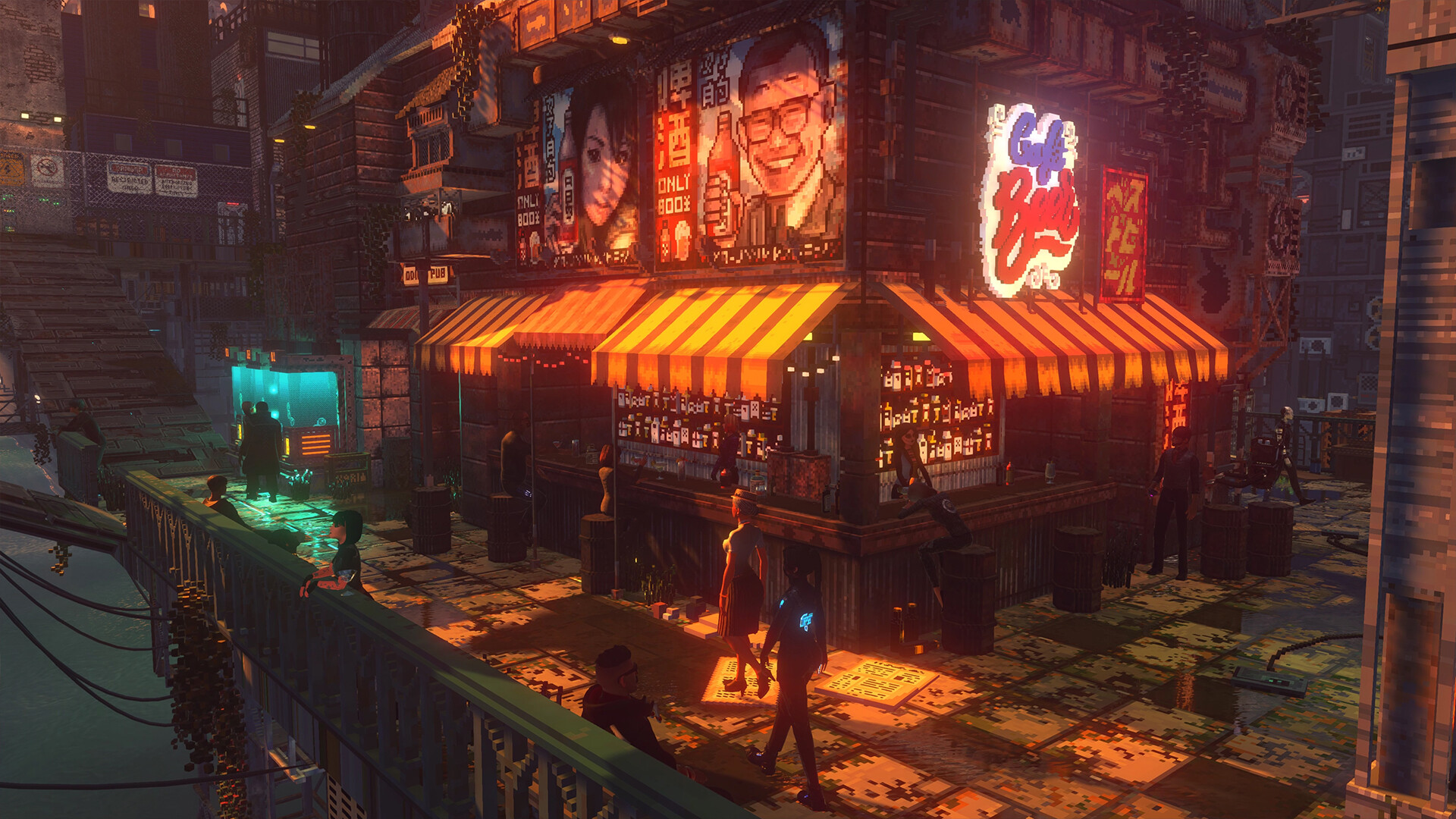
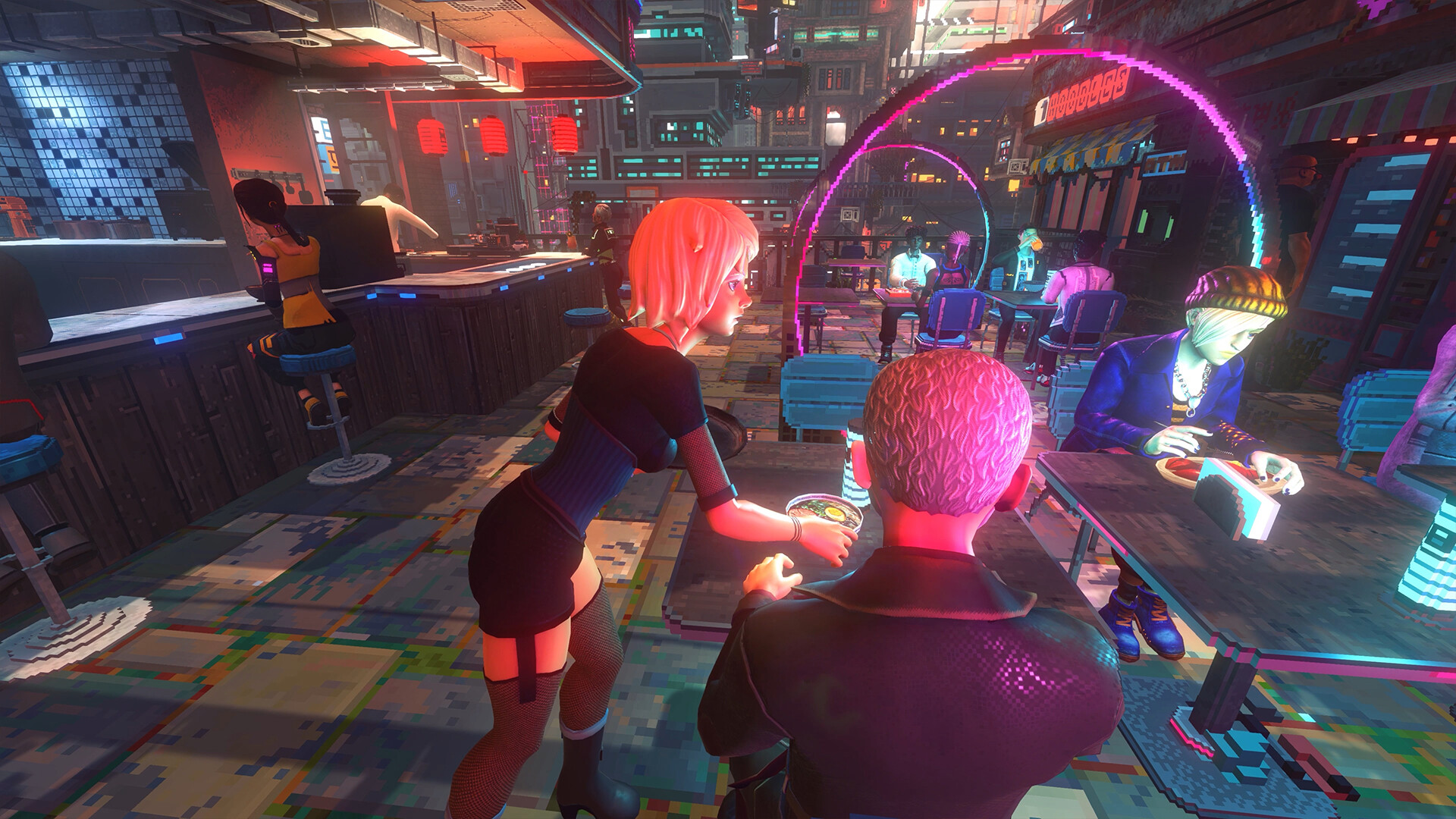
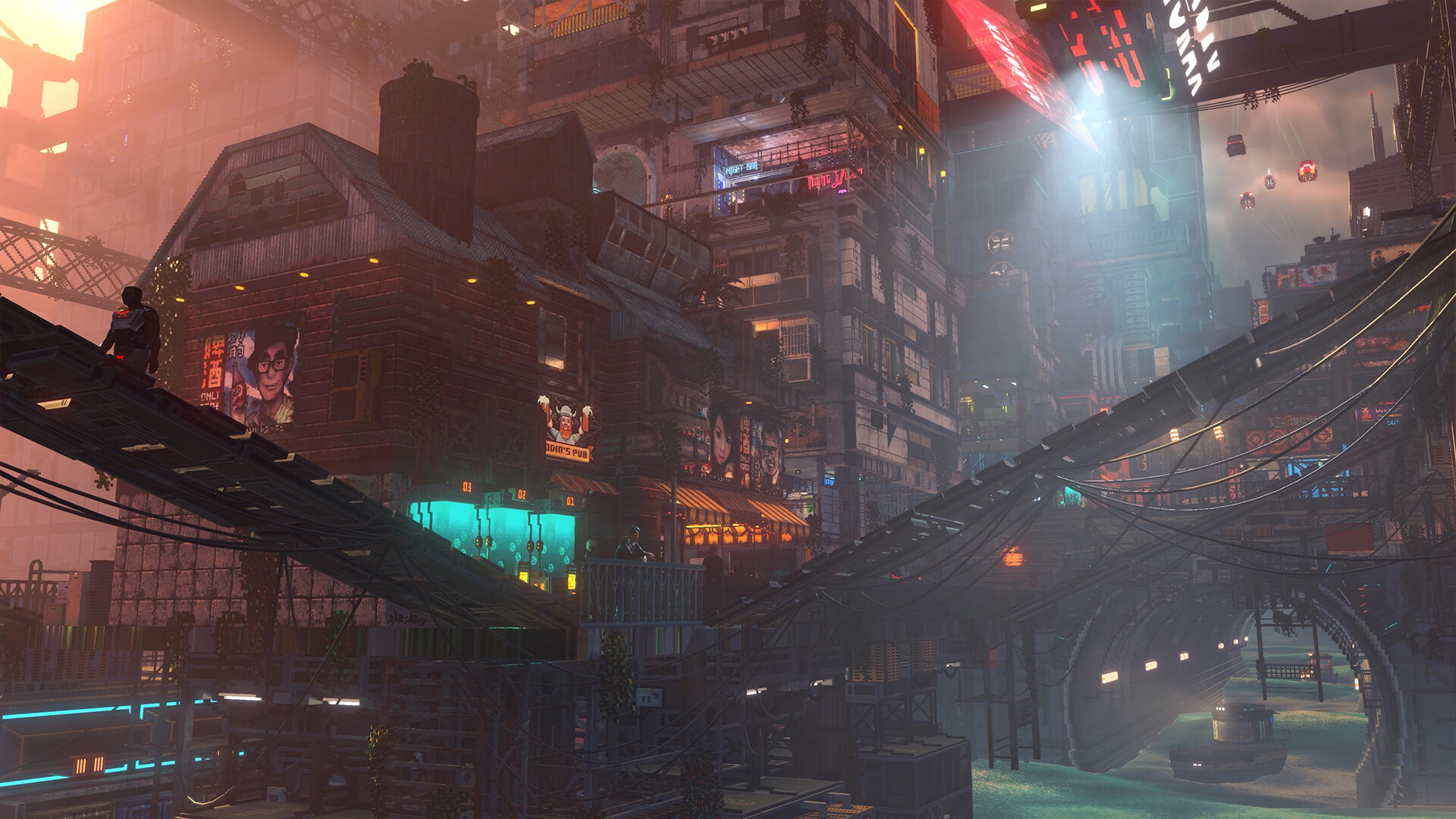
Nivalis Nights is a first-person life sim set in the vertical cyberpunk city from Cloudpunk. ION LANDS built it, 505 Games publishes it, and it launched on Steam September 29, 2026 at $24.99 after crossing one million wishlists. You arrive in Lowtown on a Monday morning with 1,000 credits, a modest apartment, and a noodle stand called Ramen Noir. From there the city is yours: grow the stand into restaurants and nightclubs, grow actual vegetables in rooftop greenhouses, fish from your own boat, chase four kinds of relationships across 130+ voiced residents, and decide whether the 2 AM curfew is a threat or an opportunity.
The pitch sounds cozy until you read the second half of the store page. Your district is being squeezed by CorpSec crackdowns while a serial killer feeds the news cycle. The curfew locks the city at night, and the game warns you plainly that sabotage cuts both ways. There is no combat and no announced fail state. The pressure is economic and social, and the only thing that can genuinely hurt you is a curfew run that goes wrong or a kitchen that runs out of noodles at 13:00.
| Fact | Detail |
|---|---|
| Developer / Publisher | ION LANDS / 505 Games |
| Release | September 29, 2026 (Steam), Epic to follow |
| Price | $24.99 / €24.99 / £21.99, 10% launch discount |
| Genre | First-person life sim, business management, voxel art |
| Reception | Mostly Positive at launch (about 78% of 2,100+ reviews) |
| Content scale | 100+ quests, 130+ authored characters, 190 meals, 240+ ingredients, 620+ furniture items |
| Voice work | About 200,000 voiced words across 135+ characters |
| Relationship paths | Friendship, rivalry, business partnership, romance |
| Night layer | 02:00 curfew, security systems, sabotage, retaliation |
| Achievements | 100+, including 24+ rare fish and 11+ purchasable apartments |
| Platform | Windows, full controller support including DualSense |
Who it is for: players who liked the mood of Cloudpunk but wanted to own something in that city instead of delivering packages through it, restaurant-sim players who want depth without timers, and anyone who considers a fishing boat a reasonable answer to a bad day.
Who it is not for: players who want combat, a directed main quest, or flawless performance on minimum hardware. The launch builds are heavy on lighting, and the first two patches were mostly about that. It runs well on strong rigs and struggles on old ones.
Getting Started: Day 1 and the First Week
Your Day 1 checklist
- Follow the intro to Meridian Market and take over Ramen Noir from Thaddeus. The tutorial walks you through placing tables, chairs, and stools. Do not get attached to those tables. You will sell them soon.
- Meet Ava at the Boardwalk docks. She anchors the dock storyline, and the docks are where your boat, your fishing rod, and half the seafood economy live. The fishing rod is free from Ady, just past the boat ramp. A spare costs about 100 credits in the Stacks.
- Buy your first stock: 30 Chicken from the Butcher, 30 Onions and 30 Ramen from the Greengrocer. Both vendors sit across the market from your stall. Dump everything in the cabinet inside Ramen Noir.
- Set your staff schedule on the tablet by the entrance. The game pauses while you edit hours, so take your time.
- Survive the lunch rush. Expect rushes around 08:00, 13:00 to 15:00, 19:00, and 21:00. Your times may drift a little, but those four windows repeat daily.
- Be home before 02:00. The martial curfew triggers forced exhaustion if it catches you outside. Your apartment in Lowtown is in the back right corner, up a flight of stairs behind a concrete entryway when you taxi in from Meridian Market.
Beginner mistakes worth dodging
- Chasing menu breadth before you can stock depth. Nine food categories exist, from meat and seafood to desserts and drinks, and 190 meals are in the game. Serving four dishes well beats offering twelve and running out of stock at midday.
- Keeping the tables. This is the single biggest noodle-bar mistake. Details in the seating section below, but the short version: tables triple your waiter travel distance.
- Hoarding ingredients. Near-expiry stock spoils overnight, fresh stock can spoil overnight, and your fridge is small. Buy for today, adjust tomorrow.
- Underselling. When the game lets you raise prices, raise them. New owners price low out of caution and then cannot afford staff.
- Exploring before unlocking fast travel. Taxis and trains cost money and time. Walk a district once to open its nodes, then fast travel forever after.
Core Mechanics: The Systems Under the City
The Ghost simulation
NPC schedules run whether you watch them or not. ION LANDS calls the system Ghost, and it simulates residents at three detail levels: distant, nearby but unseen, and fully visible. The practical consequence is that a friend you met Monday will actually be where their routine puts them on Thursday. Appointments are real. If a character says they fish at the docks in the morning, showing up there works.
The noodle bar playbook
The noodle stand funds everything else, and it rewards two specific optimizations that most new owners miss.
Seating: sell the tables, buy stools. A server visiting a table must walk around the bar three times per customer: once to take the order, once to deliver, once to clear the bowl. A server at a bar stool takes three steps between the kitchen and the customer for the same three tasks. Sell your tables and chairs as soon as you can afford a trip to the furniture store on the far side of Meridian Market. The cheapest stools fit about 11 of them where the starting layout held 3 stools and a handful of tables. Your waiter workload drops so much that you need fewer staff for the same cover.
Stocking: buy near-expiry in the morning, fresh in the afternoon. Ingredients under two days from expiry cost roughly half price, and they spoil overnight no matter what. Fresh stock can also spoil overnight. So the trick is timing: near-expiry ingredients bought in the morning get used during the same day's service, which means the 50% discount is pure savings. Anything you buy in the afternoon to survive overnight should be fresh.
How much to stock: figure roughly 52 noodle servings a day at full stools. That is 11 stools across 3 to 4 daily rushes, plus a handful of walk-in customers between rushes. Open with about 52 of each ingredient, check the cabinet at 15:00, and aim to end the day with just 1 to 4 servings of surplus. Whatever you over-bought today, subtract from tomorrow's morning order. It takes two or three days of adjustment to lock in.
Rot management: your cooks reach for the freshest ingredients first, which means near-expiry stock quietly rots in the fridge while they burn through the fresh pile. Pull aging items out manually and sell them to a merchant before they turn. The day-two patch changed cooking to use the oldest ingredients first, which cuts rot, but be aware it can nudge down the freshness factor in customer reviews.
Staff, wages, and the task priority list
Open the job board and read two things before hiring: the hours a candidate wants and the skills they hold. Three rules follow from how the wage system works.
- Match their requested hours exactly. Staff paid by the hour accept lower wages when the schedule you offer matches what they asked for. Stretch or shrink their hours and the same happiness costs more per hour. Editing schedules pauses the game, so grind this until the numbers sit right.
- Avoid generalists. Candidates holding all three skills (cooking, serving, cleaning) charge a premium. A 3-skill employee who only cooks is a donation. Fire overqualified staff and replace them with single-skill hires at the lower rate.
- Use 10+ hour requests as your skeleton crew. Full-day staff anchor the schedule. Low-hour candidates make cheap part-time cover for the rush windows.
For a running noodle bar, a workable core is 2 cooks (two cooking stations exist for noodle soup, and both should run during a rush), 3 servers, and 1 cleaner. Cleaning trips pull a worker far from the kitchen for a minute or two, but mess volume is low, so one cleaner covers it. An alternative that saves wages: 3 to 4 dual cook-and-server staff who flow to whichever task is nearest. It costs more per head and less in total.
The official task priority (added in the second launch patch) decides everything when your staff get busy. Staff work down this list in order:
| Priority | Task |
|---|---|
| 1 | Serve a meal |
| 2 | Process ingredient |
| 3 | Make meal at Food Processor or Drink Machine |
| 4 | Take new order |
| 5 | Deliver ingredients (manager role) |
| 6 | Buy ingredients (manager role) |
| 7 | Manage complaint (manager role) |
| 8 | Cleanup meal |
| 9 | Cleanup trash (cleaner role) |
| 10 | Cleanup storage (cleaner role) |
Serving beats order-taking, which is why packed venues with one employee leave customers standing unserved while a single cook serves, cooks, and cleans in a rigid loop. More seats means more staff, or faster stools.
Rush and dead hours: expect service pressure around 08:00, 13:00 to 15:00, 19:00, and 21:00, and dead air around 11:00 to 12:00, 15:00 to 16:00, and 23:00 onward. Stack shifts so staff arrive just before a rush and hand off during dead windows.
Managers and multi-venue
Venue level 3 unlocks the manager option. At launch, managers had a nasty habit of overbuying produce and burning your cash, which made them a trap for about a week. The patches improved their buying behavior, and current players run them for restocking without complaint. Hire one when your first venue hits level 3, assign restocking, and your personal morning prep loop halves.
| Manager duty | What it does | When to assign it |
|---|---|---|
| Restocking | Automatic ingredient buying | The moment the option exists and you run two venues |
| Efficiency and morale | Better labor performance | When service speed, not stock, is your bottleneck |
| Greenhouse collection | Harvests for you | When harvesting competes with quests and travel |
Do not run two venues before the first has a manager. Both will demand your hands, quests stall, and reputation stalls with them.
Greenhouses and farming
Clem pulls you into farming around day 2 or 3. The greenhouse loop: rent a plot, install grow boxes, and plant one seed per module. Each seed turns into 10 units of product at harvest, so size your boxes against your kitchen burn rate. Machines come in C, B, and A classes. C is slowest and available first; B and A need higher farming skill. Herb boxes and hydro tanks for fish also sit behind higher levels, so do not plan an early basil-and-sushi empire.
Meat printers and dairy processors exist, which means a mature greenhouse can cover every category on your menu. That matters because vendor prices swing with city events while greenhouse output does not.
Two shortcuts worth taking:
- Skyhigh Gardens sells prime greenhouse space for about 10 credits a day. Take the taxi from the Spaceport and look on the right side. It is one of the best rental deals in the city and the views are better than the industrial district's fertilizer depot.
- Trash bags hold free seeds. Bags sitting on top of trash cans in every neighborhood contain seeds and ingredients. Sell them or plant them. Collecting bags on your walking routes is the cheapest farm startup in the game.
Fishing and the boat
Your boat comes from the docks with no rent and no damage model, only fuel. Refueling stations sit in most waterfront districts, and the cheapest fuel reported so far is Mountaintown, to the right of the oil rig. Prices allegedly climb toward Calypso, so top up there.
Cast your rod where you see glowing fish surfacing. Empty water makes you wait a very long time. Sold fish land at roughly half the value the fishing UI shows, which is the market's cut, not a bug.
The quiet exploit: time stops during curfew, and CorpSec has no boats. Park your boat at a fishing spot in the evening, fish through the curfew hours as long as you like, then sleep it off and sell in the morning. It is the safest late-night activity in the game and the fastest way to stack early cash when your menu leans seafood.
The curfew layer and sabotage
The 02:00 martial curfew is the game's sharpest edge. Get caught outside and you eat forced exhaustion penalties. Work past the security systems, though, and you can reach a competitor's business, steal their fridge or food processor outright, haul it home, and put it to work. The victim spends their morning with CorpSec. The same can happen to you: one early player lost days of revenue after a rival planted rats in their restaurant.
A safe curfew protocol, until you know the risks personally:
- Pick the target and the route the night before, while the map is open.
- Save before leaving home. Save Anytime is a strategic tool, not a convenience.
- One goal per run. Get in, do it, get out.
- No sightseeing. Wandering after curfew is how runs get caught.
- Early game, skip sabotage entirely. You have nothing to defend, so a failed run bets your only asset for a marginal gain. Save it for when retaliation against you would cost a rival more than it costs you.
The City: Districts and Transit
The city has no minimap. You navigate the vertical neighborhoods with your own memory, which is exactly why the district list below matters. The in-game city map tracks four numbers per district: leaseable storefronts, active quests, hidden supply crates found out of total, and time until curfew.
| District | Storefronts / Crates | What it is for |
|---|---|---|
| Central Canyon | 10 / 9 | Most venues in the game, dual-wall terraces and skyways. Expansion target. |
| Metro Hub | 9 / 11 | Commuter flood. Quick-service stalls, bars, kiosks thrive here. |
| Hive Mall | 7 / 13 | Highest crate density, weather-sheltered foot traffic, dessert cafes. |
| Meridian Market | 6 / 10 | Starter quarter: wholesale spices, meat suppliers, your noodle street. |
| Seaside Boardwalk | Docks and slips | Ava, the boat, fishing gear, fishmongers. |
| Skyhigh Gardens | VIP venues | Highest menu markups, private clubs, cheap greenhouse rentals. |
| Industrial District | Greenhouse bays | Rentable farm plots. |
| Calypso Island | Entertainment lots | Arcades, cocktail bars, the chess tournament. |
| Lowtown | Residential | Your apartment, junk shops, fixers, curfew resets. |
Transit: HOVA taxis handle vertical climbs between elevation tiers and cost the most. Trains are the fast horizontal option, linking Metro Hub to Central Canyon and the industrial zone in seconds. Your boat owns the waterways and reaches Calypso. Walking costs nothing and is the only way to find crates, trash-bag seeds, and recipe menus sitting on crates and tables. Recipe menus are collectible colored papers; one sits on a second story near your apartment if you want to see what they look like.
Crate hunting: every district's hidden supply crates show on the map counter. Grabbing them early funds upgrades without touching your business income, and Hive Mall's 13 make it the best single sweep.
Money: Pricing, Arbitrage, and the Menu
- Max your prices. When the alert offers a price change, push it as high as the market tolerates. Underpricing is the most common way new owners stay poor while busy.
- Read the Statistics tab. The venue panel's menu page has a Statistics view showing what local customers actually want to eat, with customer happiness listed at the top of the menu screen. Stock to the data, not to your guesses.
- Trade the morning news. City events shift market prices. Check which ingredients crashed, buy in bulk, and feed demand through your venues at the spiked price. This is the closest thing the game has to a money-printing loop, and it pairs perfectly with greenhouse stock when events strangle vendors.
- Build vendor loyalty. Buying regularly from the same vendors softens prices over time. Concentrate your purchases instead of shopping every district for pocket change.
- Respect seasonality. Summer Salad sells hard in summer and is banned the rest of the year. Named specialties like Cola Chicken, Meridian Pizza, and VegCoffee anchor menus, and weather bends demand: rain sells hot dishes and VegCoffee, sunshine sells salads. Keep one always-legal anchor dish plus rotating seasonal specials on every menu.
- Watch the review loop. Customer reviews feed your venue rating, venue rating feeds level progression, and ingredient freshness feeds the reviews. The oldest-first cooking change helps you avoid rot but can cost freshness points, so the real fix is buying closer to need.
A realistic early arc: 200 to 400 credits a day in the first week, with spike days around 1,500 once stools, staff schedules, and near-expiry buying all click. Take the software optimization package offered early in the story. It is one of the few outright good deals in the corporate upsell genre.
Step-by-Step Strategies
1. The morning audit (two minutes, every day). Before opening: check the cabinet against your 52-serving target, pull any near-expiry stock for the morning cook, and note yesterday's surplus. Then buy today's stock with yesterday's data. This habit alone prevents the midday stockouts that tank reviews.
2. The stool conversion (day 2 or 3). Sell the tutorial tables, buy 11 stools, place them tight to the kitchen window. Watch your waiters stop traveling. Then trim one server if the schedule allows and bank the wage difference.
3. The greenhouse pivot (week 2). Rent the Skyhigh Gardens plot at 10 credits a day, plant boxes for the ingredients your menu burns fastest, and put your trash-bag seeds to work. Every dish you fully self-source is a dish whose cost never spikes during events.
4. The curfew fishing run (whenever cash dips). Boat to a glowing-fish spot in the evening, fish through the stopped-clock hours, sell at half UI value in the morning. Zero risk, no combat, no chase. Add a sabotage run only after you have a manager and stock buffers to absorb retaliation.
5. The relationship investment loop (every evening). Pick one named character and follow their routine, trusting the Ghost simulation to put them where their schedule says. Serve their table if they are a customer, help their errand if they offer one. Four paths exist, friendship, rivalry, business partnership, and romance, and consistent choices move you down one of them. Mixed signals leave you nowhere. Note who crosses districts or reacts to curfew events: those characters drive the real storylines. The one-timers who never leave a venue are decoration.
6. The chess ladder. Play resident minigames weekly as free practice before the Calypso tournament stakes price your mistakes. The patches fixed a castling bug, so the rules now behave.
7. The expansion gate. Open venue number two only when venue number one has a manager and runs a full day without your hands. Choose the second venue to complement the first: a bar beside your food stall covers drinks, a Metro Hub quick-service counter catches commuters, a Skyhigh club catches wallets.
Performance and Settings
Launch performance is the game's roughest edge. The good news is that the first-week patches attacked it directly, and there are real knobs to turn.
- Install the second patch or newer. It added a Lighting Details slider that culls active lights by distance. Lighting is the main performance hog, so on mid-range rigs pull the slider left until frame rates stabilize. There is no culling at the far right.
- Texture quality Low is gone. The patch removed it and upgraded Low users to Medium. Plan around Medium as the floor.
- Nvidia users: build a per-game profile in the Nvidia App. Set a DLSS override with the model preset and super resolution you want, switch Smooth Motion on, and cap the frame rate around 120. Players report this combination turning the game from a stutter fest into a smooth ride.
- No DLSS hardware? Lossless Scaling (a cheap Steam app) helps with frame generation on lower-end rigs. Cap between 60 and 120 depending on where your frames drop.
- Fast travel performance drop: a known issue in the second patch. If frames tank after fast traveling, save on arrival and reload that save. It resets the problem.
- Staff getting stuck: under investigation. Reducing the number of hired staff at a venue reduces how often it happens.
- Storage: the recommended spec asks for an SSD for a reason. The vertical city streams geometry constantly, and hard drives pop assets in visibly.
| Spec | Minimum | Recommended |
|---|---|---|
| OS | Windows 10/11 64-bit | Windows 10/11 64-bit |
| CPU | AMD / Intel (Ryzen 5 3600 class) | Modern 6-core or better |
| RAM | 16 GB | 16 GB |
| GPU | 6 GB VRAM (GTX 1660 SUPER class) | 8 GB VRAM (RTX 2070 or newer) |
| DirectX | Version 11 | Version 12 |
| Storage | 30 to 42 GB | SSD required for comfort |
Accessibility options include camera comfort settings, custom volume controls, no timed inputs, and a play-at-your-own-pace structure. Eleven languages ship, with English audio and full text for Simplified Chinese, Japanese, Korean, and Brazilian Portuguese among others. Full controller support works day one, DualSense included.
Advanced Tips: Known Issues and Workarounds
| Issue | Status | Workaround |
|---|---|---|
| Managers overbuying produce | Improved in patch 1 | Update again if it recurs; manual buying still beats a bad manager |
| Fast travel FPS drop | Known issue, fix coming | Save and reload after arriving |
| Staff stuck | Under investigation | Hire fewer staff per venue |
| Quest log text glitch (hold J) | Fixed in patch 2, not shipped | Reload the save |
| Calypso quest NPCs missing | Reported at launch | Restart the game or revisit later in the day |
| Restaurant NPC pathing snarls | Reported, patching continues | More stools and wider kitchen access reduce jams |
Achievements and Long-Term Goals
The achievement list runs past 100 badges, and the game quietly supports a completionist loop: business milestones across all four venue tiers, 24+ rare fish for the anglers, 11+ purchasable apartments to decorate with 620+ furniture items, and graffiti to find while you walk. Paid interior-design gigs for friends add a legitimate secondary income between venue upgrades. Photo mode handles the skyline shots the first-person, arms-only camera deserves.
The authored story has a specific intended ending, and your choices pick the route to it: dialogue outcomes, relationship paths, side quests, and which doors stay open across the 100+ quest catalog. You are choosing your path through the city, not writing a new one.
FAQ: Common Mistakes and Quick Answers
Is there combat or fail states? No combat. The sharpest edges are curfew sabotage and retaliation, and getting caught outside at 02:00 costs you forced exhaustion.
Managers: yes or no in the current build? Yes, after the launch patches. The week-one overbuying problem was addressed, and a restocking manager is now the biggest quality-of-life jump in the game. Hire one the moment a venue hits level 3.
What is the fastest early money? Stool-optimized noodle service plus near-expiry morning shopping, then curfew fishing once you have the boat. The event arbitrage loop takes over once you have greenhouse stock and cash to bulk-buy crashed ingredients.
How do I keep customers happy? Match menu to the Statistics tab, never stock out midday, keep ingredient freshness high, and raise prices gradually rather than maxing before your rating supports it.
Can I romance anyone? Romance is one of four relationship paths, but not every character supports every path and there is no universal gift system. Launch players call the romance content thin so far. Read character goals before investing; a business partner and a romantic interest want different versions of you.
Do I need to grow food at all? Not in the first days. Vendors cover you early. Greenhouses become the stable, spike-proof backbone once your menu solidifies, and an automated greenhouse with a collection-delegated manager runs itself.
Is the fishing minigame deep? No. You cast where fish glow and reel. The depth is in the economy: where to sell, when to fish, and how to exploit a curfew that cannot touch boats.
Is there a map? No minimap and no walkable-area map. The city map screen tracks storefronts, quests, crates, and curfew time per district. Learn the neighborhoods; the Metro Hub and taxi platforms make recovery from getting lost cheap.
One line version: what do I do first? Take over Ramen Noir, sell the tables, buy 30 of each ingredient at half price in the morning, staff two cooks and three servers on matched hours, and be home before 02:00. The empire can wait a week; the stools cannot.