Official game
Play Memoirium
This game is hosted by Steam. Continue to the official page to play or download it.
Play on SteamOverview
Memoirium is a retro PS1-era Soulslike action RPG from solo developer GoldenGratus, published with Outersloth, the indie fund started by the team behind Among Us. It released August 13, 2026 on Steam for Windows at $14.99, with a 10% launch discount.
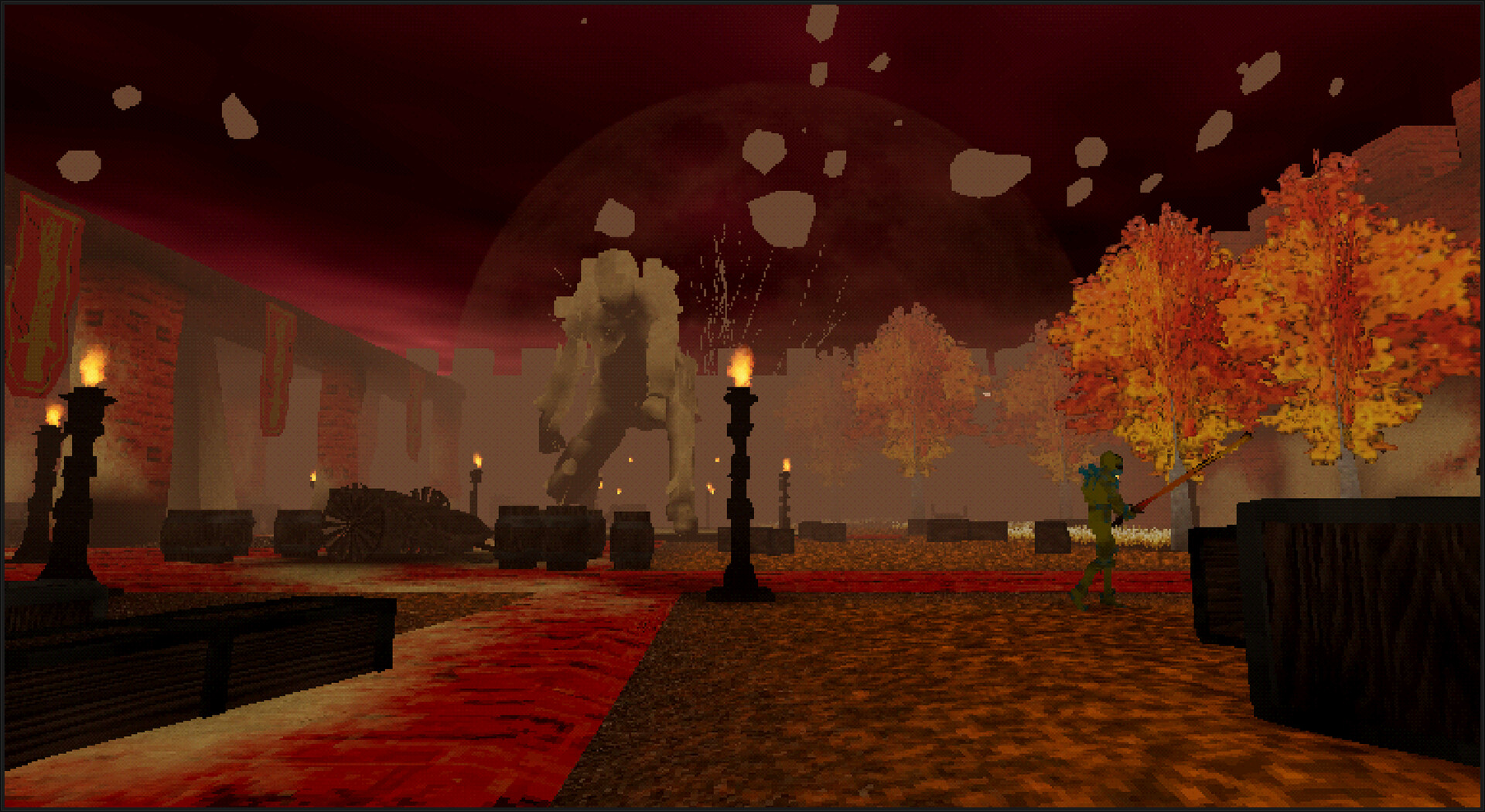
You play the Dreamer, trapped in a crumbling realm of dreams built from liminal spaces. One moment you walk a 21st-century school corridor. The next you cross a castle held together by wax. The world runs on dream logic, and nothing behaves like the waking world. Everything is sand and stars.
The core slogan is DREAM, DEFY, DECORATE. You explore dreamscapes, defy the other Dreamers who rule them, and decorate the one safe room you control. It is a methodical, interconnected Soulslike closer to Dark Souls 1's world design than to Elden Ring's open field, wrapped in Backrooms-adjacent horror.
Who it is for: Soulslike veterans wanting a fresh setting, fans of liminal horror, players who loved the dreamy melancholy of Omori or the sci-fi dread of Hellpoint. It is also surprisingly friendly to Souls newcomers because consumables replenish and you can save anytime.
Who it is not for: Players who want fast, flashy combat or explicit quest markers. Memoirium is opaque by design. The world explains itself through item descriptions and environmental storytelling, and the opening hours will frustrate anyone who refuses to read.
| Fact | Detail |
|---|---|
| Developer | GoldenGratus (solo) |
| Publisher | GoldenGratus, Outersloth |
| Genre | Soulslike action RPG |
| Platforms | Windows |
| Release | August 13, 2026 |
| Price | $14.99 base, $13.49 at launch |
| Players | Single-player |
| Achievements | 34 |
| Weapons | 31 |
| Lullabies (spells) | 67 |
| Keepsakes (consumables) | 25 |
| Dungeons | 8 |
| Save system | Save anytime + checkpoint bedroom |
| Controller | Partial support |
| Languages | English, Spanish, Japanese, Korean, Brazilian Portuguese, Simplified Chinese |
| Requirements | Windows 10, dual-core, 8 GB RAM, GTX 970, 1 GB storage |
Getting Started: The First 30 Minutes
Before You Launch
- Set combat expectations. This is a stamina-driven Soulslike, not a hack-and-slash. Attacks have weight, and enemies punish greed. The opening fights ease you in, but the rhythm is deliberate from the first enemy.
- Read every item description. Memoirium hides its rules in text. Equipment descriptions explain dream logic, hint at secrets, and tell you which statuses matter in each area.
- Know that items replenish. Consumables restock at checkpoints instead of vanishing forever. Use them aggressively.
- Check the accessibility options first. Camera Comfort and Color Alternatives are on the Steam page, plus custom volume and subtitle toggles. Tune the camera speed before your first fight, not after ten deaths.
Your First 30 Minutes
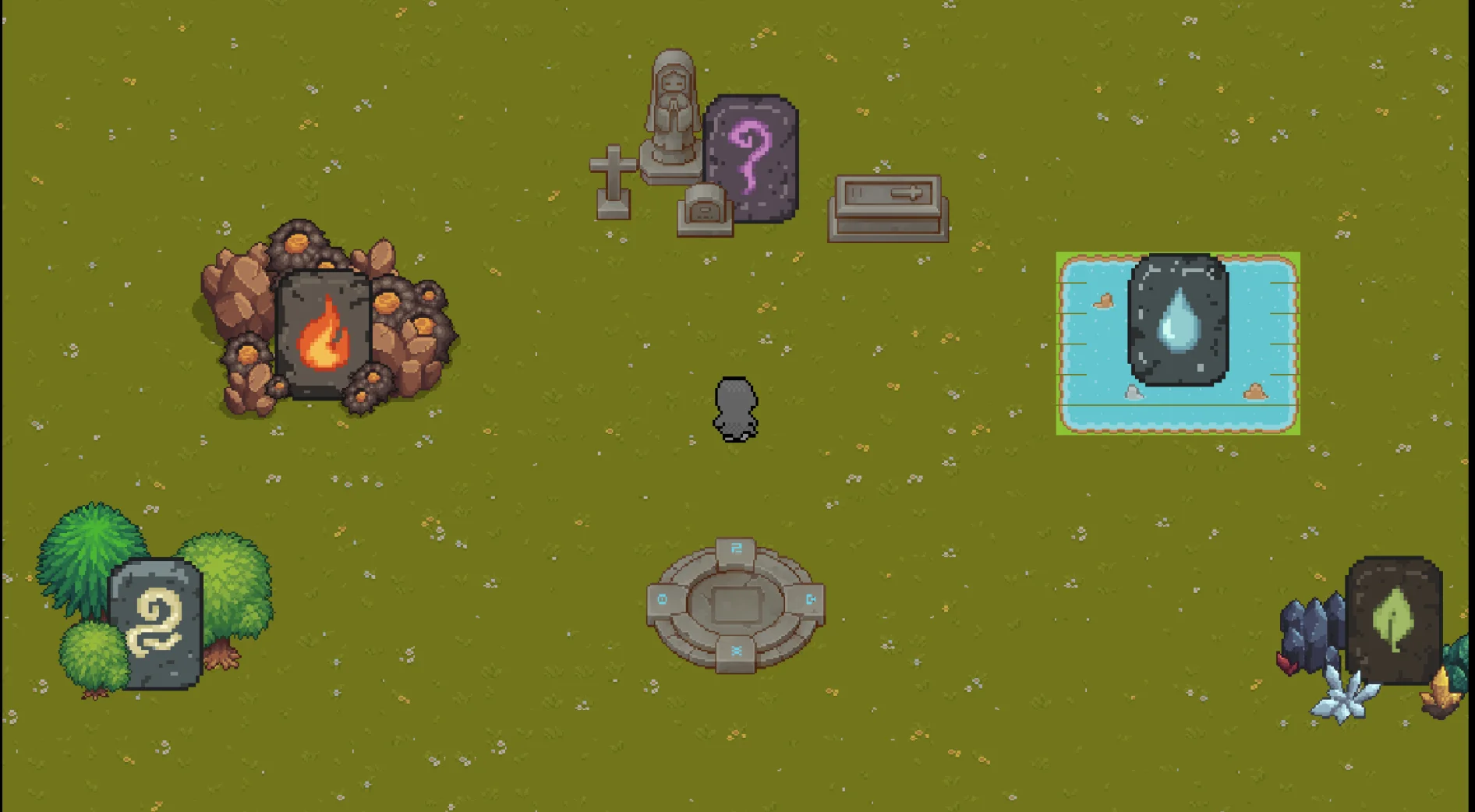
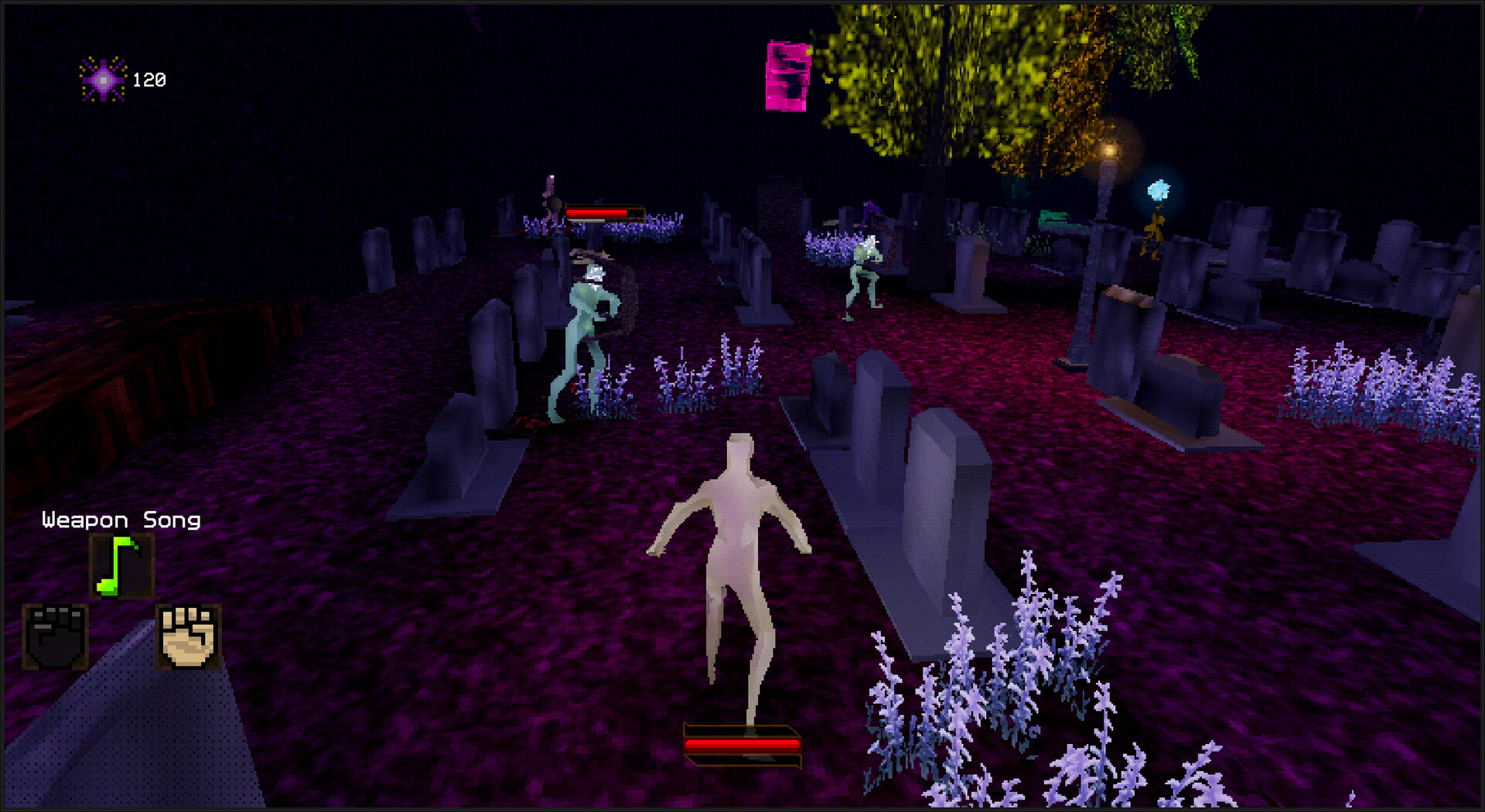
- Wake in the cemetery. The game opens in a void-ravaged graveyard. Follow the path across a crumbling statue into a cultish school. This double opening teaches you the pattern: hostile dream area, then a familiar-looking liminal space with its own rules.
- Take the first fight slow. Learn to lock on, dodge, and punish one attack at a time. The first enemies telegraph heavily.
- Find your first weapon and armor. Early equipment is simple, but its descriptions set up the core rule: everything in the dream realm has limits.
- Find the bedroom. This is Memoirium's bonfire. You rest here, bump up stats, save progress, and decorate. It is the one safe space in the game.
- Test the Lullaby system. Lullabies are your spells, and you start with at least one. Try it on a weak enemy to learn the resource cost and targeting.
- Pick a direction and commit. The world is interconnected with multiple paths. No first direction is wrong, but commit long enough to reach a checkpoint or unlock a shortcut before backtracking.
Beginner Mistakes
| Mistake | Why It Hurts | Fix |
|---|---|---|
| Hoarding Keepsakes | They replenish at checkpoints anyway | Use them constantly; the passive effects stack with your build |
| Ignoring item descriptions | The dream world's rules live in text | Read everything, especially armor and masks |
| Button mashing | Stamina and weight punish greed | Fight methodically: dodge, block, punish, reset |
| Selling or discarding duplicates | Duplicates upgrade items | Collect the same item multiple times to level it |
| Decorating the room last | The bedroom is your progress anchor and stat hub | Furnish early; it makes the rest stops feel meaningful |
| Expecting a linear path | The world loops back on itself constantly | Explore; shortcuts are the game's real reward |
Core Mechanics Explained
The Stress System
Memoirium's stamina bar is called stress. It is the single most important resource in combat. Every attack, dodge, and block costs stress, and the game punishes an empty bar harder than most Soulslikes.
The twist is the prompt-matching counter system. Some enemy attacks carry special properties:
| Attack property | What it means | Best response |
|---|---|---|
| Unblockable, parryable | Cannot be blocked, but a timed parry works | Parry to refund stress and stagger |
| Undodgeable, blockable | Cannot be dodged through, but a block works | Block and absorb, then counter |
| Dodge-through punish | Can't be blocked or parried, but a well-timed dodge passes through it | Dodge into the attack to stress out the attacker |
Dodging through certain strikes, or parrying certain others, stresses out the attacker instead of you. The window is strict, but the payoff is huge: a staggered enemy is a dead enemy. Early enemies are slow enough to practice on. Later fights expect you to read the glyph or animation and pick the correct response instantly.
Equipment That Changes Behavior
Equipment is not cosmetic. Every piece alters how the game plays:
- Armor sets change how long negative statuses last on you.
- Masks change how enemies approach you in combat. Some masks make aggressive enemies hesitate, others lure them into bad positions.
- Off-hand items modify your combat style, from parry timing to stress recovery.
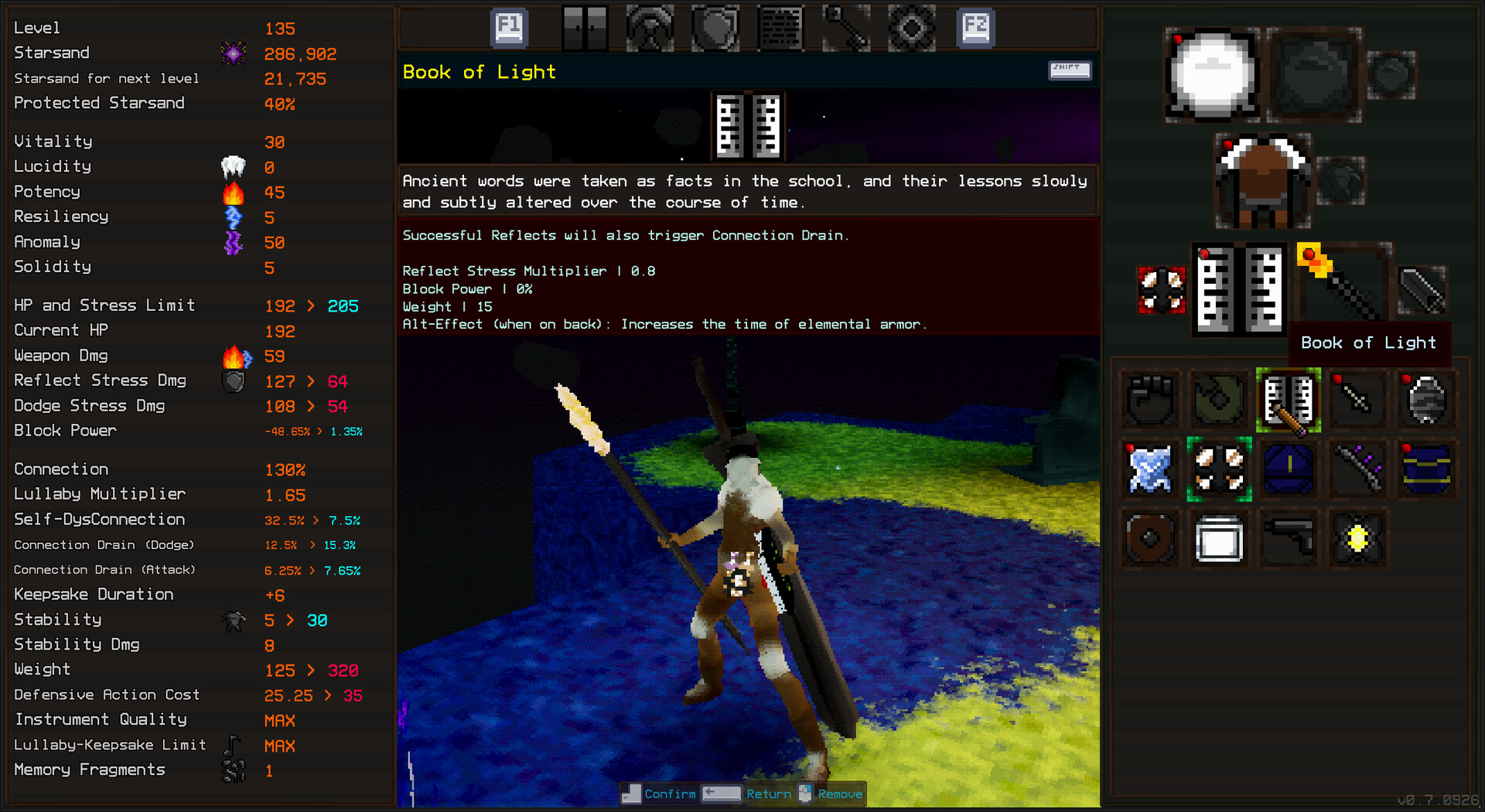
- Weapons span 31 entries, from mundane blades to the bizarre. You can and will fight enemies attacking with chairs, and you can find weapons that feel just as absurd.
Every item serves a purpose. Items replenish at certain points instead of disappearing when consumed, so the game wants you to use them. Collect the same item multiple times to upgrade it, but remember that even dream equipment has limits. Plan upgrades around one build, not six.
Keepsakes and Lullabies
Two consumable systems run in parallel:
- 25 Keepsakes are replenishing consumables that grant passive effects. They are your bread and butter. Use them freely, swap them between sections, and let checkpoints refill them.
- 67 Lullabies are the spell list. Each is a distinct ability with its own cost and effect, from projectiles to buffs to area denial. Finding and mastering Lullabies is a major progression track.
Dungeons and Bosses
The game has 8 unique dungeons, each with its own mobs, mini-bosses, and final boss. The opening areas (cemetery, school) act as the tutorial. Later dungeons escalate the dream logic: expect hostile geometry, floating platforms, and ledges that are giant swords. One early death, according to a preview, comes from rolling off a hundred-foot ledge that turns out to be a blade.
Named bosses include the Grave Warden (fought in his own garden), the Matron Defenders, the Deacon of Dreams, the Duke of Dreams, and The Librarian. Achievement names map to bosses and collection milestones, so the full list doubles as a progress checklist.
The Bedroom
The bedroom is Memoirium's unusual bonfire. It is a modern, mundane room inside a fantastical nightmare world. You rest here to bump stats and save. You can also furnish and decorate it with mementos found across the journey, and write in it. The contrast between the modern room and the sword-and-sorcery combat outside reinforces the sense that this world is not quite right. Decorating is partly a gimmick, but it succeeds at feeling like a genuinely safe space.
The Personal Room and Mementos
Beyond the bedroom, the game tracks mementos and collectibles as its completion economy. Mementos give the bedroom meaning, and the 34 achievements reward the full collection: weapons found, armors found, masks found, off-hands found, plus boss kills and story milestones.
Progression Strategy
What to Prioritize First
- Vigor-equivalent stat first. More stress (stamina) lets you dodge, block, and punish longer. Early game, survival beats damage. Get comfortable stress margins before investing heavily in offense.
- Weapon upgrades over new weapons. Duplicates upgrade your current weapon. Find one moveset you like and feed it duplicates. A leveled basic weapon outperforms an unleveled exotic one.
- One Lullaby, mastered. Do not spread Lullaby usage thin. Learn one reliable ranged or buff Lullaby and one panic button. Add more as you understand the resource economy.
- Status armor for the area. Before each dungeon, identify its status effects and swap armor. Poison resistance in a poison dungeon is worth more than raw defense stats.
- Unlock shortcuts before bosses. The interconnected world is built so you can shortcut back to the boss door. Always spend the extra minutes hunting the loop.
Area Order Logic
The game lets you reach dungeons in multiple orders, but a sensible path follows difficulty and status themes:
- Cemetery and school (tutorial pair, learn the stress system)
- The first full dungeon you can reach with the starting weapon level
- Dungeons that drop armor for the statuses used by later areas
- Save the hardest, most vertical dungeon for after you have a mobility or survivability Lullaby
There is no wrong order. There is only an order that wastes fewer Keepsakes.
Builds and Tier Lists
Weapon Families
| Family | Strength | Weakness | Best for |
|---|---|---|---|
| Straight swords and blades | Balanced speed and damage | Low stagger | Beginners learning the stress loop |
| Heavy weapons | Massive stagger, high damage | Slow, stress-hungry | Veterans who can time the prompt counters |
| Pike/spear (e.g. the flaming pike) | Range, safe pokes, fire status | Weak in tight corridors | Poking bosses from outside their swing arc |
| Off-hand focus builds | Parry and counter synergy | Requires perfect timing | Players who mastered the dodge-through mechanic |
A flaming pike style is a legitimate full-offense strategy even in the early game, but it dies to the same cliffs that kill everyone. Range does not save you from dream geometry.
Mask Loadouts
Masks are the hidden build layer. If a boss is aggressive, equip a mask that makes enemies hesitate. If a dungeon's mobs swarm, equip a mask that lures them into favorable positions. You can change a boss fight's entire rhythm without changing your weapon.
Armor Sets by Status
| Status you face | Armor priority |
|---|---|
| Poison or decay | Shorten status duration armor |
| Stress drain | Stress recovery armor |
| Fire | Fire resistance (flaming pike enemies) |
| Generic physical | Defense and weight balance |
Keepsake Priority
| Keepsake type | When to use |
|---|---|
| Passive damage buff | Between checkpoints, on the way to a boss |
| Survival passive | Boss fights and unfamiliar areas |
| Status immunity | Dungeons built around one status |
Cycle Keepsakes at every checkpoint. The replenishment system is designed for aggressive, varied use. A Keepsake that helps the current section is better than a favorite that does nothing for it.
Step-by-Step Strategy
Sequence 1: The Cemetery to School Opening
- Wake in the cemetery. Do not fight everything. The path forward matters more than clearing the graveyard.
- Cross the crumbling statue. Watch your footing; dream geometry is hostile from minute one.
- Enter the school. Expect a tall humanoid enemy that chases through corridors. It is fast, so use doorways to reset its approach.
- Find the first checkpoint and the bedroom. Rest, then bump stats.
- Practice the dodge-through counter on the school's slowest enemy before fighting the mini-boss.
- Defeat the school mini-boss. Recent patches adjusted its stats so it no longer gets stuck, but it still hits hard. Keep stress above a third at all times.
Sequence 2: Stress Management Loop
- Enter a fight with full stress. Never start an encounter below half.
- Learn one attack pattern. Dodge or block it, then punish once or twice.
- Back off and let stress recover before the next exchange.
- When you see a special prompt or glyph attack, classify it: parryable, blockable, or dodge-through.
- Execute the correct counter to refund stress and stagger the enemy.
- Finish the stagger window with a heavy attack or a Lullaby.
Sequence 3: Dungeon Clearing
- Enter with the right armor for the dungeon's status theme.
- Clear the first room to learn the local enemy movesets.
- Hunt for the shortcut before the boss. Explore every locked door and one-way drop.
- Return to the bedroom with any collected items. Upgrade your weapon if you found duplicates.
- Equip a survival Keepsake for the boss.
- Fight the boss with the stress loop from Sequence 2.
Sequence 4: Boss Preparation
- Identify the boss's special attack properties. Watch for glyphs and distinct windups.
- Equip a mask that changes the boss's approach behavior.
- Swap to status armor if the boss applies statuses.
- Fill Keepsakes at the checkpoint, then take the shortcut to the boss door.
- Spend the first attempt purely on defense. Learn the counter windows without attacking.
- On the second attempt, punish only the attacks you classified as counterable.
Sequence 5: The Collection Run
- After the credits, review the achievement list. It names every boss and collection milestone.
- Use the interconnected world to reach missed areas through shortcuts.
- Collect weapon, armor, mask, and off-hand duplicates to finish the upgrade achievements.
- Decorate the bedroom with every memento. The room tracks your completion.
- Revisit boss gardens for any missed items. The Grave Warden's garden is easy to under-explore.
Advanced Tips
The Dodge-Through Economy
The most valuable skill in Memoirium is reading attack properties instantly. A dodge-through counter stresses the attacker, which is effectively free damage and free breathing room. Train on the slow school enemies until the timing is muscle memory. Bosses use the same rules, just faster.
Armor Swap Between Areas
Never keep one armor set forever. The game hands you status-specific sets for a reason. A set that shortens poison duration is wasted in a dungeon with no poison, and essential in one that floods the floor with it. Swap at the bedroom before each new area.
Keepsake Cycling
Rotate Keepsakes every checkpoint. Use the passive that helps the current section, swap to a different one for the boss, and let the checkpoint refill both. The replenishment system exists so you never have to hoard.
Lullaby Synergy
The 67 Lullabies are not all equal, and some have hidden synergies. Pair a Lullaby that applies a status with one that punishes enemies carrying that status. Test combinations in safer areas before taking them to bosses.
Shortcut Hunting
When you find a locked door or a one-way drop, note it. Returning from the other side usually reveals a shortcut that cuts a full dungeon loop in half. Exploration is not optional; it is the game's core economy.
Save Anytime, But Rest Deliberately
You can save anywhere, but the bedroom is the only place to level and restock. Do not treat saving as a free pass to skip checkpoints. Resting respawns enemies, so plan your route around the bedroom loop.
Controller vs Mouse and Keyboard
Combat is fully playable on a controller. Some menu interactions, especially inventory sorting and decoration placement, work better with a mouse. If you own both, use the controller for fights and the mouse for menus. Reviews note hit-or-miss controller support in menus, so test your setup early.
Known Issues and Troubleshooting
| Issue | Status / Workaround |
|---|---|
| Character stuck, unable to act | Fixed in patch v1.0.81426; if it recurs, restart and load the save |
| Inventory screen stutter | Patched performance pass; keep the inventory closed during fights |
| Invisible attacks | Fixed in v1.0.81426 |
| Enemies jumping off ledges | Mostly fixed; treat it as a feature when it happens |
| Main menu pausing the game | Fixed in hotfix v1.0.81226 |
| No pause during gameplay | Known complaint; save anytime instead |
FAQ and Common Mistakes
Is Memoirium hard?
It is a fair Soulslike. Reviews call the combat solid and the bosses challenging but fair. The first hours are the hardest because you are still learning the stress and counter systems. It gets smoother as your stress pool grows.
How long is the game?
No official figure. With 8 dungeons, 31 weapons, 67 Lullabies, and 34 achievements, a full playthrough with collection runs lands around 15 to 25 hours.
Do consumables run out forever?
No. Keepsakes and items replenish at checkpoints. Use them freely.
Can I upgrade equipment?
Yes. Collect the same item multiple times to upgrade it. Dream equipment has limits, so invest in one build.
Does it have multiplayer?
No. Strictly single-player.
Is there a pause button?
Not in the standard sense. The main menu used to pause and now does not. The game supports save anywhere, so use that instead.
Does it run on Steam Deck?
The Steam page lists Windows only, no Linux or macOS builds. Steam Deck users should check Proton compatibility before buying.
Common Mistake: Fighting everything
Not every enemy is worth the stress. Run past packs to reach checkpoints and shortcuts, then fight the ones that block your path.
Common Mistake: Ignoring the bedroom
The bedroom is your stat hub, restock point, and save anchor. Skipping rest loops to save time costs you upgrades and Keepsakes.
Common Mistake: One build forever
The game rewards adapting armor, masks, and Keepsakes to each area. A static build works, but a reactive one wins.
Final Verdict
Memoirium justifies its existence with its setting. The dream world of liminal spaces, the PS1-era graphics, and the deliberate dream logic combine into something genuinely fresh. The stress counter system gives combat an identity beyond "Dark Souls but weird," and the bedroom adds a quiet, personal rhythm between the horror.
Buy it if you love liminal horror and want a Soulslike built around that mood. Skip it if you need fast combat, a clear story, or hand-holding. For everyone else, the launch price is a bargain for a game with this much personality, and the 100% positive early reviews suggest the community agrees.
Last reviewed by Game How To Editorial. We play each game, verify controls against official sources, and update guides when game mechanics change.
Screenshots