Daily Pick
One deeply researched guide worth reading today.
A practical route through the systems that matter most, written to help new players make confident decisions quickly.
Invokyr left Early Access hype behind on October 8, 2026, and the first 48 hours rewrote several assumptions from the demo era. Four themed boards shipped instead of the predicted three, the Shop turned out to be the real progression system, a rank system hides behind the final board, and the community has already cracked the safe code in the secret room. This guide covers all of it: what changed from the demo, how the dice economy really works at six players, per-board survival tactics, the shop meta, the secrets currently solved, and the launch-window bugs to work around.
Overview
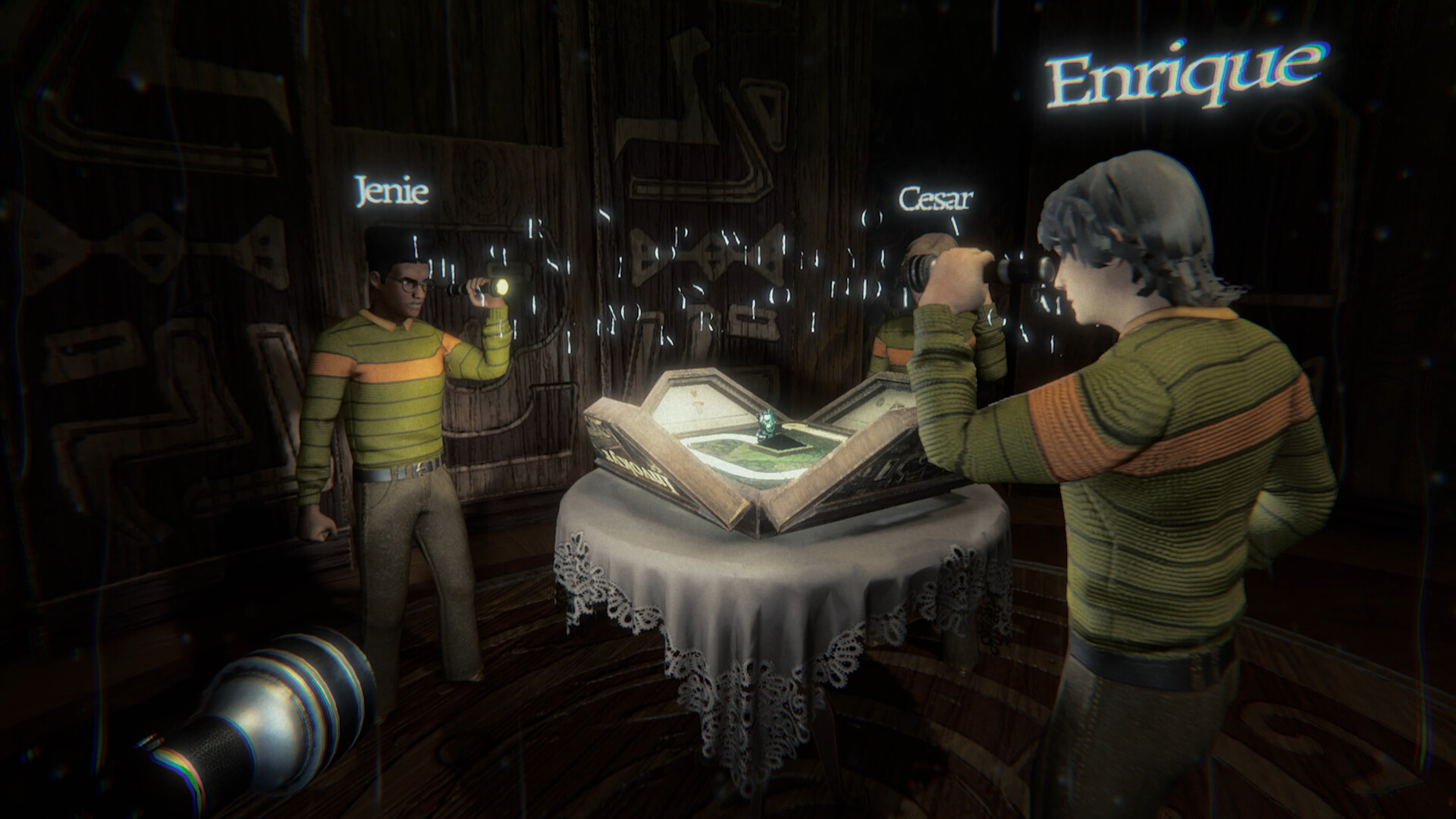
Invokyr is a co-op survival horror game built around a cursed 1970s board game, developed by Ludogram and published with Shochiku. Up to six players sit at a table inside an abandoned house ruled by the Gamemaster, a figure who was once a beloved toy. The escape route runs through the board itself: find dice hidden around the house, roll them, survive whatever each roll summons, and advance the token to the end. Every die is single-use. The roll you spend is gone, and the house only gets worse as you go.
The Early Access build contains the complete core loop: four themed boards (Haunted Manor, Jungle, Icy Mountain, Desert), a fifth Master Board finale, more than 15 monsters, more than 20 supernatural events, over a dozen dice types, Cursed Idols that trade power for drawback, House Rules that warp the game as you progress, and a Shop where run score buys upgrades, gadgets, and furniture. Launch price is $12.99 / €12.99 / £11.75 with a 25% launch discount, and the price is planned to rise as content ships. Early Access is expected to last about a year.
| Fact | Detail |
|---|---|
| Developer / Publisher | Ludogram (with Shochiku publishing) |
| Genre | Co-op survival horror, psychological horror |
| Platform | Windows 10 64-bit only |
| Early Access date | October 8, 2026 |
| Current build | V0.44.9 (patched daily since launch) |
| Price | $12.99 with 25% launch discount, rising through EA |
| Players | Solo or online co-op up to 6 |
| Boards at launch | 4 themes + Master Board; Abyss and Space on the roadmap |
| Monsters / Events | 15+ monsters, 20+ events |
| Session length | 30-60 minutes per board; 8 boards in one evening is a normal launch-week session |
| Steam rating | Very Positive (90 of 92 reviews positive in launch week) |
| Bundles | Packaged with Devour, Species: Unknown, Dark Hours |
Who this is for: groups who burned out on Phasmophobia and Lethal Company and want a rules layer and a scoreboard on their horror. The community consensus tagline, "REPO meets Jumanji," is accurate. Who should wait: solo players who want a narrative horror story. Solo works and reviews confirm it holds up alone, but the game is tuned for table chaos.
One hardware note up front: the minimum spec is higher than most co-op horror games. The store asks for an i5-7500 or Ryzen 5 1600, 16 GB of RAM, and a GTX 1650 or RX 580. If your group played Lethal Company on potatoes, check the requirements before buying six copies.
What Changed From the Demo
Veterans of the demo and Next Fest builds will notice the differences immediately:
| System | Demo | Early Access |
|---|---|---|
| Player count | 4 | 6 |
| Boards | Manor + Icy Mountain (Yeti board) | Manor, Jungle, Icy Mountain, Desert + Master Board |
| Shop | None | Full shop: upgrades, gadgets, furniture |
| Character select | Join order | Picture frames, pick your character |
| Meta progression | Cosmetics only | Score, upgrades, rank system, special modes |
| Matchmaking | Friends only, then public lobbies | Public lobbies + Steam invites, both working post-patch |
The character-select change matters more than it sounds. Demo lobbies assigned avatars by join order, which caused arguments before the game even started. Now the picture frames in the lobby let everyone lock in, and the sixth slot makes full-friend groups viable without rotating.
Getting Started: Your First Session
A run runs on three interlocking systems, and knowing which one is killing you is half the game:
- The board. Your token advances as rolls succeed. The board is the win condition and the clock at once. Groups that ignore board progress survive forever without escaping.
- The dice hunt. Dice hide in the house. Someone leaves the table, searches rooms, and brings dice back while the rest handles the summons. Each die is single-use.
- The summons. Every roll can spawn creatures, traps, or curses. Each creature hunts in its own way. Learning what a summon wants before it reaches you is the difference between a scare and a wipe.
Your first session should look like this:
- Set up before you play. Raise the FOV slider (it goes to 110; the default feels cramped to anyone coming from other horror co-ops), toggle camera shake off for steadier chases, and turn on subtitles. Patch V0.44.9 added new subtitle options, so re-check the menu if you tried the demo.
- Learn the board room first. Every expedition starts and ends at the table. Memorize its doorways and pick a rally point inside the room.
- Take one short loop. Grab the first die you find and bring it back. The opening minutes are about learning the route between the table and the nearest dice spawns with your blood still in your body.
- Watch one summon for a full cycle. Circling, ambush, and direct-chase behavior all have different answers. You cannot learn them while sprinting.
- Name rooms out loud. "Ice room with the red couch" beats room numbers nobody remembers. Voice chat is a survival tool.
- Agree on a dice bank before the first roll. "Nobody rolls while we hold fewer than two dice in reserve" prevents the classic opening disaster: three rolls in five minutes, zero in the bank, and a long walk through a house that has woken up.
Beginner Mistakes to Avoid
| Mistake | Why it hurts | Fix |
|---|---|---|
| Rolling every die the moment someone finds one | Late boards punish empty reserves | Set a group minimum bank before anyone rolls |
| Everyone searching at once | The board stalls; summons pile up unhandled | Split roles: rollers, runners, bait |
| Treating all creatures the same | Each has its own hunting pattern | Watch one full cycle before engaging |
| Wandering without landmarks | The house is a labyrinth; you can get lost for real | Call out room features; use the board room as north |
| Buying upgrades for yourself only | Money is shared but upgrades are per-player; the game barely explains this | Agree who buys what before entering the shop |
| Hoarding score for later boards | A run that saves everything dies on the second-to-last board | Spend on survivability every shop visit |
| Trusting closets blindly | The Yeti clips through closet doors on the ice board | Treat closets as delay, not immunity |
| Ignoring the save indicator | Death costs your save file | Note the "time since last save" line in the pause menu |
Core Mechanics Explained
The Single-Use Dice Economy
Every die in Invokyr is spent the moment it is rolled. This one rule drives everything. A group with five dice banked can afford a bad roll. A group with zero dice is in a horror movie, and horror movies do not end well for the cast.
Treat dice like ammunition:
- Common dice fuel steady board progress. Spend these freely, but only between events.
- Special dice (heal, hide, hinder, and more) change the state of the game. These are your emergency buttons. A heal die spent when nobody is hurt is a heal die wasted; a hinder die hoarded until half the group is down is a wipe.
- Blessed dice stay highlighted yellow after being thrown, which caused confusion until V0.44.7 fixed the highlight persisting for dead players. If you see a glowing die on the board, it is likely a blessed one already spent.
A banking rule that works for most groups: hold a reserve of two common dice plus one special at all times. When an event ends and your reserve is intact, spend down to the reserve. When it is not, the next die found goes straight to the bank, unspent.
The gather-die teleport bug (fixed in V0.44.9) used to warp dice between zones on area change. If you were sorting dice by zone, re-count after any zone transition on current builds.
Summons and Their Hunting Patterns
More than 15 monsters ship at EA launch, and the store stresses each hunts its own way. Launch-week reviews and community reports let us map several by name:
| Monster | Behavior | Counter |
|---|---|---|
| Chess Knight | Drifts across its board area in fast glides ("Tokyo drifting"), punishes open ground | Hug walls; watch its facing before crossing open floor |
| Weeping Angel type | Freezes when watched, closes when you look away; forces a staring contest | Never face it alone; one player walks backward while another guides |
| Yeti | Stalker with reach on the Icy Mountain board; isolates then kills; can clip through closet doors | Move in pairs, walk (don't sprint) toward the board room, use closets only to break line of sight |
| Snowmen | Ambush props on the ice board that activate near closets and corridors | Give clustered snowmen wide berth; they body-block while the Yeti closes |
| Exploding Penguins | Charge and detonate; throwable | Pick them up and toss them into the void, or at a friend for the scream |
| Mannequins | Spawn from rolls in the manor; swarm in numbers | Never let mannequins surround the board room; keep one exit clear |
| Doppelgangers | Mimic players; attack the group's trust | Verify with voice; agree on a visual tell before entering doubt zones |
| Trap doors | Environmental killer on several boards | Watch floor seams; the fire idol holder attracts everyone, so never lead the group |
The families still hold from the demo. Stalkers circle and punish split groups. Rushers chase in straight lines and die to doorframe line-of-sight breaks. Trappers hold ground near objectives and fold to a designated bait. The names above are the specific implementations you will meet on the four launch boards.
Events are the pressure valve. More than 20 exist, and named ones from the patch trail include the Boulder Event (recently made slightly easier), the Bonneteau event (a card-shell game; an exploit was patched October 9), quicksand in the Jungle (recently made less punishing), and Musical Idols timing windows (made more generous). The patch history also shows the team repeatedly fixing monsters from a previous event lingering into the next, which tells you events have seams. Between events the house is calmest, and that is when efficient groups move.
Idols: The Score Engine
Idols are the main way you earn money. Carry one back to the table and the run pays out. But every idol carries a curse that changes how you play while holding it, and the community has catalogued several:
- Fire idol makes you visible and vulnerable, "a juicy marshmallow" in one player's words. Everyone hunts the carrier.
- Inverted controls idol flips your movement. V0.44.7 stopped it spawning during the Boulder Event, which used to be a death sentence.
- Shrinking idol turns you tiny. One player described picking it up, turning tiny, and running away doing "maniacal laughter." Tiny carriers fit spaces others cannot and are harder to hit, but slower.
- Scanner effect interacts with invisibility in ways that were bugged and now are not. If you run scanner-based idols, re-test on the current build.
- Musical idols demand timing. The timing window was widened October 9, so retry them if you bounced off the demo version.
- The seal idol appears on the final board. It is the endgame objective, and losing it late is the run-killer: one launch-day group lost five players escorting theirs, and the last survivor clutched the finish surrounded by every monster in the house.
Two rules follow. First, the walk back is the dangerous part: the carrier is the most valuable target in the house, so escort objective carriers like wounded players. Second, death while carrying drops the idol where you fell, and someone repeats your trip. Route through cleared rooms rather than shortcutting fresh territory.
The Gamemaster and House Rules
The Gamemaster sits over all of it. Rolls gamble with the house's money: the more you play, the more the house pushes back. A rules system stacks House Rules onto the board as you progress toward the Master Board, so late sessions play by warped versions of the base game. Two consequences:
- Rules modifiers change what a "safe roll" means. Re-read the active rules at every board stop. Assign one player to read them aloud and translate them into "what changes for us."
- The Shop exists to buy margin against exactly these rules. A run that saves all its score for the final board dies on the second-to-last one.
The Save System (New, and Fragile)
The EA build added saves, and V0.44.8 cleaned them up: hosting always opens save selection, a fresh start is labeled New Save, the pause menu shows time since last save, and the Game Saved notification is larger and lingers longer.
The rules underneath are strict, and reviews confirm them: you lose your save file on death. The game saves after every completed board, and completing the main rounds gives you a safe point after that. Special modes attach to the save and the player, so you cannot access Rules mode without your own save file.
One reported pain point matters for planning: leaving and reloading a save has cost players their upgrades. One group finished the Master Board, reloaded, and faced the next, harder board with no upgrades. Until this is fixed, treat save-reloading as risky and finish a board session in one sitting when the stakes are high.
Progression and the Shop Meta
Between boards you keep progression, earn score, and spend at the Shop. Score is run currency: idols pay it out, performance pads it, and the Shop converts it to upgrades, gadgets, and furniture.
The critical mechanic the game fails to explain, confirmed by launch reviews: money is shared, but upgrades are per-player. One player buying upgrades does not equip the team. Distribute deliberately.
Spend priorities in order:
- Survivability first. Upgrades that keep players upright compound across every future board. A dead player rolls nothing.
- Dice-related advantages second. Anything that improves dice finds or mitigates bad rolls raises the floor of every session.
- Gadgets third. Situational but run-winning in the right hands.
- Furniture and cosmetics last. They persist and they are charming, but the Yeti does not respect interior design.
The rank system behind the final board is real: players discovered it only after finishing the Master Board. Performance across a set is graded, which is the game's answer to replayability while the roadmap (three new boards including Abyss and Space, 10+ new monsters, Shop overhauls, new House Rules, more lore) lands over the coming year.
Co-op Roles for Six-Player Groups
Six players is the design target, and groups that thrive assign jobs before the first roll:
- The Caller (1 player). Owns the dice bank and decides what gets rolled and when. Groups without a caller spend dice like party favors.
- Runners (2 players). Search for dice and idols. The best runners learn one wing at a time instead of wandering the whole map.
- Bait (1-2 players). Draws summons away from runners. Needs map knowledge more than combat skill.
- The Hoarder (1 player). Carries special dice and spends them only on disasters. A good Hoarder never explains a save; they just hand you the heal.
- The Escort (flexible). On idol runs, this is whoever pairs with the carrier. The walk back is where idols die.
For four players, merge Caller and Hoarder. For solo, you are all of the above, and the practical advice from players who finished it alone: advance slower than feels comfortable. The board is patient. Dead players are not.
Dead players keep a role, too. Death is not always the end, and "the dead can still talk" per one review, so stay on voice, call monster movements, and direct your living teammates. A dead Caller is still a Caller.
Advanced Tips
Sequence 1: The Standard Opener
- Land, group up at the board, and do not touch anything for the first sixty seconds.
- Send two runners on the shortest possible loop while the Caller and Bait hold the board room.
- The first die found comes straight back to the table. Bank it unless everyone is standing safe at the board.
- Roll once, watch what spawns, and learn the monster's pattern without fighting it.
- End the opening with a two-dice reserve before anyone leaves the board room again.
Sequence 2: The Banking Cycle (Mid-Game)
- After each event ends, regroup at the table and count the bank out loud.
- If you hold more than the reserve (two common plus one special), roll the surplus immediately while the house is calm.
- Push the board one to two spaces per calm window, never more.
- Restock during the next window. Repeat until the board reaches the last third.
- In the last third, stop spending commons on anything except progress; hold specials for the final sequence.
Sequence 3: Icy Mountain Survival
- Enter the frozen wing in pairs, never alone. The Yeti isolates, then kills.
- Keep to cleared corridors; ice adds slips and falls to every chase.
- When the Yeti stalks your pair, walk, do not sprint, toward the board room. Sprinting breaks formation.
- Use hide dice only when the Yeti has line of sight on a runner carrying an idol.
- Treat penguins as throwable ordnance and audio camouflage at once: their noise masks the approach you actually need to fear.
- Remember closets are delay, not immunity. V0.44.7 made the doors faster, but the Yeti still clips through.
Sequence 4: Event Seam Exploitation
- Learn your group's event trigger: usually a roll made while the previous summon is still active.
- When an event begins, stop all looting. Everyone returns toward the board room.
- Handle the event with banked dice, not found ones; runners stay home until it ends.
- The moment the event clears, sweep the rooms the summon occupied. Spawn areas often hide dice that were unreachable during the patrol.
- Roll for progress only after the sweep, while the seam is still quiet.
Sequence 5: The Two-Down Recovery
- When two players die, the group switches from progress mode to economy mode. No rolls except heals.
- One player retrieves idols from the death sites while the other holds the board room.
- Spend the first special die only when the group is back to full strength or the board demands it.
- If a third death would end the run, bank everything and push the board with the minimum possible number of rolls.
- Accept slow wins. A crawl across the finish line beats a heroic wipe every time. And remember: a wipe costs your save file.
Sequence 6: The Master Board Push
- Before the final board, everyone gathers at the table with full reserves and full upgrades. This is the point of the whole banking system. Do not reload your save between the semi-final and the Master Board until the upgrade-loss bug is patched.
- Read the active House Rules aloud and translate each into "what changes for us."
- Roll in pairs: one die for progress, one held ready to react to what spawns.
- Spend hinder dice on whatever the final sequence summons first, not on the boss escort. Early tempo saves lives later.
- Guard the seal idol with the whole group. The final board's lost-idol horror stories all start with a thin escort.
- When the last space is in reach, roll it the moment the house is calm, even if the bank empties. There is no tomorrow on the last space.
Secrets: What the Community Has Solved So Far
Launch-week players have been busy. Everything below is confirmed working on the current build:
The Safe Code (Solved)
A secret room holds a six-number safe and a note on the desk. The safe sits on the second floor in the main room. The code comes from two clues:
- Find the book that reads "Class of '87: A New Beginning."
- The secret room's paper shows the date 09.13.
Combine them: the safe code is 091387. Lore hunters add that September 13, 1987 fell on a Sunday, and the book's text mentions a ten-year-old kid, "sequelae," and a breathing problem, which is the story layer Ludogram is building around the house. Enter the code and claim what the safe holds.
The Bookshelf Office (Solved)
A second secret room opens from a small room: find the leaning book on the corner bookshelf, press E, and the shelf swings open into an office with a note on the table. Players missed it for days because the room itself is tiny and off the main path.
Henry's Bedroom (Partially Solved)
The bedroom is enterable and contains a TV, interactive wardrobes, and a long letter with story information. The community knows Henry died because of an idol, and one player's teasing sign-off, "the game is NOT dangerous..." suggests the letter says more. The bedroom key's location remains unsolved at time of writing. The leading theory places it in the board game room's upper layers, reachable only with an anti-gravity or gravity die. If you find it, you are ahead of the entire Steam forum.
The Upstairs Puzzle Room
The jump puzzle room upstairs changes between updates. The demo kept a snow pile and a totem up there; the frozen update swapped in a sand pile and a Pharaoh mask, and the mask received its own patch fix in V0.37.10, which tells you Ludogram hides real content in that room. Check it every update.
The Climbable Shelf
At least one manor shelf can be climbed into a hidden room. Demo players found it by chasing stuck dice. If a die lands somewhere stupid, look up before you panic.
Known Issues and Workarounds (Launch Window)
Three patches landed in the first 48 hours. The current status:
| Issue | Status | Workaround |
|---|---|---|
| Connection failures on launch day | Fixed in V0.44.7 (Steam SDK downgrade) | Keep the game updated; error message now tells you if your version is stale |
| Save selection friction | Improved in V0.44.8 | Hosting now always opens save picker |
| Gather-die teleport between zones | Fixed in V0.44.9 | Re-count dice after zone transitions anyway |
| Negative money bug | Fixed in V0.44.9 | Update if your score went negative |
| Upgrades lost on save reload | Reported, unpatched | Finish board sessions in one sitting |
| Fifth/sixth player lobby kicks | Patched repeatedly through demo | Use Steam invites over public lobbies when hosting fails |
| Dice stuck on shelves or under furniture | Physics remains spicy | Roll low and centered; climb the shelf if needed |
| Controller support | Partial; full support "in the next few updates" per the devs | Keyboard and mouse for now; V0.44.9 improved gamepad support |
| Subtitles for the Gamemaster's speech | Improved in V0.44.9 | New subtitle options in the menu |
| ~30s load between roll and level | Reported | Wait it out; it is a transition, not a hang |
| Steam Deck | Player-reported as running well, needs a perf patch | Not officially supported (Windows-only store listing) |
The dev velocity is the best in the genre right now: three patches in two days, each one naming and fixing community reports. The Discord is active and the team answers directly.
Accessibility and Options
The store lists five accessibility categories: adjustable text size, custom volume controls, playable-without-timed-input mode, stereo sound, and subtitle options. On top of that: key rebinding, an arachnophobia option, and a camera shake toggle. The arachnophobia option replaces the relevant horrors rather than deleting content, so nothing is locked away for sensitive players. Turn off timed inputs if your group hesitates under pressure; nothing in the core loop requires them.
System Requirements
| Tier | CPU | RAM | GPU | Storage |
|---|---|---|---|---|
| Minimum | i5-7500 / Ryzen 5 1600 | 16 GB | GTX 1650 / RX 580 | 5 GB |
| Recommended | i5-11500 / Ryzen 5 5600X | 16 GB | Current-gen equivalent | 5 GB |
DirectX 11, Windows 10 64-bit, broadband required for co-op. The 16 GB floor is the real constraint; 8 GB machines will struggle. Family Sharing is supported, so one library can cover a household before everyone buys in.
Comparison With Similar Games
| Game | What it shares with Invokyr | What Invokyr does differently |
|---|---|---|
| Phasmophobia | Co-op in a haunted building, evidence gathering | The board gives every session a scoreboard and a clock |
| Lethal Company | Loot runs, distinct monster AI, group chaos | Dice scarcity creates a group-level resource debate, not just personal greed |
| REPO | Physics chaos, extraction tension | The Gamemaster is a rules system, not just monsters |
| Jumanji (the fantasy) | A game that plays you back | It is an actual video game with a rank system behind the final board |
| A real board game night | Rules, turns, house-rules arguments | The house actually eats you when you argue too long |
The launch reviews converge on one line: this is not "friendslop." The systems interlock, the difficulty is fair (one group went 4-4 across eight boards in a night and called the losses earned), and the price undercuts most of the genre at $12.99 before the launch discount.
FAQ
Is Invokyr out? Yes. Early Access started October 8, 2026 at $12.99 (25% launch discount), Windows only. The current build is V0.44.9.
How many players? Up to 6 in online co-op, playable solo. The sixth slot and character select are new for Early Access.
Does the demo still exist? Yes, and it remains the best zero-cost trial in the genre. Demo progress does not carry over, but the first board is identical.
What happens when a player dies? Death is not always the end; dead players can still communicate. But a full group wipe costs your save file, and losing your save means losing upgrades, score, and special-mode access.
Is there a safe code in the secret room? Yes: 091387. The book "Class of '87: A New Beginning" gives the year, the paper in the secret room gives 09.13.
Where is Henry's bedroom key? Unsolved as of October 10, 2026. The best community theory points to the board game room's upper layers with a gravity die. The bedroom itself is enterable and holds story lore.
How does the Shop work? Score earned from idols and runs buys upgrades, gadgets, and furniture. Money is shared; upgrades are per-player. Spend on survivability every visit.
Is there a rank system? Yes, hidden until you finish the Master Board. Performance across a set is graded.
Does it work on Steam Deck? One launch review reports it runs well, but the store lists Windows only and there is no official Deck support yet.
Is controller support in? Partial as of V0.44.9, with full support promised in the next few updates.
How long is a session? 30 to 60 minutes per board. A four-board set plus the Master Board is an evening.
Is it too hard? Launch-week consensus says hard but fair. The one negative review calls it casino-like; the 90 positive reviews call the losses earned. Bank dice, assign roles, and the difficulty curve flattens.
What is coming during Early Access? Three new board themes (Abyss and Space confirmed, one secret), 10+ new monsters, Shop overhauls, more House Rules, idols, dice, and lore. The price rises as content lands, so buying early locks the discount.
What is the single most important tip? Dice are ammo. Bank two commons and one special at all times, roll only between events, and never let the most excited person in your group touch the dice physics.
Quick Reference Card
- Win condition: advance the board to the end of each set, beat the Master Board, check your rank.
- Dice are ammo. Each one is single-use. Bank two commons and one special at all times.
- Assign roles. Caller, Runners, Bait, Hoarder, Escort. Dead players still talk: use them as spotters.
- Idols pay, idols curse. The carrier is the target. Escort the walk back through cleared rooms.
- Money is shared, upgrades are per-player. Divide shop purchases deliberately.
- Never reload a save mid-set until the upgrade-loss bug is patched.
- Safe code: 091387. Book gives the year, paper gives the date.
- Bookshelf office: press E on the leaning book in the small room.
- Roll dice gently. Physics loses dice on shelves, and lost dice lose runs.
- Roll between events, not during. Event seams are the safe windows.
- Current build V0.44.9. Keep updated; the team patches daily.