Daily Pick
One deeply researched guide worth reading today.
A practical route through the systems that matter most, written to help new players make confident decisions quickly.
Overview: What Kind of Game Is A Tiny Wander?
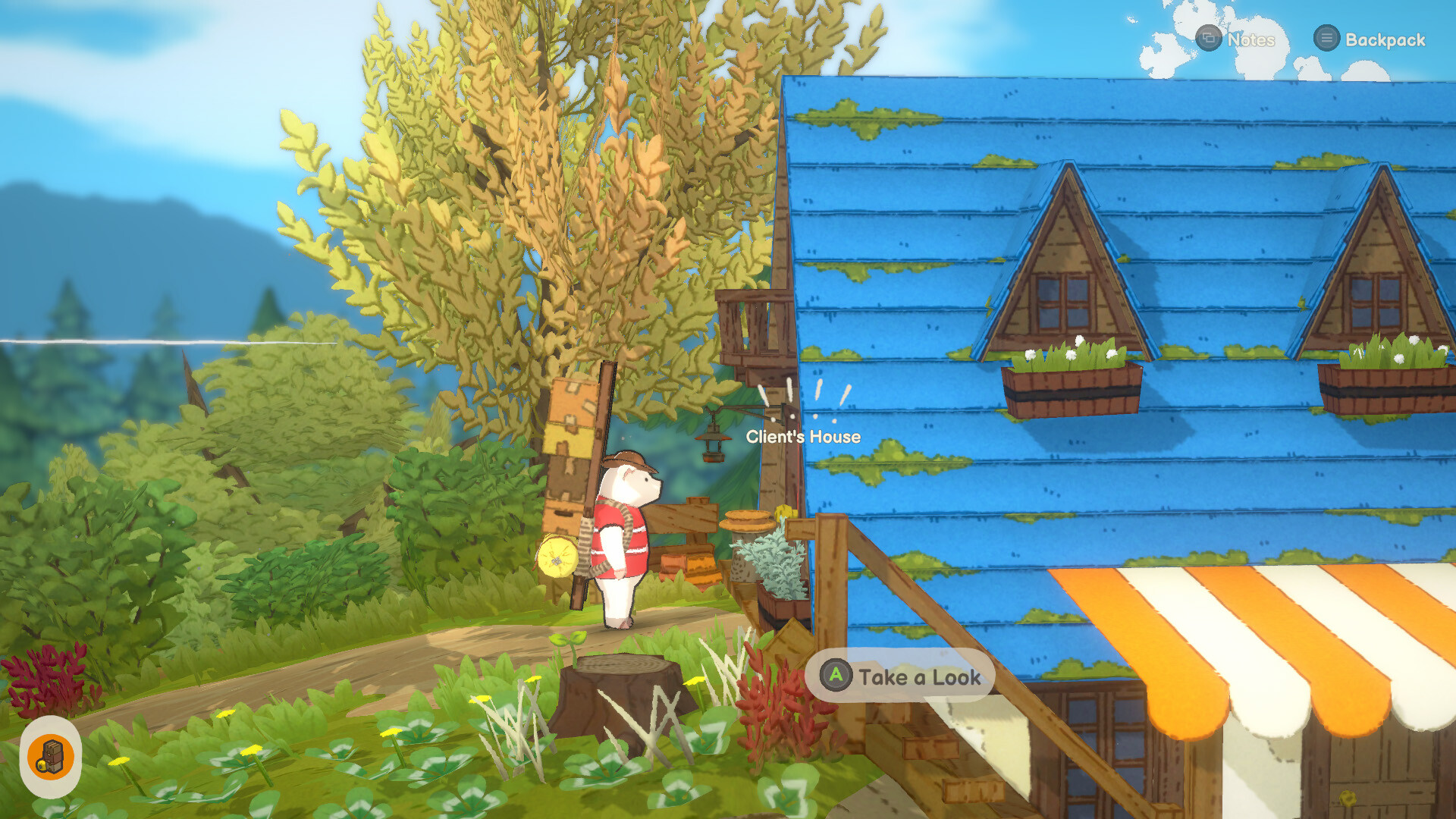
A Tiny Wander is a cozy 3D exploration mystery adventure from DOUKUTSU PENGUIN CLUB, a three-person Japanese indie studio. You play Buie (written Buu in some materials, Boo in others), an earnest delivery pigling with surprising brawn. A traveling luggage carrier by trade, Buie accepts a delivery to the farthest reaches of a forest locals have learned to fear. The game is a spin-off from the art book "Quaint Places: Chronicles of Exploration" by Nonohara, the studio's director and lead illustrator, and it shows: every environment was drawn before any mechanic was designed around it.
The pitch in one line: the setting and the narrative become the riddle. Nothing in the forest is a standalone brain teaser. The puzzles are environmental, the clues are social, and the progression currency is your own expanding "Memories." The developers describe it as a "mysterious adventure of deciphering and unraveling the riddles of the forest's secrets, through exploration, discovery, and interactions with the locals."
A free demo launched August 6, 2026 during the Wholesome Games Celebration. It covers roughly the first 10% of the final release with about 20 to 30 minutes of playtime. The full game targets Q2 2027 on Steam, with Android and iOS listed as tentative platforms on the official site.
Who is this for? Fans of A Short Hike, Eastshade, Lil Gator Game, Night in the Woods, and Snuffkin: Melody of Moominvalley. There is no combat, no horror, no reflex sequence, and no way to lose. The difficulty is attentional, not mechanical. If you like games where paying close attention is the entire skill floor, this is for you. Furigana support means young children and Japanese learners can play comfortably.
| Field | Detail |
|---|---|
| Genre | 3D cozy exploration puzzle adventure |
| Developer / Publisher | DOUKUTSU PENGUIN CLUB (3-person team) |
| Platform | Windows (Steam); Android/iOS tentative |
| Price | TBA (demo free) |
| Players | Single-player |
| Release | Q2 2027 (shifted twice: 2025 → 2026 → Summer 2027) |
| Demo | First ~10% of game, 20-30 min, no save/load, no carryover |
| Perspective | Third-person 3D, pop-up picture book aesthetic |
| Controller | Full controller support |
| Languages | Japanese, English, Simplified Chinese, Korean, Traditional Chinese |
| Soundtrack | Takao Masaki |
| Steam | store.steampowered.com/app/3260830 |
| Demo | store.steampowered.com/app/4657220 |
| Website | doukutsupenguin.com/a-tiny-wander-en |
The Premise: One Night, One Package, One Forest
The story is a single small adventure squeezed into one night. Buie accepts a delivery request to a settlement deep inside the "Forest of No Return," a giant-tree forest where travelers often go missing. On the dark road, Buie loses footing and accidentally drops the customer's package down a cliff. The delivery deadline is tomorrow.
There is no tutorial screen and no quest marker. What the game hands you is a tent at the forest's edge, a lantern, and the question of where to start looking.
The emotional arc is deliberate. Buie is "rejected by the forest," waking up collapsed at its entrance. The game asks you to rebuild a relationship with a place that has a reputation. The forest is mysterious but not menacing; the tension is curiosity, not dread.
Key narrative beats established so far:
- Buie accepts the delivery to the Forest of No Return.
- The package is dropped down a cliff. Deadline: tomorrow.
- Buie camps at the forest's edge to gather clues.
- Residents with "slightly quirky" worries hold leads: a grumbling furry friend, a fishing fanatic mushroom.
- Resolving worries connects to important leads, and the Memories you collect guide you to the farthest reaches.
The demo introduces the central mysteries without resolving them: why travelers go missing, who the master of the Moon Mansion is, and what the cryptic letter means. Expect the full game to pay these off through observation and conversation rather than scripted reveals.
Getting Started: Your First 30 Minutes
The demo (app 4657220, free) is the definitive way to start. Two demo caveats: save/load is disabled, and progress does not carry to the final release. Treat the demo as reconnaissance, not a warm-up.
Your first loop, in order:
- Wake up at the forest entrance. You are collapsed at the edge of the Awry Forest. Look around before moving.
- Grab the lantern. The lantern is your primary tool for the entire game. Everything else supports it.
- Light the first signpost. Dark signposts are unreadable until illuminated. This is the game teaching you its core grammar: light, read, remember.
- Meet the first residents. The grumbling furry friend and the fishing fanatic mushroom are the demo's anchors. Talk to them, then talk to them again.
- Patch the tent. The demo includes small campsite problems: a tent with a hole needs patching, a broken backpack ladder needs materials. These feel like chores, but they are the game teaching you its item and material loops.
- Collect materials, build the first bridge. Terrain blocks your path on purpose. Hauling materials and setting up bridges is how the map opens.
- Brew and take the coffee break. The full moon campfire scene is where the story breathes. Do not skip it.
Beginner Mistakes to Avoid
| Mistake | Why It Hurts | Fix |
|---|---|---|
| Rushing past signposts | They are unreadable until lit, and they hold the map's clues | Light every signpost the moment you see it; revisit them later |
| Talking to residents once | First contact opens conversation; second contact often opens the quest | Talk to everyone at least twice per area visit |
| Hoarding materials | Bridges and repairs need hauled materials to open | Build and fix as soon as you have the materials; the path you open early becomes the shortcut you need later |
| Skipping coffee time | Coffee is the social system and opens conversation paths | Take coffee breaks with everyone you meet |
| Treating it as a linear quest | The game is designed to allow straight-to-the-end shortcuts | Observe broadly; order matters less than attention |
| Expecting horror or combat | There is no horror and no combat | Enjoy the slow, warm mystery instead of bracing for danger |
| Ignoring the sky | The environment and sky slowly shift into night, changing what you can see | Plan exploration around the light you have; head back to camp when the sky darkens |
| Not sitting down | Sitting on stones to watch scenery is a designed moment, not dead time | Check every stone, bench, and viewpoint |
Core Mechanics Explained
The Lantern
The lantern is the game's investigation surface. Hold it up to illuminate signposts too dark to read, reveal hidden paths, and turn the forest's darkness into readable text. The official framing: "look closely, listen carefully, and move cautiously."
Practical implications:
- Light is infinite. The game does not punish you for keeping the lantern on. Use it liberally.
- Signposts are the map. The demo's signposts point to the delivery route, resident locations, and hidden nooks. A signpost that says nothing to you now will say more after you gain Memories.
- Light reveals, revisiting reveals more. A second pass with new knowledge turns a lit signpost into a connection point.
The Coffee System
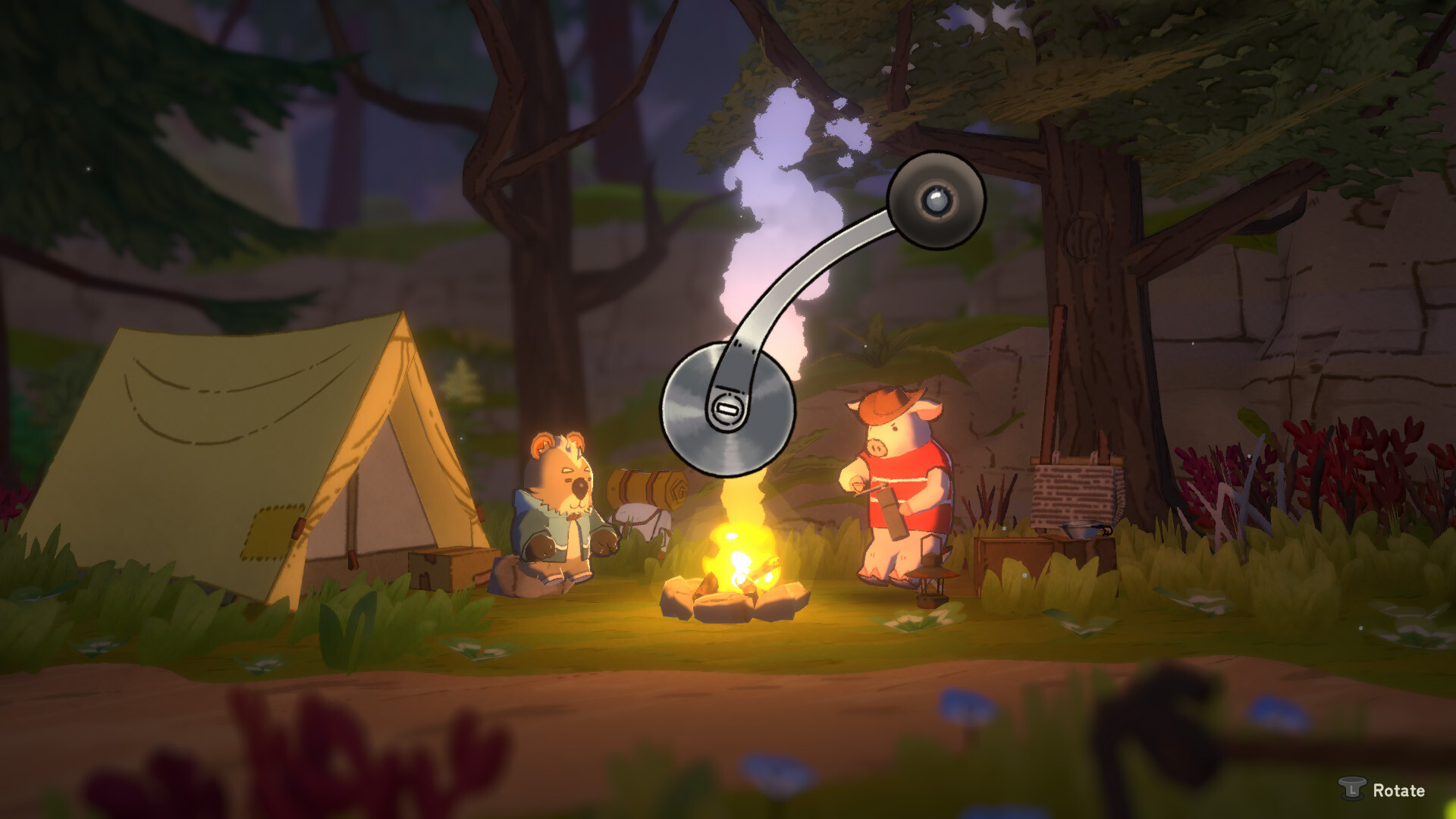
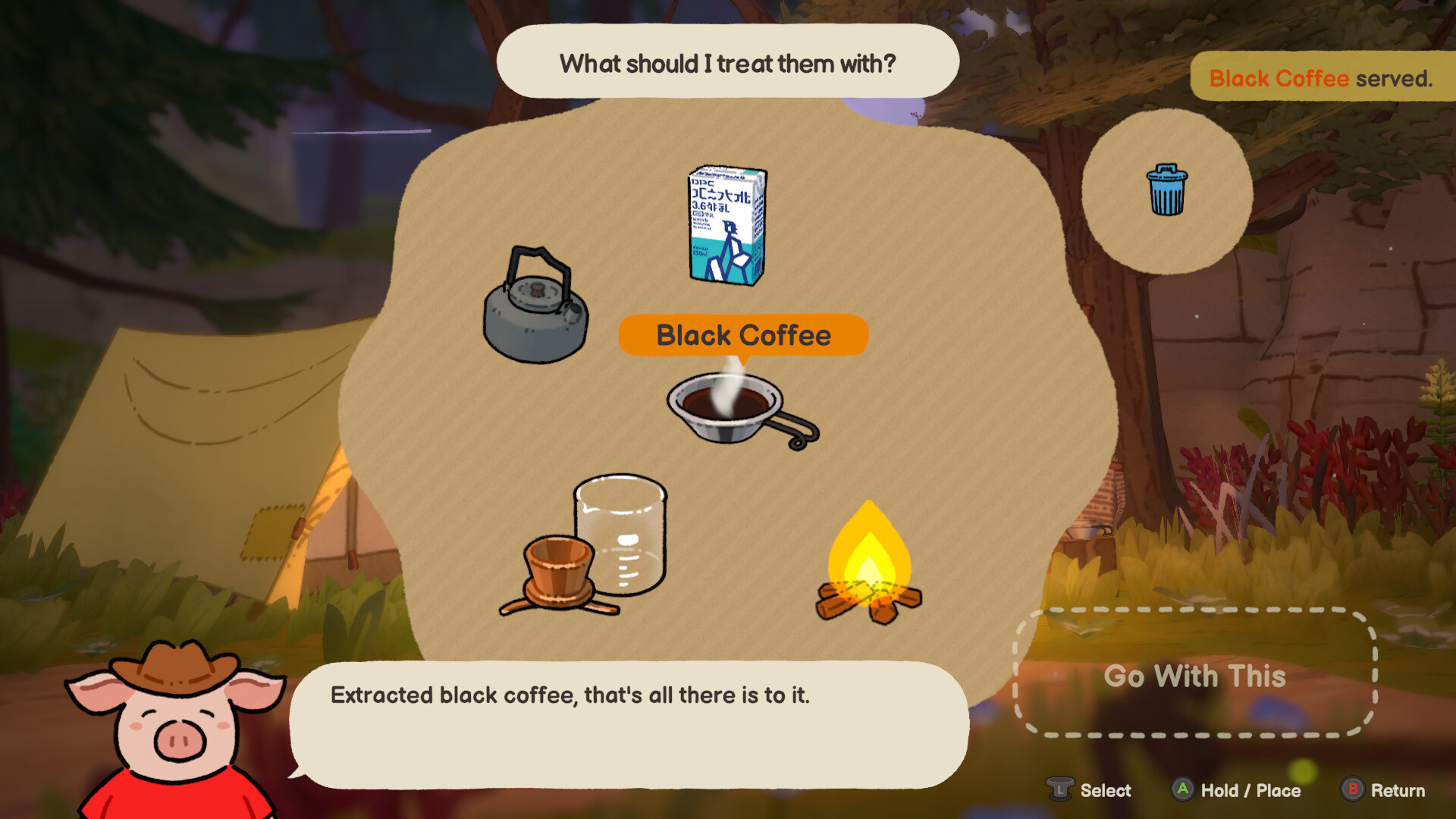
Coffee is the game's social engine, and the demo turns it into a hands-on brewing minigame. You grind beans with a hand grinder, brew over a bonfire, and serve the result to locals gathered around a campfire under the full moon.
Why this matters:
- Coffee deepens relationships. Treating locals to coffee is the fastest way to open conversation paths.
- Coffee talk surfaces leads. Cross-character hints come out over a warm cup. Residents who seem to have nothing to say often open up once served.
- Coffee is free progression. It costs time, not risk. There is no penalty for brewing and serving constantly.
- More than coffee. The official feature list says "making other things besides coffee can be enjoyed." Expect a small camp-crafting layer in the full release.
Memories
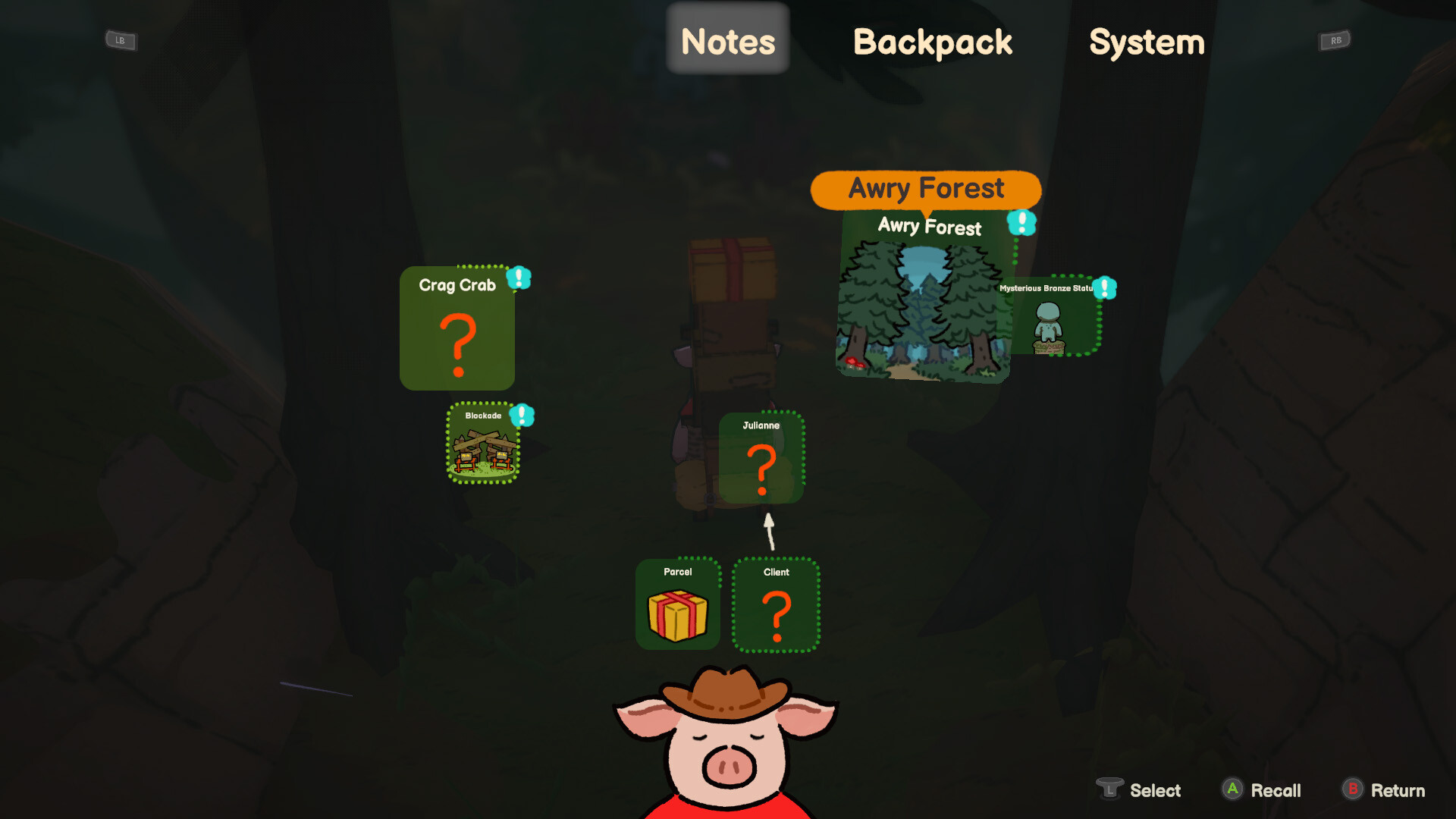
Memories are the game's progression currency. As you explore, discover, and interact, your Memories expand. Think of them as a cross between a quest log, an encyclopedia, and a map. The official line: "you'll realize the connection to everything as you come to know the world and expand your 'Memories.'"
In practical terms: if you feel stuck, you are missing a Memory, not a mechanical skill.
Bridge Building and Repairs
The terrain thwarts exploration on purpose. You haul materials to build bridges across ravines, patch the tent, and fix broken equipment like the backpack ladder. These tasks are the main objectives, dressed as campsite chores. When you hit a dead end, the answer is usually materials, not a puzzle.
The Shifting Sky
The environment and sky slowly shift into night as you explore. This is both a mood mechanic and a pacing signal. The forest at dusk is not the forest at midnight. The sky tells you how deep you are in the journey, and it changes what you can see and what residents do.
Sitting and Observing
Sitting on stones to watch the scenery shift is a designed activity. The game rewards slowing down. Check every seatable surface; these moments often trigger the kind of observation that expands Memories.
Controls and Settings
The game supports keyboard and mouse or full controller. Movement is WASD or the left stick; hold to run with the lantern. Interact with residents and objects, and use the lantern to illuminate dark signposts and hidden paths. There are no combat or reflex sequences.
A few settings notes from the demo's patch history:
| Setting / Action | Detail |
|---|---|
| Items key | Mapped to R since demo v0.2d (originally Q) |
| Memory / Items toggle | Pressing the same key again closes the panel |
| Ruby text (furigana) | Toggle ON/OFF directly from in-game since v0.4d |
| Language | No longer reset by "Reset All" since v0.4d |
| Controller | Unresponsiveness with certain controllers fixed in v0.4d |
| SFX volume | Loud effects rebalanced in v0.3d |
Progression Strategy
A Tiny Wander has no levels, no XP, and no skill tree. Progression is knowledge-based. Here is how to structure it:
Phase 1: Breadth (First 30 Minutes)
- Light everything. Every signpost, every dark corner.
- Talk to every resident twice.
- Do not commit to a direction until you have seen the starting area's full loop.
Phase 2: The Resident Network (Mid Demo / Early Full Game)
Residents are the quest log. Each character has a worry, and resolving worries connects to important leads. Build a mental map of who needs what:
| Resident Type | Likely Role | How to Progress Them |
|---|---|---|
| Grumbling furry friend | Early lead, teaches the worry-resolution loop | Listen, then act on what they need |
| Fishing fanatic mushroom | Secondary lead, likely tied to a location or item | Find what they are missing, return it |
| Coffee companions | Relationship unlocks | Serve coffee, revisit after new Memories |
Phase 3: Memory Consolidation
- Revisit areas after gaining new Memories. The forest rewards revisiting: signposts reveal connections, residents open new dialogue.
- Solve one resident's worry at a time. A finished thread opens the next area. Collecting threads without finishing them leaves the map locked.
Phase 4: The Shortcut
- Once you understand the world's connections, look for the straight-to-the-end path. The game explicitly permits it. Use your Memory map to skip redundant loops.
Step-by-Step Strategy: Five Sequences That Work
Sequence 1: The First Signpost Loop
- Light the first dark signpost at the forest entrance.
- Read it. Note the direction it points and the name it mentions.
- Walk that direction. Look for a second signpost or a resident.
- Talk to the resident. Ask about the name on the signpost.
- Return to the first signpost after the conversation. It will read differently.
Sequence 2: The Worry-Resolution Chain
- Find a resident with a visible worry (the grumbling furry friend is the demo's example).
- Listen to the full dialogue. The worry is usually stated plainly, but the solution is hinted at in the environment.
- Search the nearby area for the item or person the worry references.
- Return with what was needed. The resident's dialogue updates, and a lead unlocks.
- Follow the lead immediately. Leads are time-sensitive to your attention, not to a clock.
Sequence 3: Bridge and Repair Economics
- When you reach a dead end, check for a gap or ravine.
- Look for material sources in the areas you have already cleared.
- Haul materials to the gap. The game does not require you to optimize routes, just carry what is needed.
- Build the bridge or patch the repair. New area opens.
- Before leaving, check the new area for signposts and residents. The bridge was the gate, not the goal.
Sequence 4: The Coffee Break Protocol
- When you meet a new resident, note whether coffee time is available.
- Grind the beans and brew at the bonfire. The minigame is simple: keep the hand grinder turning and mind the brew.
- Serve coffee early in the relationship, not after the quest is done.
- Use the conversation to ask about other residents. Coffee talk is where cross-character leads surface.
- Revisit after each new Memory. Coffee companions remember what you have learned.
- Under the full moon, coffee time is where the story's emotional beats land. Do not rush these scenes.
Sequence 5: The Shortcut Run
- Build a complete mental map: all signposts, all residents, all bridges.
- Identify which Memories are prerequisites for the final area (the farthest reaches).
- Trace the minimal path: which worries must be resolved, which bridges must be built.
- Execute the minimal path, skipping loops.
- If the path does not open, you are missing a Memory, not a step. Search for the unlit signpost or unserved coffee companion.
Advanced Tips: What Experienced Players Know
-
Light every signpost twice. First pass reveals the map. Second pass, after you have new Memories, reveals the connections. The forest rewards revisiting.
-
Carry coffee into every conversation. Coffee time is available with every character depending on the situation. Brew in advance so you can serve on the spot.
-
Build bridges and do repairs before you need them. When you see a gap or a broken prop, gather the materials immediately. The path you opened early becomes the shortcut you need later.
-
Let the sky guide your pacing. The shift into night is a signal. If the sky is darkening, you are deeper in the journey than you think. Plan your return to camp before the light runs out.
-
Solve one resident's worry at a time. Each resolved worry connects to a lead. Focus on completing threads instead of collecting them. A finished thread opens the next area.
-
Treat the demo as a speedrun rehearsal. The demo is the same world as the full game. Memorize the layout, the signpost positions, and the resident roster. When the full release arrives, you will already know the first 10% cold.
-
Watch for the unusual. The game asks you to notice "unusual events encountered." If something looks out of place, it is a clue. A stone you can sit on, a signpost angled oddly, a resident standing somewhere unexpected.
-
The forest listens. Sound design is part of the puzzle layer. "Listen carefully" is in the official instructions. Use headphones; the forest's audio cues carry information.
-
Read the patch notes. The demo has shipped three hotfixes since launch (v0.2d, v0.3d, v0.4d). Changes like the Items key moving from Q to R will catch you if you rely on muscle memory from older footage.
-
Do not hoard. There is no penalty for spending coffee, using the lantern, or building bridges. The game's resources exist to be used.
The Demo: What You Can Play Now
| Detail | Value |
|---|---|
| App ID | 4657220 |
| Released | August 6, 2026 (Wholesome Games Celebration) |
| Coverage | First ~10% of the final release |
| Playtime | 20-30 minutes |
| Save/load | Disabled |
| Carryover | Progress does not carry to the final release |
| Content | Forest entrance, first signposts, first residents, first bridge, tent patch, backpack ladder repair, coffee break |
Why play the demo now: it teaches the lantern grammar, the coffee system, and the non-linear structure. It is also a milestone for the studio: after two years of event-only playable builds, this is the first public release.
Demo strategy: use the 20-30 minutes to map the area completely. Light every signpost, talk to every resident twice, build every available bridge, patch every repair, and try coffee with everyone. The demo's ending point is the first major gate of the full game.
System Requirements
| Component | Minimum | Recommended |
|---|---|---|
| OS | Windows 10 | Windows 10 |
| Processor | Intel Core i3-6100 / AMD FX-8350 | Intel Core i5-6600 / AMD Ryzen 5 |
| Memory | 4 GB RAM | 8 GB RAM |
| Graphics | GeForce GTX 560 / Radeon HD 6870 | GeForce GTX 960 / Radeon R9 280 |
| DirectX | Version 10 | Version 10 |
| Storage | 2 GB | 4 GB |
The requirements are modest because the game is a small 3D world with a picture book aesthetic. A mid-range machine from the last decade runs it comfortably. Full controller support means the Steam Deck profile should work well, though the official platform list currently covers Windows only.
The Studio and Development Background
DOUKUTSU PENGUIN CLUB is a three-person Japanese indie studio. A Tiny Wander is their flagship work, exhibited at BitSummit PUNCH! for the second consecutive year in 2026, featured in Wholesome Direct 2025, and selected for the Wholesome Games Celebration 2026.
- Director / lead illustrator: Nonohara, author of the art book "Quaint Places: Chronicles of Exploration" (Wokashi na Tatemono Tanbouki). The game grew out of the #MoeArchitecture illustration series Nonohara shared on social media and in self-published doujin art books; the book contains roughly 280 newly drawn pieces.
- Composer: Takao Masaki, whose original soundtrack is described as "soothing to the ears."
- Previous title: CALME (断崖のカルム), a stealth and exploration platformer exhibited at Tokyo Game Show 2022 and BitSummit. A Tiny Wander is a deliberate pivot in scope and genre.
- Development cadence: daily development logs on the official Discord; occasional newsletters with an exclusive wallpaper gift.
- Event history: Wholesome Direct 2025, Wholesome Games Celebration 2026, The MIX at BitSummit 2026, BitSummit PUNCH! 2026.
The studio's positioning is deliberately wholesome. The demo timing, released during the Wholesome Games Celebration, is part of a strategy aimed at the cozy community. The release has been postponed twice, from 2025 to 2026 and then to Summer 2027, to expand content and polish pacing. The team has said they work seven days a week, and that completing the full version will take longer than expected.
Similar Games
- A Short Hike: a small, warm exploration game about climbing a mountain and talking to everyone.
- Eastshade: a painting-themed exploration game where conversations and observation are the core.
- Lil Gator Game: cozy exploration with simple interactions and a gentle world.
- Night in the Woods: a night-toned narrative adventure about a small town and its residents.
- Snuffkin: Melody of Moominvalley: a gentle exploration adventure with a similar pace and tone.
- Tinykin: cozy platforming exploration where every character has a role.
- Alba: A Wildlife Adventure: a wholesome exploration game about helping residents and observing the world.
Where A Tiny Wander differs: most cozy games are built on farming, resource accumulation, and nurturing loops. This one has none of that. Its Steam tags tell the story: Walking Simulator, Nonlinear, Mystery, Hidden Object. The core mechanic is observation, and the visual world was designed before the game existed, so the game plays like walking through an illustrated book.
FAQ
When does A Tiny Wander come out? The full game targets Q2 2027 (summer) on Steam. The date has shifted twice: originally 2025, then 2026, now Summer 2027. The studio cites demo polish time and the expanded scope of the full version. No specific day within the quarter has been announced.
Is A Tiny Wander a horror game? No. The developers have been emphatic about this from the earliest announcements, including the explicit label "No Worries, This Is NOT a Horror Game." The nighttime setting is about atmosphere, moonlight, and mystery, not threat.
Is there combat? No. Exploration, lantern puzzles, resident interactions, coffee breaks, and bridge building. No combat or reflex sequences.
Who is Buie? Buie (also written Buu or Boo in localization materials) is the protagonist, an earnest delivery pigling with brawn who accepts a delivery into the Awry Forest.
Is the game non-linear? Yes. It is possible to go straight to the end based on how puzzles are solved. The demo also uses a natural stopping point rather than a hard gate.
What platforms is it on? Windows at launch, with full controller support. The official site also lists Android and iOS as tentative platforms.
How much does it cost? The price has not been announced. The demo is free.
What languages are supported? Japanese, English, Simplified Chinese, Korean, and Traditional Chinese. Furigana features help Japanese learners and young children.
Who is making it? DOUKUTSU PENGUIN CLUB, a three-person Japanese indie studio. Directed by Nonohara, soundtrack by Takao Masaki.
Does demo progress carry over? No. The demo does not support save/load, and playthrough data cannot be carried over to the final release.
How long is the demo? About 20-30 minutes, covering roughly the first 10% of the final release.
Is there multiplayer? No. Single-player only.
What is the "farthest reaches"? The deepest part of the Awry Forest, where the delivery must be completed. The Memories system is implied to be the key to reaching it.
What are the Moon Mansion and the cryptic letter? Central mysteries introduced in the demo and unresolved in it. Who the master of the Moon Mansion is, and what the cryptic letter means, are among the questions the full game is expected to answer through exploration and conversation.
Why is the Items key R? The demo's key mapping for Items was changed from Q to R in hotfix v0.2d. If you watched pre-release footage, the older binding may be shown.
Common Mistakes: The Five That Cost You Progress
-
Skipping the second conversation. The game's quest structure lives in second and third conversations. If you talk to everyone once and leave, you will miss most of the leads.
-
Hoarding materials. There is no reason to stockpile. Every bridge you can build should be built, every repair made. The map stays closed until you spend.
-
Ignoring coffee. Coffee is not flavor. It is the relationship system, and relationships are how leads surface. Players who skip coffee play a much smaller game.
-
Rushing the night. The shifting sky is a signal, not a timer. But if you push too deep into the night without returning to camp, you will miss the campfire scenes that carry the story's emotional weight.
-
Expecting the game to hold your hand. A Tiny Wander gives you the world and trusts you to pay attention. If you are stuck, the answer is in a signpost you did not light, a resident you did not revisit, or a stone you did not sit on.
Update: TGS 2026 Selection and the Road to Q2 2027
Two developments since this guide was first written matter for anyone tracking the release: the game is officially part of Tokyo Game Show 2026's SELECTED INDIE 80 lineup, and the store page now pins the release window to Q2 2027, tightening the earlier "Summer 2027" estimate toward spring.
Tokyo Game Show 2026
A Tiny Wander exhibits at TGS 2026 (September 17-21, Makuhari Messe, Chiba) in SELECTED INDIE 80, Hall 9, Booth E-33. For a three-person studio that debuted in event booths two years ago, a TGS selection slot is a meaningful stamp: the game now shares a curated floor with the strongest indie cohort of the Japanese show. Attendees who showed the "Added to Wishlist" screen at the booth received a relaxed Buie sticker, a small thing that tells you exactly how the studio values wishlists as its primary currency of support.
For players, what matters is not the sticker but the build: TGS showings have historically matched the latest public demo plus refinements, so nothing gameplay-new leaked from the event. If you played the demo, you have seen the current state of the game.
The Demo's Post-Launch Patch History, Decoded
The demo has been quietly patched four times since its August 6 release, and the patch notes read like a map of what first-week players struggled with:
- v0.2d changed the Items key from Q to R and made pressing the same key close the Memory and Items screens. If you watched older footage, rebind your muscle memory. It also fixed the Simplified Chinese glyph corruption (characters showing as boxes), which matters for a game whose Steam page highlights furigana support for Japanese learners.
- v0.3d fixed too-loud sound effects and, more importantly for completionists, improved responsiveness when placing or picking up items at specific points. The tent patch and bridge materials are less finicky now.
- v0.4d fixed a hang when certain controllers connected (relevant if your game froze on boot with a gamepad plugged in), restored the ruby text toggle in settings, and made Reset All preserve your language setting.
- v0.5d clarified the demo's scope and polished animations, the studio managing expectations before the TGS crowd arrived.
The pattern is a careful, responsive team: every hotfix addressed player reports within days. For a three-person studio, the cadence is the signal.
What the Full Version Adds (Per the Developer)
The demo announcement contained the most concrete statement yet about the full game's structure: because the game is non-linear, the full version is designed so you can clear it from the early areas. Read that carefully. It is not just "open world," it is "the ending is reachable early if you solve well." The shortcut strategy in the Progression section above is not an optimization, it is the intended alternate route.
Combine that with the store page's non-linear pitch and the design thesis snaps into focus: the developers built a game where sequence is the puzzle. Two players can have completely different A Tiny Wander stories, one finding the Moon Mansion in the first hour, another meeting it after every resident's arc is closed. Neither is wrong.
Release Window: Q2 2027
The store page moved from "Summer 2027" to "Q2 2027" (April-June). The delay history is two postponements (2025 → 2026 → 2027), both attributed to expanding content volume and quality. Nothing in the recent announcements suggests another slip; the TGS presence and demo hotfix cadence point to a studio in polish phase, not production phase.
Wishlist Strategy, Revised
With the game heading to Q2 2027 and the demo at a natural stopping point, the practical advice: wishlist it now, play the demo once (30 minutes is enough to learn the grammar), then wait for release rather than replaying the demo slice. The demo disables saving and progress does not carry over, so a second pass teaches you nothing new. Save the forest for the full version.
Updated FAQ Entries
When does A Tiny Wander release? Q2 2027 per the current Steam page (April-June 2027). It slipped twice, from 2025 to 2026 to 2027, both times to expand content.
Was the game at Tokyo Game Show? Yes. SELECTED INDIE 80, September 17-21, 2026, Makuhari Messe Hall 9, Booth E-33.
Is the demo still worth playing before release? Once, yes. It teaches the lantern, coffee and Memories systems in 20-30 minutes. Progress does not carry to the full game, so replaying it has no mechanical value.
My controller froze the game on boot. Update to demo v0.4d or later. That hotfix fixed controller-connection hangs.
Is there Chinese support? The store page lists no languages beyond Japanese and English officially, but v0.2d specifically fixed Simplified Chinese glyph rendering, which indicates an active zh-CN localization in progress. Treat full Chinese support as likely but unconfirmed.